

World
How 9/11 changed how we fly in New Zealand forever

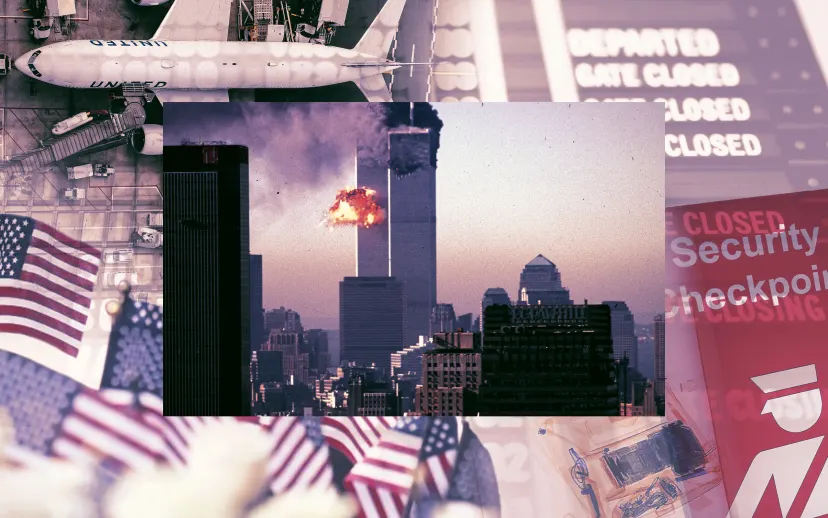
Explainer – It only took one day for how New Zealanders fly to be forever changed.
This week marks the 25th anniversary of the 11 September, 2001 terrorist attacks in America, which left nearly 3000 people dead.
Two New Zealanders also were killed on that day – Alan Beaven, a New Zealand native and environmental attorney who died on the hijacked Flight 93, and John Lozowsky, a US-born New Zealander who had dual citizenship and who died in the World Trade Center collapse.
There had been plane hijackings and bombings before 2001, of course, but what happened that day was something new – and terrifying.
Fred Stein is the deputy chief executive of aviation security at the Civil Aviation Authority, which establishes safety and security standards in New Zealand through its Aviation Security Service, or AvSec.
“We had trouble imagining an attack like 9/11 before 9/11 and by we, I mean the aviation industry, right?,” he said.
“And now the aviation industry not only can imagine something like 9/11, but we’re actually open to the idea that things we’ve never experienced are still possibilities.”
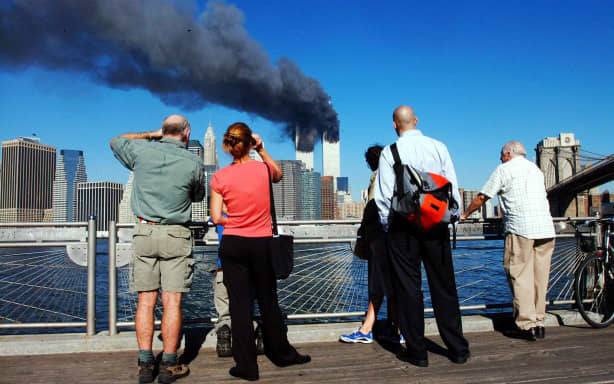
HENNY RAY ABRAMS / AFP
How flying used to be
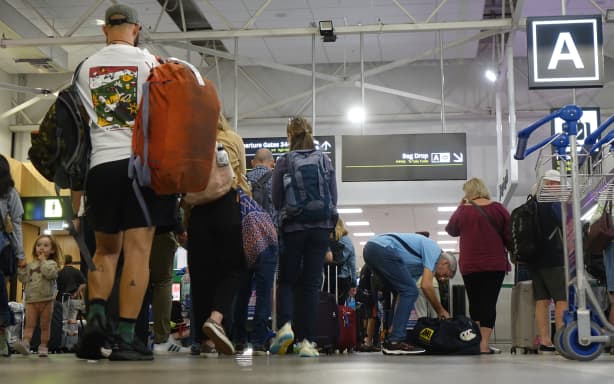
Most people under 30 will have no idea how different air travel was before 11 September 2001. Domestic flights in New Zealand had no real security screening at all, and international flights had far more relaxed standards than they do now.
“There were very few airports with screening and that screening was just started and was quite limited,” Stein said.
“The only real equipment was a walk-through metal detector and maybe a hand-held metal detector and the very simple x-ray machines. That was it.”
People could walk up to boarding gates to greet family members, you didn’t have to worry about carrying your water bottles through, or arrive hours earlier for international flights.
“You pretty much just showed them your ticket and boarded,” one person posted in a recent Reddit thread reminiscing about travel in New Zealand pre-9/11.
Today, only regional domestic flights for planes with fewer than 90 seats don’t have security screening, according to AvSec – mostly ATR turboprop planes.
Stein worked for 20 years at America’s Transport Security Administration, which was formed in the wake of the 9/11 attacks, before he came to New Zealand to work with the CAA. The attacks using commercial airliners were on a scale that had never been seen before.
“That was really the first time that an airplane had become the weapon,” he said.
While there were deadly incidents like the 1988 UK Lockerbie bombing that killed 270 people, “This was the first time that the people on the aircraft had the sole purpose of turning that aircraft into a weapon.”
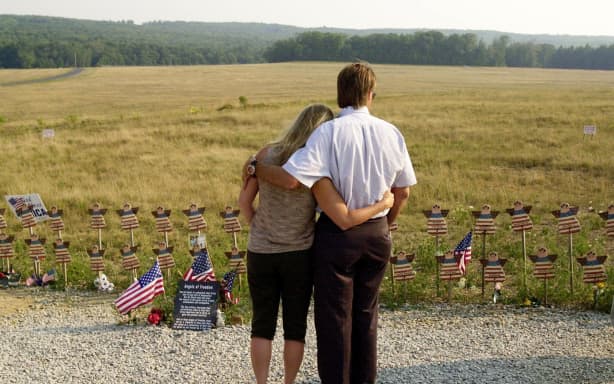
SHAWN THEW / AFP
The single biggest change after 9/11
Security bio-scanning, shoe checking, reinforced cockpit doors – these are all part of 9/11’s impact, but the biggest change is more of a state of mind, Stein said.
It’s all about how we view air travel.
“The exact style of attack that happened on 9/11 would be almost certain to fail today,” he said.
“And a huge reason for that is because the passenger expectation has changed. Passengers wouldn’t allow themselves to be turned into a weapon by people wielding knives.”
One of the key events of that day was when the passengers of United Airlines Flight 93 fought back against the hijackers. The plane crashed in Pennsylvania instead of on its expected Washington, D.C. target, killing all 37 passengers and four hijackers. New Zealand-born Alan Beaven was one of those on that flight.
Flight 93 “was galvanising,” Stein said. Its story was turned into movies and books and it helped change the image of passengers from just passive travellers to actually acting as another layer of security, he said.
“They have demonstrated again and again and again in aviation travel since then, that the passengers won’t take it. They will actually rise up and protect themselves. That was never even a consideration (before).”
Many times in recent years passengers have gotten involved with fighting back, such as with “shoe bomber” Richard Reid who attempted to blow up a Miami-bound plane in December 2001 and was tackled by passengers after he grabbed a flight attendant.
As recently as last week, a disruptive passenger on an American Airlines flight who reportedly attacked others on board was subdued and duct taped to his seat with the help of other passengers.
Crew are now trained to be more proactive, Stein said.
“Crews carry zip ties and duct tape with them, they know that they can enlist the aid of the passengers when something really unusual and threatening happens.
“Even if it’s not to the level of trying to truly hijack the plane, if they’re putting the plane at risk, passengers are gonna respond.”
The Civil Aviation Authority is “continually assessing the threat environment and working with domestic and international partners to ensure New Zealand’s security settings remain appropriate and proportionate,” Associate Transport Minister James Meager told RNZ.
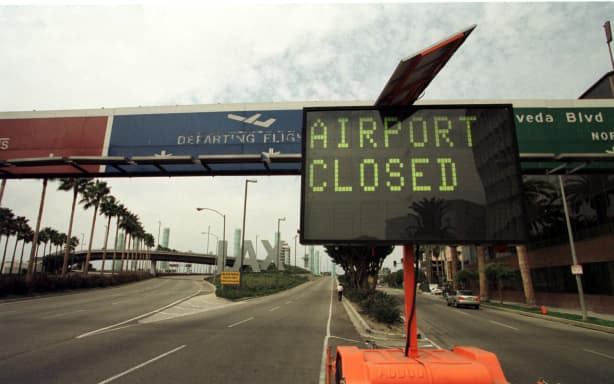
GERARD BURKHART / AFP
How that all changed in one day
The 9/11 attacks happened early in the hours of 12 September New Zealand time. Prime Minister Helen Clark was on a flight to Hong Kong for a European visit which was quickly cancelled.
Former RNZ presenter Geoff Robinson arrived at work at 4.30am to find one of the century’s biggest stories unfolding. He told Stuff in 2021, “I remember Kim Hill saying, ‘it will never be the same after this’, and she was absolutely right.”
Flights all around the world were grounded and governments hustled to upgrade security at airports.
In a book the Aviation Security Service published in 2017 looking back at its first 40 years, it describes 9/11 as the day “aviation security changed overnight”.
Cabinet ordered emergency domestic security screening nationwide at 11am, which required a major expansion of airport staff. Defence Force staff were called in to assist AvSec in Auckland, Wellington and Christchurch.
AvSec staff, police and others worked nonstop to bring tighter screening in.
Not everyone appreciated the additional security screening or delays, AvSec wrote. People were bringing things onto flights that wouldn’t be imaginable now.
“Avsec was collecting bin loads of every imaginable object – knives, scissors, hammers, box cutters and even guns,” the book notes.
The events of 9/11 led to global standards for security, set by the International Civil Aviation Organisation (ICAO).
“Their focus on security before 9/11 was so small, minimal, and now of course it’s a major part of what they do and the rules they set for the international community,” Stein said.
“Across all political spectrums, it doesn’t really matter, security is kind of a common thread we all hold pretty dear.”
Stein said 9/11 forced greater cooperation across nations to ensure air security.
“Very few attacks actually originate in the country that the attack is targeting.
“We’re one world, and we’ve got to work together if we’re going to keep each other safe.”
By the end of October, then-Transport Minister Mark Gosche announced domestic screening would be permanent.
“Although the changes at our airports were the most dramatic in the country’s history, AvSec moved swiftly and efficiently,” Gosche recounted in AvSec’s account of the day.
Other changes came with time in the wake of 9/11 – after a 2006 attempt in Britain to detonate liquid explosives disguised as soft drinks, strict new rules about liquids, aerosols or gels were added to most security screenings.
RNZ / Kim Baker-Wilson
How security keeps changing
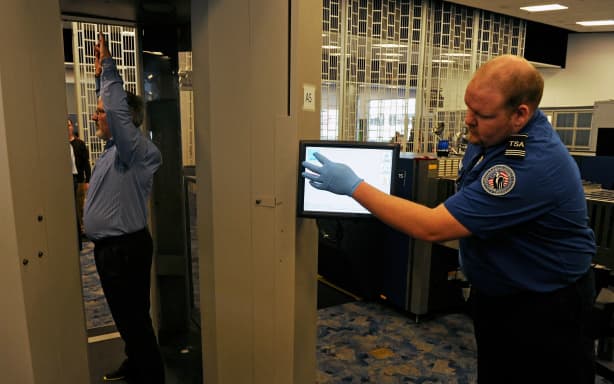
The changes over the past 25 years have ranged from the visible – those full body Advanced Imaging Technology or AIT scanners, where you get to raise your arms over your head and get the total treatment – to less obvious changes in how bags are screened behind the scenes.
After cockpits were stormed, hardened cockpit doors and secondary barriers were added. “Behaviour detection officers” are now trained to look for what Stein calls “indicators of deception.”
“We are lucky that we are in a different threat environment than almost anywhere else in the world,” Stein said.
But that hasn’t made New Zealand immune to air security incidents.
In 2008, Somali refugee Asha Abdille attempted to hijack an Air New Zealand flight from Blenheim to Christchurch. That led to a Ministry of Transport review and recommendations to further improve security.
“The threats don’t stop evolving,” Stein said.
Things nobody imagined in 2001 – drone attacks on planes, hacking or other threats from artificial intelligence – now need to be considered.
Organisations like AvSec need to address the threats “but to do it at the right proportion and without impacting legitimate activities. So it’s a balance, like the rest of security. It’s just a new frontier that we are learning to grapple with and trying to stay ahead of.”
ETHAN MILLER / AFP
For instance, those slow body scans will soon become much faster.
“We’re not far from that being a walk-through AIT, so it’ll have the speed of the walk-through metal detector, but the effectiveness of the AIT,” Stein said.
“The future technologies are continuing to change and they’re definitely going to improve security, but hopefully also improve the passenger experience.”
Meager told RNZ that the CAA and AvSec are constantly working to make flying safer.
“Over the past 25 years, aviation security in New Zealand has continued to evolve to keep pace with modern technology, most recently with work in the Civil Aviation Rules Update Programme, launched in April.
“A key project includes work to implement rules which address issues raised within International Civil Aviation Organisation audits. These improvements to security, safety and efficiency will create consistency with other like-minded countries and confirm New Zealand as a safe and highly respected international aviation destination.”
Grant Morris, associate professor of law at Victoria University, said the changes to flying after 9/11 aren’t going anywhere.
“They are here to stay for two main reasons,” he said.
“Firstly, the threat of terrorism remains. Secondly, if measures were significantly reduced and then a terrorist attack occurred, authorities would be blamed for reducing the measures.”
“New Zealanders should have confidence that agencies continue to work closely together to keep our aviation system safe, secure, and proportionate to the risks we face,” Meager said.
What happened 25 years ago forced security authorities to think bigger and smarter, Stein said.
“The idea that people would get on a plane, and be willing to kill themselves and turn that plane into a weapon, all those things were so new in 9/11 … and are now, just an ingrained part of how we approach security.
“There is just an awareness of the possibilities,” he said.
“I think we’re just collectively more open to using our imagination and knowing that the bad guy will use their imagination.”
Tomorrow: How 9/11 changed how New Zealand views its place in the world.
Source: RNZ

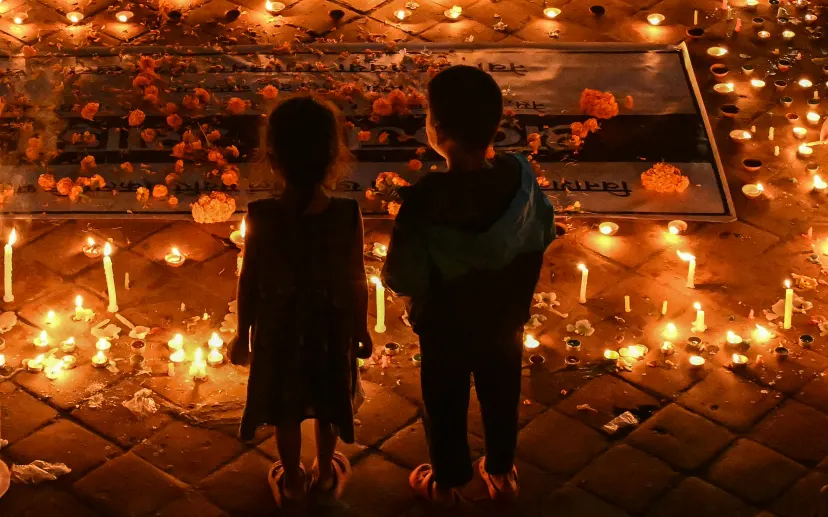
Nepal held a national day of mourning with candlelight vigils on Monday for victims of devastating glacial floods, as families of missing hydropower workers feared trapped in tunnels prayed rescuers might yet find them alive.
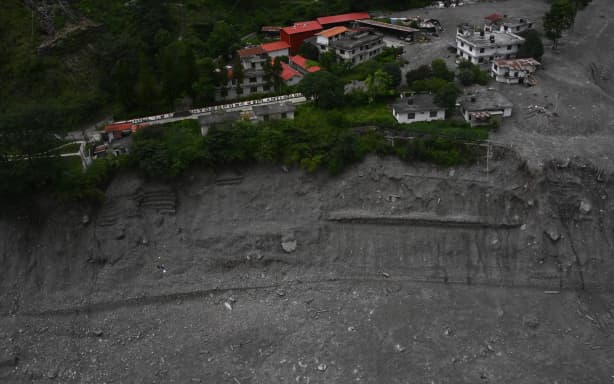
The 26 August glacial and mountain collapse on the China-Nepal border killed at least 1399 people, with more than 5500 missing, including around 800 foreigners.
Flags flew at half-mast and hundreds of people gathered for the vigils in the Nepali capital Kathmandu, as the nation marked the 13th day after death in line with Hindu mourning rituals.
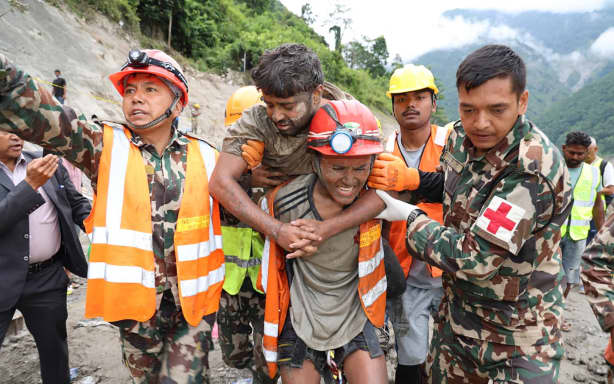
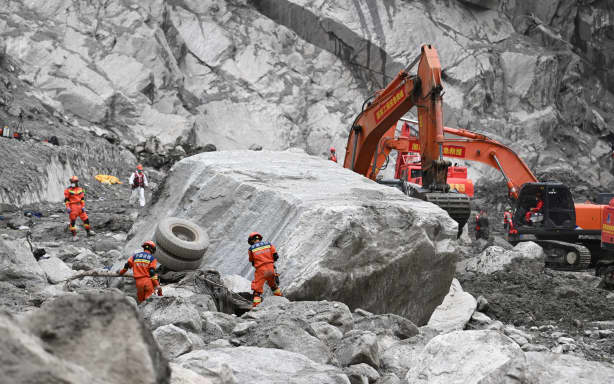
Hundreds of hydropower workers are among the missing, but the rescue of three of them from deep inside tunnels — two Nepalis on Friday and a Chinese man on Saturday — have buoyed hopes that more could still be alive.
Nepal Army spokesman Raja Ram Basnet said rescue efforts were continuing at “the same tempo” to make sure “that no one is still stranded”.
Entire communities have been swept away, with roads destroyed and homes demolished.
HANDOUT/AFP
‘Hope’
But families of some of the missing workers who gathered in Kathmandu said the government must move faster.
“We have a lot of hope,” said Reena Amatya Shrestha, whose brother is among the missing.
“They say they are doing rescue. If the rescue is there, where’s the result? We need the result.”
Australian tunnel rescue expert Arnold Dix, who is advising Nepali teams, said the operation presented an unprecedented challenge.
“We are facing something I have never faced before,” said Dix, president of the International Tunnelling and Underground Space Association, in a post on social media.
“Not one rescue, but multiple potential rescues, unfolding at the same time, in different places, each with its own dangers, uncertainties, and lives that may still be saved.”
Foreign experts, including from China, India and South Korea, are aiding Nepali teams in rescue efforts.
“We are measured not only by the lives we save, but by the lives we refuse to abandon,” said Dix.
Drone pilot Adarsha Raj Bhusal recalled sinking into mud after leaping from a helicopter into the flood-ravaged Upper Trishuli-1 hydropower tunnel in Rasuwa district days after the disaster.
“The moment I landed I sank into the mud up to my waist,” the 24-year-old told AFP on Monday in Nuwakot district.
“Other soldiers were there to help, but they were struggling just as much as I was. That’s how bad the conditions were… it was intense the entire way in.”
PRAKASH MATHEMA / AFP
‘New life’
Nepal President Ram Chandra Paudel visited relief camps in Nuwakot, speaking to those left homeless by the disaster.
“Today the entire nation is mourning this horrific disaster,” he said in a statement.
“To everyone waiting for news of family members and friends, I want to assure you that search and rescue operations will continue.”
With mortuaries overflowing, Nepal has buried hundreds of bodies in mass graves after taking DNA samples for future identification, according to police.
Despite the gloom, there have been remarkable tales of survival.
Chandika Shrestha, a 64-year-old Nepali woman, was pulled out alive from her mud-covered home in Bidur on Saturday.
Her family had already held a symbolic funeral ceremony, believing her dead.
“Chandika has got a new life,” her neighbour Buddhi Lal Dongol told AFP. “It would be so good if the others who are missing also came back.”
Several families held last-rite ceremonies in Nuwakot to mark the 13th day of mourning, while Buddhist monks held prayers for the dead.
“I have had to hold myself together a lot,” 63-year-old Kula Priya Nepal, whose son was killed at a hydroelectric project, told AFP.
CNS / AFP
While the exact cause of the glacial collapse is unclear, climate change is accelerating glacial melting worldwide, increasing the risk of such disasters.
Nepal, a largely rural nation of 30 million people that has contributed little to the greenhouse gas emissions driving global warming, has said reconstruction could cost billions of dollars.
Its economy is already under pressure, with limited resources to respond to a disaster of this scale.
The disaster has come just ahead of the anniversary of last year’s 8-9 mass September anti-corruption protests that toppled the government.
Rescuers have retrieved 1356 bodies in Nepal, while around 4994 people are missing, according to the disaster agency.
The toll in China stands at 43 dead and 519 missing, according to state media.
On Monday, local volunteer groups in Kathmandu packed utensils, blankets and clothes to be distributed to survivors.
“As Nepalis, we’ve always been told that you look after your people,” volunteer Ashim GC told AFP.
“And these are our people.”
Source: AFP & RNZ


Pieces still missing from Tom Phillips inquiry – academic

Police supporting families of New Zealanders missing in Nepal floods

Woman told police she had Tom Phillips in her car in May 2023 – but officers were diverted


-

 Fiji News2 months ago
Fiji finalising diaspora policy to ensure citizens abroad ‘keep coming back’
-

 Latest News2 months ago
41 percent of Kiwis taking on debt to cover increased living costs – Kiwibank
-
 NZ News2 months ago
Mother of Marokopa children says Tom Phillips would take her phone to stop 111 calls
-
 NZ News2 months ago
Coroner told about LynnMall terrorist’s time in prison’s extreme risk unit
-
 Latest News2 months ago
Police searching for missing woman recover body in West Auckland
-
 NZ News2 months ago
Queenstown bouncers guilty of selling drugs while on the job
-

 Sports2 months ago
Junior Bula Boys reach OFC U-16 final, seal U-17 World Cup berth
-
 World2 months ago
Ex-Fiji prosecutions office employee ‘scared to leave Australia’ after leaked corruption allegations