

Latest News
Degenerative brain disease study finds CTE in 31 former rugby league players


A landmark study has found 31 rugby league players have been diagnosed with the degenerative brain disease chronic traumatic encephalopathy (CTE).
Rugby league players in their 20s, 30s and 40s have been found to have had the degenerative brain disease, which can only be diagnosed after death.
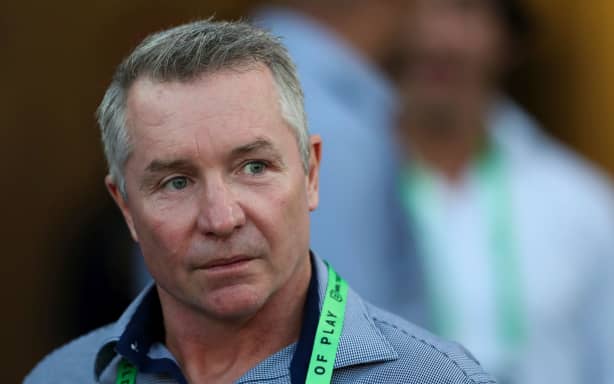
Among them were decorated league footballer and NRL coach Paul Green, 49, as well as Manly Sea Eagles player Keith Titmuss, who was just 20 when he died.
PHOTOSPORT
The ABC has obtained the latest statistics, which are based on the first 150 brain examinations of people who played contact sports completed at the Australian Sports Brain Bank.
Of the 51 rugby league players’ brains donated to the brain bank, 31 were found to have CTE. They played at various levels of the game from amateur to professional.
The paper was presented by molecular biologist and data scientist Jennifer Cropley at the International Sports Concussion Conference in Melbourne on Tuesday.
CTE’s sole cause is repetitive hits to the head and body. Symptoms can include memory loss, impulsivity, anxiety and anger.
The disease has been found in several athletes who have died by suicide, but experts say more research needs to be done to establish a “causal” link.
‘I feel a massive responsibility’
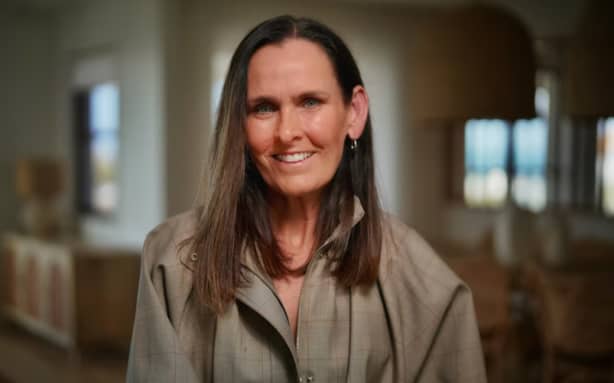
Former league star Paul Green’s widow Amanda Green is calling on all collision sports to do more for the next generation of players.
Experts have repeatedly called for football codes to ban contact until the age of 14.
ABC News / Michael Lloyd
Green has appealed for more people to donate their brains to understand the disease and wants more awareness around the issue.
“Now that we know what we do about this disease I feel a massive responsibility, as we all should, to protect the brain health of the next generation of young athletes,” Green said.
“I owe it to my kids and their sports-loving mates. We need to ensure they don’t make the same mistakes as our generation did. The key here is to pledge our brains and support the incredible and potentially lifesaving work of the Australian Sports Brain Bank.”
Green said she had “no idea” about what CTE was until after her husband died.
“I had been involved in the highest level of professional sport in this country and did not understand this disease we now know as CTE,” she said.
“That was not OK I didn’t know what CTE was, and since Paul’s diagnosis, I have constantly called for more education on the issue. People needed to understand this disease so no-one else suffered in silence.”
ABC News / Michael Lloyd
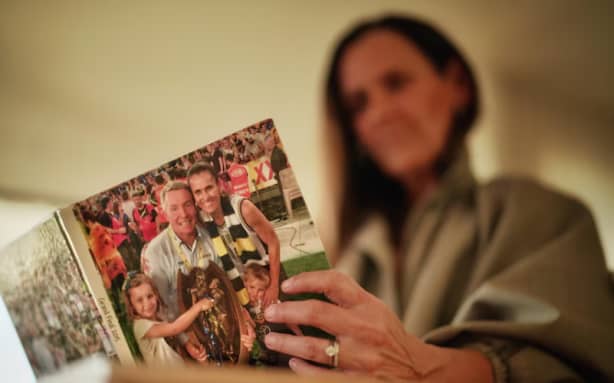
Paul Green died by suicide in 2022.
Green said that since learning about the disease, she could see her husband was showing CTE signs prior to his death.
“On receiving Paul’s diagnosis from [sports brain bank director] Professor Michael Buckland, he had mentioned that Paul had one of the most severe cases of CTE that he had seen, but due to Paul’s intelligence, there was a possibility that he has masked a number of his symptoms, but the symptoms I had seen were symptoms such as anxiety, impatience, he was impulsive in his decision making, he definitely had lower levels of tolerance and quite elevated emotions,” she said.
“These were changes that I had seen over time that I put down to the stress of his job.”
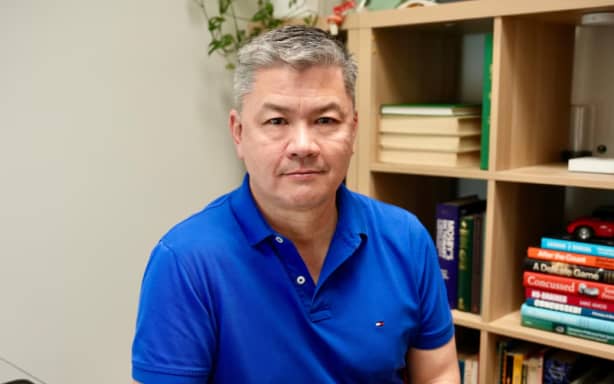
Swinburne University professor Alan Pearce, who is an author on the paper which reveals the latest rugby league statistics, said more needed to be done to protect players.
“Given rugby league is a collision-based sport, it is not surprising that we found over 60 per cent of rugby league donors had CTE, but this tells us we need to start implementing modifications,” he said.
“Introducing contact limits in rugby league is a good start but rugby league and all contact and collision-based sports must also start modifying to non-contact versions for children to the age of 14 years of age.
ABC News / Simon Tucci
“Keith Titmuss’s result, having stage two CTE at 20, tells us that this is not an old person’s disease.
“Keith passed in 2020, and his brain results typify that exposure risk for CTE starts at junior sport level.
“Keith played junior rugby league from the age of five years old, then schoolboy rugby union, and his brain results show the effect of that.”
Titmuss played as a schoolboy at Newington College in Sydney and had had a substantial exposure to repeated head impacts throughout his 15 years playing junior contact sport.
Titmuss died of exertional heat stroke after a 2020 Manly Sea Eagles training session.
His CTE diagnosis was revealed in 2024 and sparked warnings the major football codes were not doing enough to protect young athletes. His parents Lafo and Paul donated his brain for research.
The latest rugby league statistics follow a Four Corners report in June which revealed 33 Australian Rules footballers have been diagnosed with CTE and exposed the scale of the AFL’s brain trauma crisis.
The Four Corners report triggered enquiries by WorkSafe Victoria and WorkSafe WA into incidents related to footballer safety.
Last month a Boston University study revealed at least one in four former NFL players who died between 2016 and 2021 was found to have CTE.
The NRL has been contacted for comment.
Where to get help:
- Need to Talk? Free call or text 1737 any time to speak to a trained counsellor, for any reason
- Lifeline: 0800 543 354 or text HELP to 4357
- Suicide Crisis Helpline: 0508 828 865 / 0508 TAUTOKO. This is a service for people who may be thinking about suicide, or those who are concerned about family or friends
- Depression Helpline: 0800 111 757 or text 4202
- Samaritans: 0800 726 666
- Youthline: 0800 376 633 or text 234 or email talk@youthline.co.nz
- What’s Up: 0800 WHATSUP / 0800 9428 787. This is free counselling for 5 to 19-year-olds
- Asian Family Services: 0800 862 342 or text 832. Languages spoken: Mandarin, Cantonese, Korean, Vietnamese, Thai, Japanese, Hindi, and English.
- Victim Support 0800 842 846.
- Rural Support Trust Helpline: 0800 787 254
- Healthline: 0800 611 116
- Rainbow Youth: (09) 376 4155
- OUTLine: 0800 688 5463
- Aoake te Rā bereaved by suicide service: or call 0800 000 053
If it is an emergency and you feel like you or someone else is at risk, call 111.
– ABC News

Latest News
NRL finals schedule: Who plays who in week 2 and how the Warriors can make the Grand Final

The Warriors will need to take the hard path to the NRL Grand Final, having lost to the Dolphins in their qualifier at Go Media Mount Smart Stadium.
A victory in week one would have seen the Warriors take a week off and advance straight to the preliminiary finals in week three.
Instead they’ll take on the Newscastle Knights in a must-win elimination final on Sunday.
Here’s who plays who next:
Week two: Semi-finals
The teams that lost their qualifying finals get another chance. They play the winners of the elimination finals in two sudden death games.
The two winners would then move on to the preliminary finals.
- Cronulla Sharks v Sydney Roosters, Saturday, 9.50pm at Allianz Stadium, Sydney
- Warriors v Newcastle Knights, Sunday 6.05pm at Eden Park, Auckland
Warriors boss Cameron George is expecting Sunday’s game to sell out, in what he describes as an international for his side.
“It’s us versus Australia. So the more people we get there, the better New Zealand will be.
“There are 17 teams in this comp and we’re the only one from here so it’s us against them. This is our New Zealand grand final in the NRL and it’s pretty special.”
Warriors club members can buy tickets from midday Monday with general public tickets going on sale Tuesday.

Andrew Cornaga/www.photosport.nz
Week three: Preliminary final
The four remaining teams play in the preliminary finals.
The Panthers and Dolphins have advanced straight to the prelims where they’ll meet the winners of the semi finals.
If the Warriors win against the Knights this weekend, they’ll go on to play the Panthers.
The winner of the Sharks v Roosters match this weekend will face the Dolphins.
The winners book their place in the Grand Final.
rnz
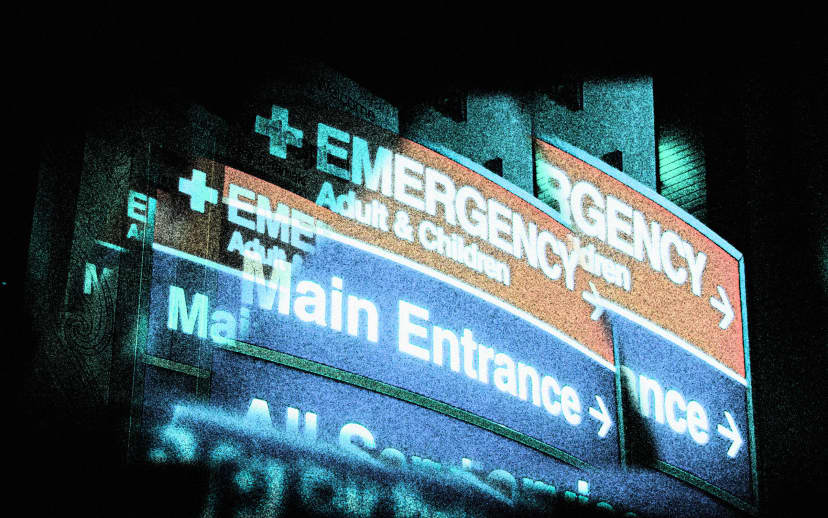
Extra paediatricians are being drafted in and elective procedures are still being called off in the busiest flu season for Auckland’s children’s hospitals in years.
PHF Science figures showed there had been about 70 children with the most severe respiratory symptoms admitted each week for the past four weeks to Kidz First and Starship hospitals.
That was an 85 percent increase since the end of July and did not reflect the total number of children in hospital with respiratory symptoms, or emergency presentations.
South Auckland paediatrician Dame Teuila Percival said this winter had been the worst for years – and the busiest she could remember.
It had been all hands on deck at KidzFirst.
“People do extra shifts, we have senior medical officers like myself, and others who work in places like psychiatry coming in, helping out doing more time in the ED,” Dame Teuila said.
Children were being admitted with a wide range of symptoms including dehydration, confusion from fever, vomiting, diarrhoea, difficulty breathing, a bad cough and needing oxygen, she said.
Some were in intensive care – usually because they needed high levels of support with breathing, she said.
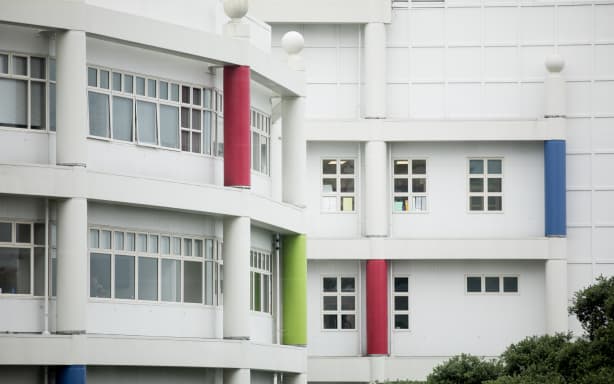
RNZ / Cole Eastham-Farrelly
“They’re taken care of very well when they’re there but its very stressful for parents and families to see their children so unwell,” he said.
RNZ understands Starship also remained very busy, with elective procedures still regularly deferred because the space was need for acutely unwell children.
More help needed next year
Dame Teuila said many of the sickest children were Pasifika or Māori children.
It was great that the flu vaccine had been made free for under-fives earlier this month, but she would like to see it free for everyone next winter, she said.
Flu often made its way around a family, and more vaccination would help.
“It’s not uncommon that the whole family come to ED – and we see all the children and the mum and the dad and everybody’s sick,” she said.
Dame Teuila said there needed to be more resources for general practice to be able to help more people get in to see their doctors before they get sicker.
“I do think getting to primary care is a barrier for a lot of families particularly if you have got two, three, four kids all sick. Its very hard to get into see someone at the moment in a timely way,” she said.
“My colleagues in primary care work really hard. They’re just under the pump when I speak to them on the phone as we all are. They just need more people,” she said
RNZ asked Health NZ for figures for children in other main hospitals in New Zealand, but it said they needed to go through the Official Information Act process which could take several weeks.
But PHF Science kept combined figures for the two dedicated children’s hospitals in Auckland, which is why they were readily available.
A spokesperson said the figures which went to 6 September were part of its severe acute respiratory surveillance which only covered some of the sickest children.
Other respiratory hospitalisations would not be included.
rnz
Latest News
Auckland’s City Rail Link goes into action for first rush hour after ‘incredible’ opening day
After decades of waiting, delays, cost blowouts and disruption, Aucklander commuters finally got to ride on the new City Rail Link on Sunday.
And today commuters see try out brand new rail link in morning rush hour.
The $5.5 billion project has brought two new underground train stations, and turned Waitemata station from a dead-end into a two-way thoroughfare.
It has been touted as a game-changer for Auckland, helping to move more people around the city and reduce car dependence.
On opening day, more than 400 people turned out at Ōtāhuhu station Before 5am to be on the first train to travel through the City Rail Link.
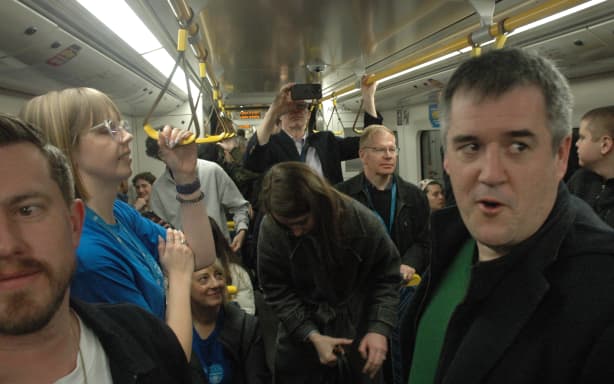
Politicians, train nerds, and advocates alike were crammed in to the carriages, and as the new tunnel drew nearer, the excitement was growing.
Chants of “tunnel, tunnel, tunnel” rang out through the train, and a cheer went up as it entered.
RNZ / Edward Gay
Taylor Parker, 23, arrived at 3.40am in Ōtāhuhu to be the first person in the queue.
“This is incredible. It is like the harbour bridge opening but for the younger generation. It’s truly a once in a lifetime.”
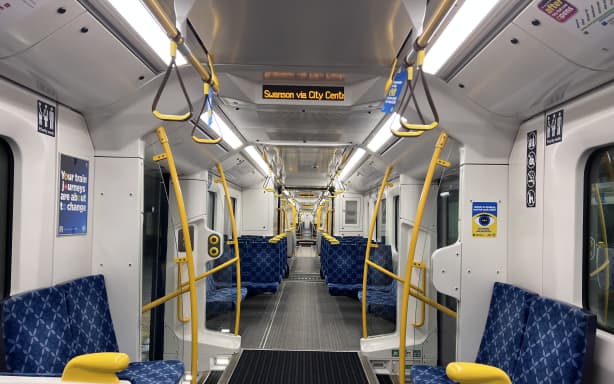
As the day drew on, thousands travelled through the new tunnels and stations at Karangahape road and Te Waihorotiu in mid town, which had entrances on Victoria and Wellesley streets.
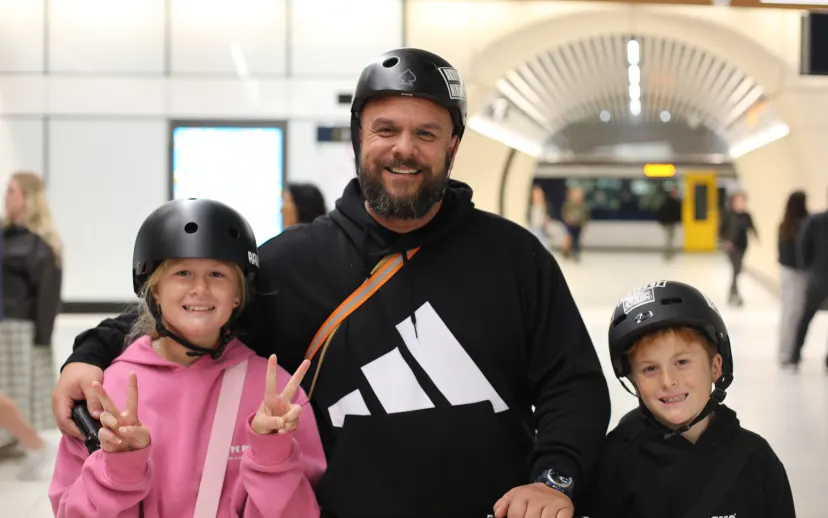
Bryce Ongley was checking out the new stations with his two kids.
“Yeah nah, they’ve really enjoyed it. It’s kind of like space age – out of this world when you come down here and see it, eh? All lit up.”
His daughter Frankie was also impressed.
“They’re very cool and very big, and I love them and I think it’s my favourite one. Because it’s in the city and I love the city.”
RNZ / Luka Forman
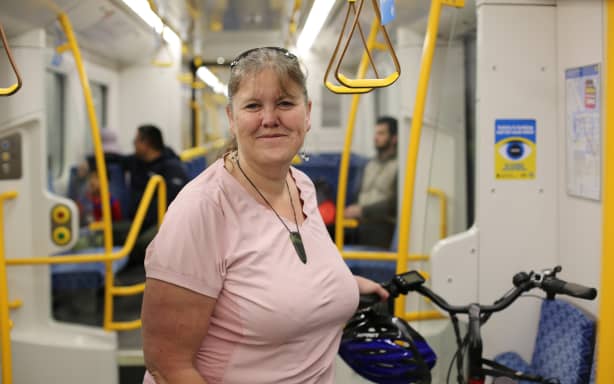
Cyclist Sarah Woodfield said the new stations and tunnels would help her get more places on her bike, and give people more options for getting around.
“No city ever solved its traffic problems by building more roads. So public transport being a good option is really great for everyone.”
Kate Millington lived in Mount Eden, and said the new stations reminded her of Sydney where she used to live.
“It’s bloody amazing. I use the trains a lot, and I timed myself from home to the Maungawhau station, and rather than taking 20 minutes to get to Kingsland it took me seven.”
Manukau Ward Councillor Alf Filipaina said the CRL would help connect South Auckland with the rest of the city.
“It’s a matter of getting off the roads, using the train when they can. And having the ability from south-side to come all the way into town.”
RNZ / Lucy XIa
Patrick Reynolds – director of advocacy at charity Greater Auckland – said despite the excitement, a more joined-up rail network would become the new normal.
“Instead of a train full of very tired nerds. This will just be every day, it’ll be completely ordinary. Getting the train is just a thing you’ll do.”
The opening day was not without an issue – a small fire at Waitemata station caused by a lighting cable early in the day created delays and cancellations across the network – but things were back on track by about noon.
Auckland Transport chief executive Stacy van der Putten said the disruption was disappointing, but she was impressed with how crews responded.
Time will tell whether there are any other kinks to iron out in the first days and weeks of the new network.
rnz


Woman told police she had Tom Phillips in her car in May 2023 – but officers were diverted

NRL finals schedule: Who plays who in week 2 and how the Warriors can make the Grand Final

Flu season hitting children’s hospitals hard, extra paediatricians called in


-

 Fiji News2 months ago
Fiji finalising diaspora policy to ensure citizens abroad ‘keep coming back’
-

 Latest News2 months ago
41 percent of Kiwis taking on debt to cover increased living costs – Kiwibank
-

 NZ News2 months ago
Mother of Marokopa children says Tom Phillips would take her phone to stop 111 calls
-

 NZ News2 months ago
Coroner told about LynnMall terrorist’s time in prison’s extreme risk unit
-

 Latest News2 months ago
Police searching for missing woman recover body in West Auckland
-
 NZ News2 months ago
Queenstown bouncers guilty of selling drugs while on the job
-

 Sports2 months ago
Junior Bula Boys reach OFC U-16 final, seal U-17 World Cup berth
-
 World2 months ago
Ex-Fiji prosecutions office employee ‘scared to leave Australia’ after leaked corruption allegations