

NZ News
Alleged drug was awaiting 270kg shipment when arrested


A gang kingpin alleged to have imported “huge quantities” of drugs, including methamphetamine, never indulged in the substances and instead spoke of “junkies” lying and cheating to get their next fix.
Waikato Comancheros boss Junior Heart, previously known as Sonny Fatu jnr, counselled gang members not to use the substances so they could “maintain order in their lives,” Crown solicitor Jacinda Hamilton told a jury of six men and six women in the High Court at Hamilton today.
“He spoke negatively about people who he perceived as junkies, who he thought would lie and cheat in order to get their next fix,” she said.
She claimed he said drugs were a “scourge” and affected people’s functioning and ability to maintain order in their lives.
Heart originally faced 110 charges, mostly relating to the supply of methamphetamine, but also cocaine and MDMA, and possession of firearms and explosives.
However, in recent days he has pleaded guilty to 73 charges, more than 50 of which relate to the supply of meth around the Waikato, supplying MDMA, offering to supply meth, supplying materials used in meth production, unlawful possession of firearms and explosives, and participating in an organised criminal group.
He is still fighting charges related to supply, offering to supply and conspiring to supply about 50kg of meth, conspiracy to murder another gang member Heart felt had ripped him off 10 bitcoin, conspiring to kidnap that man, and conspiring to chop another man’s finger off.
Hamilton told the jury police managed to combat the alleged hit by arresting the unsuspecting “victim” and keeping him in custody.
The offending allegedly occurred between November 2019 and June 2021.
Hamilton told the jury that Heart peddled the drugs with one focus.
Money.
“It was his business.
“It was how he earned a living and how he was getting rich and growing his power.”
Hamilton said a kilogram of meth was worth $180,000 to $220,000 between October 2019 and June 2021.
Heart could source meth and cocaine from China and Mexico for between US$5000 ($8450) and US$10,000 ($16,900), “making it a very profitable business”.
She claimed Heart, who was “exacting and ruthless,” was selling meth in kilograms and ounces to others below him in his group to make their own profit.
Revealing details of the wounding charges, Heart is alleged to have told another man that he was “thinking about chopping [man’s] finger off tomorrow, lol”.
“Need butcher knife and hammer”, he reportedly said. The other man allegedly replied, “send him the gangster message”.
The conspiring to murder messages involved Heart “ordering the hit” of a man in 2021 who was in Colombia, Hamilton told the jury.
Heart had become unhappy with a man who had a drug debt with him and gave him bitcoin as payment.
Over many months, the man disagreed with the extent of the debt, “so much so that Mr Heart became angry”.
Heart suggested potentially kidnapping one of the man’s family members to get him back to New Zealand, and told his Comanchero gang contact he wanted to “get the c***”.
The contact said he would “get him put to bed. no problem”.
He messaged Heart again, confirming he wanted the man “killed”.
“You want slept correct?”
Heart responded, “correct”, before floating the idea of torturing him so he could pay his bill.
“The reason I say torture brother is because he was a dark web guy so he will have heaps of crypto.
“If too much headache, sleep time for him.”
The target returned to Hamilton, and police arrested him to keep him safe.
At the time of his arrest in June 2021, Hamilton claimed Heart was waiting on a 270kg shipment of meth from overseas, after telling his contact that he would “take as much as [he] could possibly offer”.
As for cocaine, the amounts sold “paled in comparison” to meth, but he was allegedly supplying it around May and June 2020, after the first Covid-19 lockdown.
At one point cocaine was “the champagne of drugs” but when supplies increased, prices dropped and it was soon on par with meth.
As for MDMA, also known as ecstasy, about 5000 pills could be pressed from 1kg of the drug.
She claimed Heart sourced 2kg of MDMA between March 2020 and June 2021.
Heart had already pleaded guilty to charges relating to the distribution of MDMA.
Hamilton said Heart’s business ran like a “well-oiled machine”.
“He set the prices.
“He determined what quantities others in the syndicate could receive at any one time.”
Some of his right-hand men were paid a wage, she said.
She alleged Heart, commander of the Waikato chapter of the Comancheros, was the ringleader.
“He was the commander in the Waikato and his influence amongst those affiliated with the Mongrel Mob was also strong given that he had previously been a patched member of that gang.
“It is the Crown case that he was the controlling force of that syndicate and that he profited significantly from the activities.”

Belinda Feek/Open Justice
‘The defence and its four key issues’
Heart’s counsel Sam Wimsett KC said the defence had four key issues, some applying to more charges than others.
The first was whether a planned deal actually happened.
As for the conspiracy charges, there was an issue whether there was an actual agreement.
“Whether it’s more than chit chat, general ideas, spitballing, or whether there was in fact an agreement.”
Another issue would be doubling up, whether an offence is already captured by another charge.
The final issue was whether there was “another person or persons” who doesn’t feature as part of the prosecution case.
“Has anyone been missed who could explain some things did or didn’t happen?
“Mr Heart is undoubtedly, and was undoubtedly, a criminal, he accepts that, but not to the extent that’s alleged by the Crown.
“How far does his criminality go?”
‘The fake software that duped criminals worldwide’
Hamilton outlined for the jury how police discovered the FBI were investigating Waikato-based criminals.
Before September 2019, police and customs were already investigating two New Zealanders living overseas who they believed were importing drugs into the country.
One was a “self-styled commander” of a gang based overseas and believed to have been importing meth, cocaine and MDMA.
The other lived in another country, and police believed he was “actively assisting” him.
During that investigation, they were alerted to the arrival of a package of Dedicated Encrypted Communication Devices [DECD].
Hamilton said criminals “savvy” with police techniques often used pre-paid phones and spoke in code to keep their communications private.
However, it usually didn’t take long for police to crack the codes and take the offenders down.
Hence the development of DECDs.
In 2019, police had never seen them.
They looked like a regular mobile phone, but their functions were limited to sending voice messages or photos.
At that stage, a 6-month subscription cost up to $4000 per device.
In September that year, Customs identified a package from Hong Kong containing 20 devices, destined for a Waikato property.
The package was listed as containing lithium-ion batteries.
Then another package arrived.
After earlier covert investigations, police were able to unlock the devices using a password and found they were running on an encrypted network called ANOM.
“That was completely new to police. They were not aware of the ANOM software.”
After getting High Court permission to track the devices, they obtained the communications sent by and between them.
The police investigation was dubbed Operation Equinox.
Hamilton said Heart had a DECD device “and was actively using it”.
But given the encryption, a “very frustrating phase” began for police as although they could see messages being exchanged, they couldn’t read them.
“Police knew the communications were there, but they were effectively blind to them.”
They found ANOM operated out of Panama, and the company stated it wouldn’t answer to any search warrant outside that country.
“So, the police knew messages were being sent and who between.
“They were confident criminal activity was occurring, and they could do very little to interfere with it.”
At that stage, Heart was going by his former name, Sonny Fatu Junior.
He soon after officially changed his name to Junior Heart.
On December 18, 2019, Heart travelled to Phuket with Joseph Edmonds, who changed his name to Josef Heart around the same time.
Moving into 2020, police discovered the Hearts were involved in the supply of drugs.
By March, they learned ANOM was a “carefully planned and well-executed” software developed by the FBI and marketed to criminals worldwide.
At that stage, the FBI was targeting transnational criminal groups involved in serious offences.
Like police in other countries, the FBI didn’t want NZ Police to compromise their wider operation so they had no option but to “watch, wait and work on piecing together the very many transactions being undertaken”.
Police would ultimately end up with all communications between October 2019 and when the operation wrapped up in June 2021.
The trial, overseen by Justice Brett Tantrum, is set down for about three weeks.
* This story originally appeared in the New Zealand Herald.
Source: RNZ

The Ministry of Foreign Affairs and Trade says police are supporting the families of five New Zealanders who remain missing after August’s catastrophic flash flood at the Nepal-China border.
A massive flash flood, believed to have been triggered by a glacial collapse, tore through a Himalayan valley on 26 August, burying villages.
The disaster killed more than 1300 people, with at least 5000 others unaccounted for, according to latest reports on both sides of the border.
In New Zealand, community groups have raised more than $200,000 for the flood victims, according to former honorary consul for Nepal Dinesh Khadka.
“I’m so proud of the Indian community here who … supported us, saying it is not a Nepal problem but our problem,” Khadka said.
He said about 80 percent of the donations had come from New Zealand’s Indian community.
Supplied
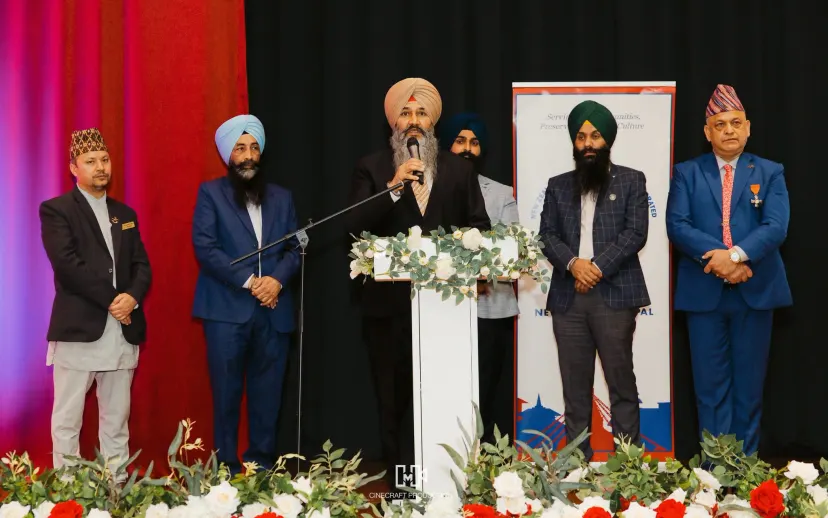
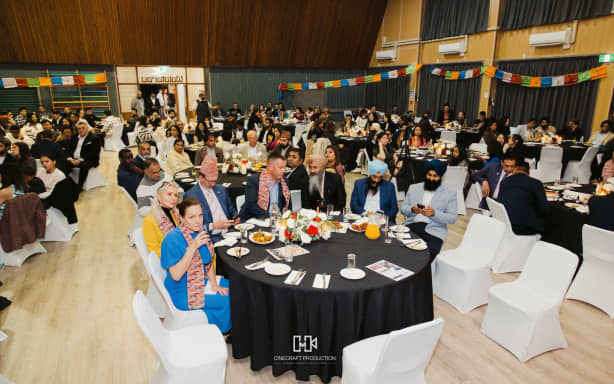
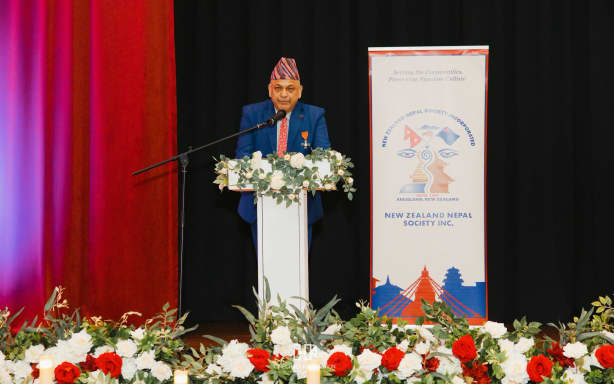
Last week, the Nepali community raised $100,000 through a fundraising dinner at the Freemans Bay Community Centre in Auckland.
The Central Sikh Association donated $50,000 to Nepal that same night.
Earlier this month, Gurdwara Shri Dashmesh Darbaar Sahib in Papatoetoe pledged $15,000, which was matched by the New Zealand Indian Central Association.
Shiv Mandir in Manurewa donated $4000, while Manurewa Local Board member Marshal Ahluwalia and National Party Manurewa candidate Ghouse Majeed donated $7500.
Khadka said the Federation of Islamic Associations of New Zealand had pledged $5000, which would be directly deposited into Nepal’s Prime Minister’s Disaster Relief Fund.
Other fundraising events included a dosa event in Māngere organised by Thiru Subramaniyar Aalayam on 5 September, and a fundraising dinner organised by the Nepal-New Zealand Friendship Society of Canterbury in Rolleston on 12 September.
A similar dinner was organised by the Waikato Indian Association and Nepal-New Zealand Waikato Friendship Society in Hamilton on 9 September, while the Taranaki Nepalese Community is planning a fundraising dinner in New Plymouth on 26 September.
He said the fundraising was a temporary effort to support people who had lost everything in the floods.
“Nepal will take decades to rebuild and whatever we raise now will go to the people who are in most need right now,” he said.
Khadka said more fundraising events were being planned across New Zealand.
Next week, Wellington Mutamizh Sangam’s youth wing will hold a youth festival to raise funds for Nepal, while the Indian Film Festival in October has also pledged to support fundraising efforts for the country, with a Nepali film included in its programme.
Khadka said the response had shown him how much New Zealanders cared about Nepal.
“Wherever we go, I see New Zealanders approaching me and asking how they can support Nepal,” he said.
“That makes me proud of New Zealand and how lucky we are to be called New Zealanders.”
Khadka also warned that some organisations were using the disaster to make money.
“It is very sad to see that there are organisations who are raising money but it doesn’t reach the Prime Minister’s Disaster Relief Fund, so my request to people who are donating their hard-earned money is to make sure that you donate through the right channels,” he said.
Supplied
Khadka said he was receiving regular updates from Nepal Police, who were doing their best to recover bodies and search for survivors.
“More than 1400 bodies [have] already [been] found but they’re looking through the rubble and buildings to find more than 5000 bodies or even survivors,” he said.
Khadka said he did not have an update on the missing New Zealanders.
Five New Zealanders remain missing following the deadly flash floods: Dejan Kuzmic, Shweta Mhatre, Mihir Patel, Kinnari Patel and Suhasini Reddy.
More than 300 foreign nationals have been rescued, according to an update from Nepal’s National Disaster Risk Reduction and Management Authority.
No New Zealanders have been included in that number.
RNZ understands Mhatre and Kuzmic were part of the Isha Foundation’s pilgrimage, and Sadhguru had previously said two New Zealanders were missing from his trekking group.
Meanwhile, Reddy’s family has called on rescuers not to stop searching for the 44-year-old after conflicting reports about her status emerged online.
Reddy’s brother Rajeev and his wife Lauren urged people to keep searching for survivors in a Facebook post several weeks ago.
A spokesperson for the Ministry of Foreign Affairs and Trade said New Zealand’s consular response team in Kathmandu was engaged with local authorities and the Nepalese Government.
“However, challenges on the ground mean that new, verified information will continue to take time to emerge.”
A spokesperson for the Ministry of Foreign Affairs and Trade said New Zealand had extended an offer of technical expertise to aid Nepal’s response effort in addition to humanitarian assistance worth $3.5 million to support the humanitarian response.
rnz
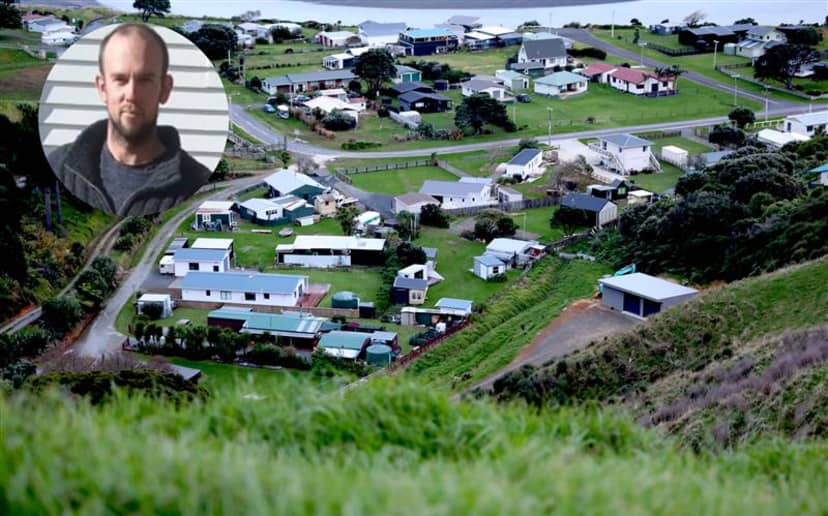
A credible sighting of Tom Phillips in May 2023 was not investigated properly by police as they were diverted to another incident, and police inaction led to avoidable delays, a report has found.
A woman was approached by who she thought was Phillips on 28 May 2023 for help jump starting his car near Te Anga Road. She drove him there, took a photo of him, and sighted his children.
A damning inquiry has found authorities could have prevented Phillips from disappearing with his children – or brought them home sooner.
The report released on Tuesday afternoon said agencies missed crucial chances to protect the children and repeatedly downplayed the harm they faced.
The woman called the police after the sighting and described him as Caucasian, in his late 30s to early 40s. She said he was wearing a black hat, black/grey shirt, black jeans, and work boots.

NZ Police
She said that he smelled strongly and like someone who had not had a shower in a very long time.
She also expressed her concern about the man and the children because they seemed to be stuck in the middle of nowhere on a forestry road. Her and her mother-in-law suspected it was Phillips.
Following the report, police dispatched a unit about half an hour after receiving the call, but that unit was diverted to a family harm incident shortly after at a different address on Te Anga Road. The report noted family harm incidents were usually given priority.
Not long after that, the unit advised no further action was required from police.
There was a brief follow up after this, by an “astute senior constable” but what followed was a “series of unfortunate mis-steps and circumstances” that together “conspired to compound the delay in police properly appreciating and investigating the significance” of the sighting.
There is no evidence that the first unit tasked with the report visited the woman’s home or attempted to visit the location of the sighting. Police have not been able to explain to the inquiry why it was designated as no further action required, without any follow up.
Regarding the 28 May 2023 sighting, the inquiry found police inaction on the day led to avoidable delays.
It said police should have recognised the sighting was credible, and investigated “more thoroughly and in a more timely way,” and had there been no delay, “there might have been a real prospect of locating the children”.
Source: RNZ


Pieces still missing from Tom Phillips inquiry – academic

Police supporting families of New Zealanders missing in Nepal floods

Woman told police she had Tom Phillips in her car in May 2023 – but officers were diverted


-

 Fiji News2 months ago
Fiji finalising diaspora policy to ensure citizens abroad ‘keep coming back’
-

 Latest News2 months ago
41 percent of Kiwis taking on debt to cover increased living costs – Kiwibank
-
 NZ News2 months ago
Mother of Marokopa children says Tom Phillips would take her phone to stop 111 calls
-
 NZ News2 months ago
Coroner told about LynnMall terrorist’s time in prison’s extreme risk unit
-

 Latest News2 months ago
Police searching for missing woman recover body in West Auckland
-
 NZ News2 months ago
Queenstown bouncers guilty of selling drugs while on the job
-

 Sports2 months ago
Junior Bula Boys reach OFC U-16 final, seal U-17 World Cup berth
-
 World2 months ago
Ex-Fiji prosecutions office employee ‘scared to leave Australia’ after leaked corruption allegations