

Latest News
Shane Jones accuses kiwifruit industry of ‘slave practices’, slams National over regional shakeup


NZ First deputy leader Shane Jones has accused the Bay of Plenty kiwifruit industry of “medieval slave practices” at a public meeting, and called for a review of the laws governing Zespri.
The self-proclaimed champion of the regions has also promised New Zealand First will campaign on abolishing regional councils, and criticised National’s approach – saying it has never had New Zealand First’s backing and the mandate for it should be tested at the election.
Jones was railing against the India Free Trade deal and “blockchain migration” in his speech to about 130 people at the Victory Christian Centre in Lower Hutt when he turned his attention to “a deeper question”.
“I don’t know about you, but I’m sick to death of what I’ve seen up in the kiwifruit industry: medieval slave practices,” he said.
“When the United States is calling out New Zealand as being responsible for the provision of goods and services that are associated with slave labour, look no further than the egregious cases of what we’re seeing in the Bay of Plenty and the migrant groups that are being exploited there.”
He said that could not be afforded and it was about time “we started to train more of our own young people”.
Trade Minister Todd McClay in July rejected the United States administration’s justification for newly reimposed 12.5 percent tariffs on the basis of “forced labour” in New Zealand.
“They are just looking for any means that they can to put tariffs back on… I strongly reject that there is any support at all in the New Zealand system for forced labour. We’re not involved in it. It doesn’t happen through our trade. It doesn’t exist in New Zealand,” McClay said at the time.
Jones told reporters after the public meeting that the kiwifruit industry “dominated by Zespri, is losing its social licence” and the next government should review the legislation which grants Zespri a legal export monopoly.
“It is riddled with cases of mediaeval labour practices, egregious taxation practices, and I fear that allegations of slave labour that are made from time to time by America against New Zealand are traceable back to migrant gangs exploiting the goodwill of Kiwis and ruining the reputation of an important industry called the kiwifruit industry. But that also can be shot home to the Zespri company and the orchard owners.”
He believed “more systemic change” was needed than merely increasing the Labour Inspectorate’s resources to deal with what he called “industrial-scale corruption”.
“Casey Costello, who’s been involved in this, has already got a model for us. It’s the anti-corruption model,” he said.
“All state agencies, as the IRD are now doing by issuing a red alert, should join forces and root out these cases of potential slave labour … look no further than kiwifruit industry and those egregious cases that need to be not only terminated but the people associated with it, they need to be 501’d out to where they come from.”
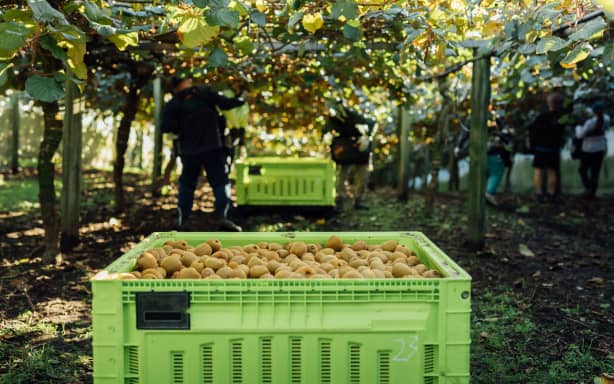
Zespri
The NZ Herald reported last May on an illegal migrant allegedly exploited as a “money mule” to funnel more than $3 million through his bank accounts and withdrawn as cash.
At the time, Customs and Associate Police Minister Costello – a former police detective sergeant who later worked on investigating labour exploitation, and entered Parliament at third on NZ First’s list at the last election – pointed to the Ministerial Advisory Group on organised crime she set up earlier in 2025.
“I saw these issues first-hand when I was working to prevent migrant exploitation before entering politics,” she said.
“Numerous countries have introduced statutory requirements to ensure that wage payments are made through verifiable, electronic means, to enhance compliance and combat financial misconduct.”
She had also called for an end to cash payments for professions like lawyers and immigration consultants, and a joint approach to investigations and prosecutions.
“It’s time for a review of the Zespri legislation,” Jones said on Sunday, “because I fear that they have trivialised their social licence, and we mean to do something about it if we come back into power.”
Zespri responds
A Zespri spokesperson said the company wanted everyone in the industry to be safe and well looked after no matter where they were working.
“Any allegations of poor working conditions are taken seriously and investigated, with action taken wherever possible, including proactive on reporting to government agencies to consider further enforcement action.
“We have extensive systems in place to both keep the wrong people out of the industry and then to remove them when they are found.”
The spokesperson said all growers supplying the company were certified to internationally recognised independent certification system GLOBALG.A.P and compulsory employer module GRASP which includes requirements for worker safety and health and welfare.
“All potential contractors go through a vetting process administered by independent private ethical labour investigators AIM CRI Ltd during the application process to assess if they will be able to meet the required standards.
“These contractors must also hold a CAV (Compliance Assessment Verification). To get this, they must show they have the appropriate systems in place to meet GAP and GRASP requirements including providing a safe work environment, with inspections taking place annually to observe that these systems are operating effectively.”
Zespri said any who failed to comply were removed from its published list of approved contractors, and a separate list of such contractors was also published to the industry.
“To address issues when they arise, we work closely with government agencies and use AIM CRI Ltd to robustly investigate allegations of misconduct and to support a strong response. These investigations will often result in us passing files on to enforcement agencies to take action.
“To help ensure issues are brought to our attention Zespri also has a dedicated Speak Up Line in place for anyone who has concerns about poor practice taking place within the industry and we encourage anyone with concerns to contact this confidential information line. We also have a dedicated Industry Compliance team which continues its work to strengthen our compliance programme.”
Zespri said its discussions with authorities about removing operators failing to meet its standards had previously led to successful prosecutions, “removing poor operators from the industry”.
“The vast majority of employers in the industry look after their people. Any exploitation of workers is unacceptable and alongside the government and NZKGI we will continue to do everything we can to ensure an industry free from exploitation and one where people are valued, supported and safe in their jobs.”
NZ First favours catchment groups to replace regional councils
Jones had also spoken of his party’s plans to “do away with your regional councils”, but would not “shoehorn you into a single model”.
“That’s on you, the community, to work with your ratepayer associations, to work with your community boards and your elected representatives to identify a type of reform model that improves not only responsiveness but your sense of confidence as to where you live,” he told the gathered congregation.
“Other parties might be trying to force rapid change. We are going to campaign on it and then after the election we will feel – depending on the quality of the voting result – that we have a mandate.”
Speaking to reporters, he said regional councils would be “no longer fit for purpose” thanks to the councils’ “chequered history” and the changes to resource management laws.
Using Wairau as an example, he said far too much authority was placed with “distant bureaucratic offices such as Napier and Hawke’s Bay”.
“We’re very taken with catchment boards and catchment groups having more authority. It worked in the past. It ensures that more local ownership is exercised for rivers, for other catchment features, rather than it being centralised in a bureaucracy,” he said.
That contrasted with the government’s approach to reforming regional councils, where National Party ministers Chris Bishop and Simon Watts had handed down an ultimatum for councils to “lead your own reform, or we will do it for you”.
Watts this month confirmed to RNZ more than two thirds of councils had submitted proposals for reorganisation – but nearly 20 had not.
Jones on Sunday suggested that approach should have been campaigned on.
“National’s model must be taken by them via a manifesto to the public. Winston Peters has never once agreed that their preferences will see the light of day before the election. We never ever agreed for a massive statutory reformation through Parliament of local government before the election,” he said.
rnz

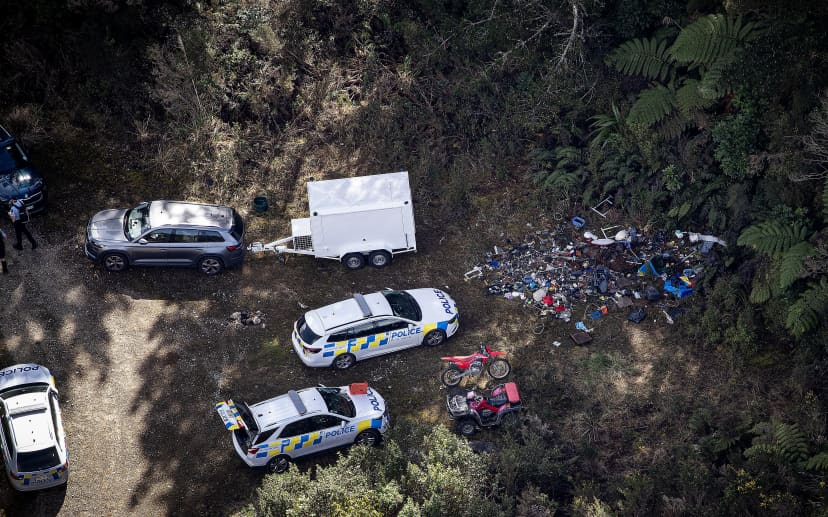

The Ministry of Foreign Affairs and Trade says police are supporting the families of five New Zealanders who remain missing after August’s catastrophic flash flood at the Nepal-China border.
A massive flash flood, believed to have been triggered by a glacial collapse, tore through a Himalayan valley on 26 August, burying villages.
The disaster killed more than 1300 people, with at least 5000 others unaccounted for, according to latest reports on both sides of the border.
In New Zealand, community groups have raised more than $200,000 for the flood victims, according to former honorary consul for Nepal Dinesh Khadka.
“I’m so proud of the Indian community here who … supported us, saying it is not a Nepal problem but our problem,” Khadka said.
He said about 80 percent of the donations had come from New Zealand’s Indian community.

Supplied
Last week, the Nepali community raised $100,000 through a fundraising dinner at the Freemans Bay Community Centre in Auckland.
The Central Sikh Association donated $50,000 to Nepal that same night.
Earlier this month, Gurdwara Shri Dashmesh Darbaar Sahib in Papatoetoe pledged $15,000, which was matched by the New Zealand Indian Central Association.
Shiv Mandir in Manurewa donated $4000, while Manurewa Local Board member Marshal Ahluwalia and National Party Manurewa candidate Ghouse Majeed donated $7500.
Khadka said the Federation of Islamic Associations of New Zealand had pledged $5000, which would be directly deposited into Nepal’s Prime Minister’s Disaster Relief Fund.
Other fundraising events included a dosa event in Māngere organised by Thiru Subramaniyar Aalayam on 5 September, and a fundraising dinner organised by the Nepal-New Zealand Friendship Society of Canterbury in Rolleston on 12 September.
A similar dinner was organised by the Waikato Indian Association and Nepal-New Zealand Waikato Friendship Society in Hamilton on 9 September, while the Taranaki Nepalese Community is planning a fundraising dinner in New Plymouth on 26 September.
He said the fundraising was a temporary effort to support people who had lost everything in the floods.
“Nepal will take decades to rebuild and whatever we raise now will go to the people who are in most need right now,” he said.
Khadka said more fundraising events were being planned across New Zealand.
Next week, Wellington Mutamizh Sangam’s youth wing will hold a youth festival to raise funds for Nepal, while the Indian Film Festival in October has also pledged to support fundraising efforts for the country, with a Nepali film included in its programme.
Khadka said the response had shown him how much New Zealanders cared about Nepal.
“Wherever we go, I see New Zealanders approaching me and asking how they can support Nepal,” he said.
“That makes me proud of New Zealand and how lucky we are to be called New Zealanders.”
Khadka also warned that some organisations were using the disaster to make money.
“It is very sad to see that there are organisations who are raising money but it doesn’t reach the Prime Minister’s Disaster Relief Fund, so my request to people who are donating their hard-earned money is to make sure that you donate through the right channels,” he said.
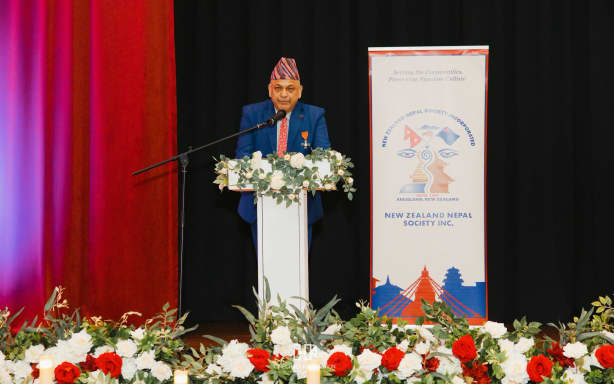
Supplied
Khadka said he was receiving regular updates from Nepal Police, who were doing their best to recover bodies and search for survivors.
“More than 1400 bodies [have] already [been] found but they’re looking through the rubble and buildings to find more than 5000 bodies or even survivors,” he said.
Khadka said he did not have an update on the missing New Zealanders.
Five New Zealanders remain missing following the deadly flash floods: Dejan Kuzmic, Shweta Mhatre, Mihir Patel, Kinnari Patel and Suhasini Reddy.
More than 300 foreign nationals have been rescued, according to an update from Nepal’s National Disaster Risk Reduction and Management Authority.
No New Zealanders have been included in that number.
RNZ understands Mhatre and Kuzmic were part of the Isha Foundation’s pilgrimage, and Sadhguru had previously said two New Zealanders were missing from his trekking group.
Meanwhile, Reddy’s family has called on rescuers not to stop searching for the 44-year-old after conflicting reports about her status emerged online.
Reddy’s brother Rajeev and his wife Lauren urged people to keep searching for survivors in a Facebook post several weeks ago.
A spokesperson for the Ministry of Foreign Affairs and Trade said New Zealand’s consular response team in Kathmandu was engaged with local authorities and the Nepalese Government.
“However, challenges on the ground mean that new, verified information will continue to take time to emerge.”
A spokesperson for the Ministry of Foreign Affairs and Trade said New Zealand had extended an offer of technical expertise to aid Nepal’s response effort in addition to humanitarian assistance worth $3.5 million to support the humanitarian response.
rnz
Latest News
NRL finals schedule: Who plays who in week 2 and how the Warriors can make the Grand Final

The Warriors will need to take the hard path to the NRL Grand Final, having lost to the Dolphins in their qualifier at Go Media Mount Smart Stadium.
A victory in week one would have seen the Warriors take a week off and advance straight to the preliminiary finals in week three.
Instead they’ll take on the Newscastle Knights in a must-win elimination final on Sunday.
Here’s who plays who next:
Week two: Semi-finals
The teams that lost their qualifying finals get another chance. They play the winners of the elimination finals in two sudden death games.
The two winners would then move on to the preliminary finals.
- Cronulla Sharks v Sydney Roosters, Saturday, 9.50pm at Allianz Stadium, Sydney
- Warriors v Newcastle Knights, Sunday 6.05pm at Eden Park, Auckland
Warriors boss Cameron George is expecting Sunday’s game to sell out, in what he describes as an international for his side.
“It’s us versus Australia. So the more people we get there, the better New Zealand will be.
“There are 17 teams in this comp and we’re the only one from here so it’s us against them. This is our New Zealand grand final in the NRL and it’s pretty special.”
Warriors club members can buy tickets from midday Monday with general public tickets going on sale Tuesday.

Andrew Cornaga/www.photosport.nz
Week three: Preliminary final
The four remaining teams play in the preliminary finals.
The Panthers and Dolphins have advanced straight to the prelims where they’ll meet the winners of the semi finals.
If the Warriors win against the Knights this weekend, they’ll go on to play the Panthers.
The winner of the Sharks v Roosters match this weekend will face the Dolphins.
The winners book their place in the Grand Final.
rnz


National vows to try to split Pak’nSave and New World

Tom Phillips report: The missed opportunities to find the children

Pieces still missing from Tom Phillips inquiry – academic


-

 Fiji News2 months ago
Fiji finalising diaspora policy to ensure citizens abroad ‘keep coming back’
-

 Latest News2 months ago
41 percent of Kiwis taking on debt to cover increased living costs – Kiwibank
-

 NZ News2 months ago
Mother of Marokopa children says Tom Phillips would take her phone to stop 111 calls
-

 NZ News2 months ago
Coroner told about LynnMall terrorist’s time in prison’s extreme risk unit
-

 Latest News2 months ago
Police searching for missing woman recover body in West Auckland
-

 NZ News2 months ago
Queenstown bouncers guilty of selling drugs while on the job
-

 Sports2 months ago
Junior Bula Boys reach OFC U-16 final, seal U-17 World Cup berth
-

 World2 months ago
Ex-Fiji prosecutions office employee ‘scared to leave Australia’ after leaked corruption allegations