

NZ News
Disputes Tribunal orders Kmart to pay Christchurch couple over contaminated sand


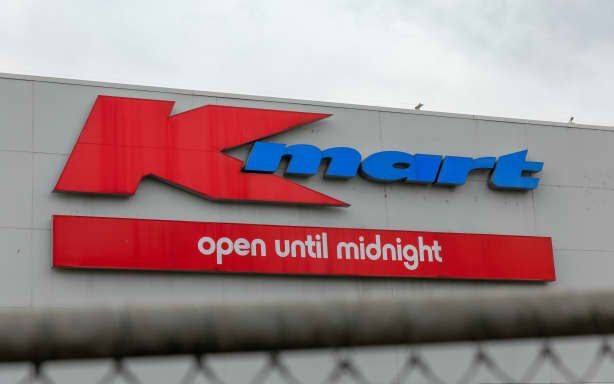
Kmart has been ordered to pay thousands to a Christchurch couple whose toddlers played with asbestos-contaminated sand.
Last year, the retail giant was part of a nationwide recall of coloured play sand products, after they tested positive for tremolite – a form of asbestos associated with higher cancer risks at low exposure levels.
Elle Chrisp and David Dingwall took Kmart to the Disputes Tribunal, seeking re-imbursement for costs associated with asbestos contamination and future medical monitoring.
The Christchurch pair claimed $60,000 in total.
In a recent decision, the tribunal ordered Kmart to pay the family $15,185.42 to cover costs associated with asbestos testing and remediation.
It found the play sand purchased was unsafe, not fit for purpose and not of acceptable quality under the Consumer Guarantees Act.
Supplied / Screenshot
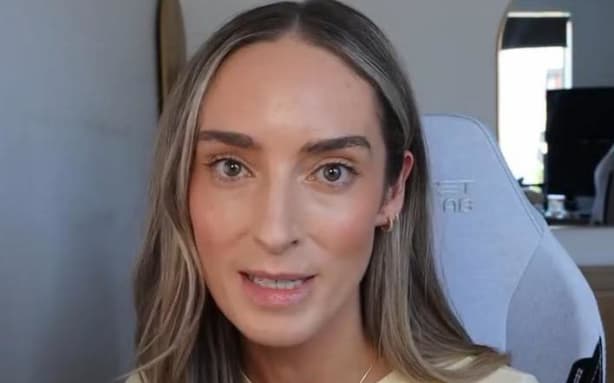
Elle Chrisp said the family had bought 4kg of the sand and it was in their backyard where their three-year-old twins played with it.
But she said from time to time the sand would end up inside the house as well as it came in on their shoes and clothes.
“We had our sand independently tested, it came back with tremolite asbestos, we were phoned and the advice we were given was to evacuate our home immediately taking just the clothes on our back, nothing else, leaving everything behind.”
That was because further environmental testing was needed to find out exactly where the asbestos contamination was, she said.
Fortunately the testing showed the contamination was limited to backyard area, she said.
RNZ / Cole Eastham-Farrelly
The family incurred a number of costs in this process, she said, including lab testing, having to dispose of a lot of items such as toys that were stored outside and remediation to make the outdoor area safe.
The family was also not able to use the outdoor area for 67 days until it was remediated, she said.
Chrisp said they took the case to the tribunal because the product was unsafe and that was what they wanted to establish.
“We weren’t seeing that communicated anywhere, parents were told that they were overreacting, it was low risk, it was never low risk, it was never safe and that was what the decision came to.”
She said she was pleased that Kmart had to attend the tribunal hearing.
“Because we did not have any engagement from them at all prior to going to the tribunal and that’s why we were so thankful the disputes tribunal process existed because it put us on an even footing with a huge company who otherwise could have ignored us.”
The tribunal process which doesn’t use lawyers was great because it was built for ordinary people to be able to get a fair outcome, she said.
Chrisp said they were very happy with the outcome of their tribunal case.
“Ultimately for us it was wanting a public ruling that this is enforceable.”
Referee Cynthia Hawes said the sand should not have been offered for sale.
“I do not think that any reasonable parent, acquainted with the fact that the moulding sand contained asbestos, and regardless of the quantity or proportion in the sand, would purchase it for his or her child to play with.”
The claim for medical expenses was not allowed.
A Kmart spokesperson said the product recall was part of a broader industry issue.
“When the matter became known to us, we acted quickly by removing affected products from sale, issuing recall notices, and supporting customers with refunds and guidance on safely disposing of the products based on regulatory advice.”
They said the company was reviewing the tribunal’s decision.
“We remain focused on supporting our customers on this matter while being guided by evidence, expert advice and the relevant regulators.”
Consumer NZ head of research and advocacy Gemma Rasmussen said Chrisp and Dingwall spent months gathering evidence, and forked out thousands of dollars to take Kmart to the Disputes Tribunal.
She said the ruling found “firmly in the family’s favour”.
“It is completely reasonable for them to undertake everything that they did from testing to vacating their home, and Kmart should have to pay for that.”
Rasmussen said the ruling did not set a precedent, but it sent a clear message and she hoped other families were encouraged to make claims.
However, she said the order ultimately showed the difficulty in getting redress following a product safety failure.
She said current laws were too reactive and regulatory reform was needed.
“Our market place has dramatically changed from major retailers like Kmart selling thousands of goods to people shopping on platforms like Temu and Ali Express, and we really need the government to take this a little more seriously.”
Minister of Commerce and Consumer Affairs Cameron Brewer has been approached for comment.
Source: RNZ


Latest News
Opportunities to mitigate multi-million-dollar RNZ budget blowout likely missed – experts

Multiple opportunities to identify and mitigate a multi-million-dollar budget blowout at RNZ appear have been missed, according to the former executive director at Audit New Zealand.
The public broadcaster on Monday revealed a near $12 million shock financial loss after a litany of financial blunders, which will now lead to sweeping job cuts.
The $11.8m loss is more than 25 times the $470,000 RNZ had expected to lose over the year to June.
CEO Paul Thompson took responsibility for the result, and said internal reports gave an inaccurate picture of the finances, meaning the scale of the loss only became clear in October.
RNZ’s former chief financial officer Hilary Parker resigned unexpectedly in early October.
The board said it would commission an independent review into what went wrong.
Independent contractor Stephen Walker, who left the Audit Office earlier this year, said the size of the loss was surprising, as was the length of time it took to identify it – months after the financial year ended.

Supplied / OAG
“Probably more of a concern is that they had seemingly been unaware that they were running up a significant deficit until they were in the preparation stage of their annual report in October.”
Walker said public entities typically produced monthly financial reports.
An interim audit also took place before the end of the financial year, he said, but if the organisation hadn’t identified significant losses at that stage, the auditor could also be in the dark.
“It seems that there’s a real weakness in forecasting and budgeting that’s occurred here and that the monthly accounts, when they’re produced, either haven’t identified these significant variances against budget or the magnitude of them really hasn’t come to light until right towards the end of the financial year,” Walker said.
“And really at that point, there’s no opportunity for the chief executive, the leadership team to take, and the board to take, any corrective action because the year has effectively been completed.”
Walker said the “significant miss” was difficult to account for given it was more than 10 percent of RNZ’s total funding.
He said based on RNZ’s annual report, financial complexity didn’t appear to be a factor.
“This $11.8m loss isn’t made up of one particular item … it seems to have been contributed to by a number of separate expense lines running over budget. So I don’t think it’s necessarily to do with complexity.”
Among the errors, RNZ wrongly counted $2m from land sales as income in its budget. Staff costs also came in $3.2m over budget, including $1.4m in redundancy payments.
Professor at Auckland University’s business school Norman Wong said based on media reports the issues identified were “significant and troubling”.

Supplied / University of Auckland
“But recognising the sale of land as income in their budget is a basic error that one would have expected to have been caught and corrected well before it got to this point.”
With funding reductions at RNZ over the past two years, Walker expected greater scrutiny of financial results.
“Virtually every public entity has had their annual budget reduced. And so you would expect … the leadership team on a monthly basis and board – I’m not sure how frequently the board will consider the information – but you would expect them to be interrogating the results on a regular basis throughout the year,” he said.
Walker said initiating an independent review was the correct course of action and that he’d want to understand what information the leadership team and the board were regularly receiving.
He said he’d “love to say” surprising financial results were rare, but conceded they occured on a semi-frequent basis during his time leading the Audit Office.
“The benefit of independent scrutiny by the Audit Office – and the auditors providing that support to the Auditor General – [is] that the reporting is fairly presented at the end of the year, whether it’s good, bad or ugly.”
rnz


Police say person who fired gun at officers still at large

New Zealand sides named for RLWC finals

Parliamentary Service working on extra chairs and offices for increased number of MPs


-

 Latest News2 months ago
‘Chilling’: Business groups speak out against National’s supermarket break-up plan
-

 NZ News2 months ago
Tom Phillips report: The missed opportunities to find the children
-

 Politics2 months ago
National vows to try to split Pak’nSave and New World
-

 Latest News2 months ago
Cars bearing Chinese police markings stir unease in Auckland
-

 Fiji News2 months ago
Plans to have new Constitution by Dec 24th 2026
-

 NZ News2 months ago
Cop who stole $68,000 can now be named as champion Muay Thai fighter Haimona Tamati-Te Paki
-

 Politics2 months ago
MBIE confirms botched biometric projects costs blown out to $50.7 million
-

 Latest News2 months ago
Five Karangahape Road venues lose their liquor licences after police intervention