

Latest News
English to become official language of NZ alongside Te Reo Māori and sign language


English will join Te Reo Māori and sign language as an official language of New Zealand, after the English Language Bill passed its third and final reading at Parliament.
The bill, in the name of Justice Minister Paul Goldsmith, is just two pages long, and states English “has long been a de facto official language in New Zealand, that is, widely used and accepted as an official language, but its official language status is not set out in legislation”.
Once again, Goldsmith did not contribute to the debate. He has previously said the bill was not a priority, but was a coalition commitment.
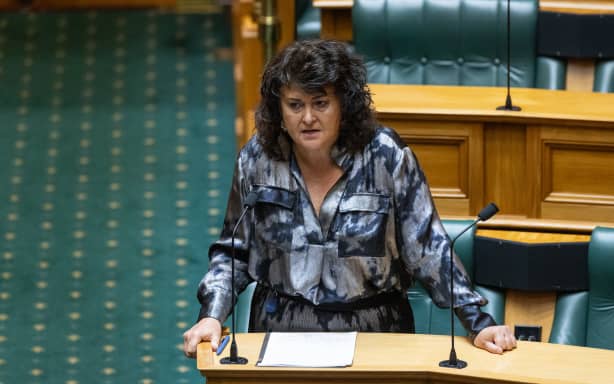
New Zealand First got the bill into the coalition agreement, and speaking at the third reading, MP Casey Costello said the bill was important to the “hard-working Kiwi battlers” her party represented, and denied it was a waste of time.
“It is not trivial, unnecessary, or a distraction to this House in a democracy to deliver for those who elected us to this House,” she said.
Costello said the bill provided clarity and certainty in legislation, and changed none of the existing legal protections afforded to Te Reo Māori or New Zealand sign language.
Her contribution was significantly less combative than New Zealand First leader Winston Peters’ call at the first reading of the legislation in February.
VNP / Louis Collins
Back then, Peters said the purpose of the bill was to help solve a “virtue signalling narrative,” and that New Zealand should be using English as the primary and language.
Now, his colleague Costello said the purpose of the bill was providing clarity in law.
“This is a practical measure. It aligns the statute book with long-standing practice, and provides a clear statement about the status of English within New Zealand’s official framework.”
‘Snowflake government’ – opposition questions the bill’s purpose
Opposition parties have questioned the government’s priorities, given most laws are already written in English.
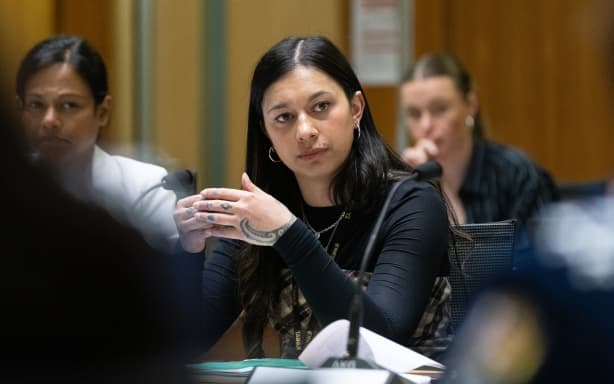
Green MP Tamatha Paul said the bill’s proponents were “bunch of snowflakes that hear the word Aotearoa and cry themselves to sleep,” and noted English was also not an official language of England.
“Let me tell you why Te Reo Māori has a protected language status, because it was beaten out of Māori systematically. We had to march our arses to Parliament, demanding that the indigenous first language of this country be recognised and not beaten out of the mouth of its native speakers.”
VNP / Phil Smith
Paul has recently returned from a cross-party visit to the Welsh Senedd.
“They’ve got their their beautiful indigenous language, Cymraeg, everywhere before English. And guess what? The world didn’t fall over, and the world didn’t end. People still knew where they were going. In fact, people saw it and thought, ‘wow, we’re in a country that values their indigenous language and identity,’ unlike our snowflake government that cannot handle Te Reo Māori.”
Her colleague Lawrence Xu-Nan, who on Wednesday had been told by Peters to “go back to your own country,” asked what the House was protecting the English language from.
“What is an example where English has not been otherwise provided for? There is no response to that. Because there is no instance that a minister can think of that will make this bill fulfil any requirement of why we need to legislate or give a legislative recognition of an official language status to English.”
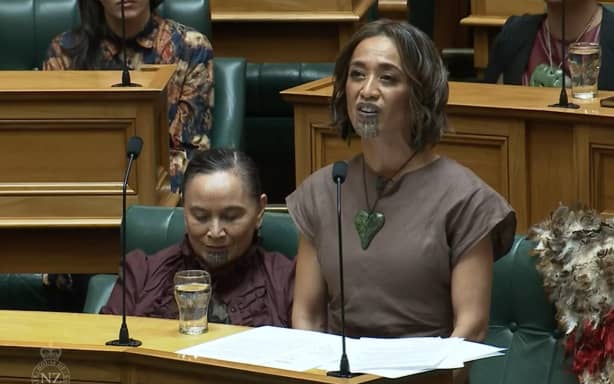
Speaking in Te Reo Māori, Te Pāti Māori MP Oriini Kaipara spoke of the “pain Māori has taken to establish its space in this country,” while English had not followed the same path.
“What benefit will come from this kaupapa, from this event? Why are these hours and the time of all of these Members being used up in this way? Why are we spending all this time on this bill, when we know that English is already the main language of New Zealand?”
Parliament TV
Despite being opposed to the legislation philosophically, Labour voted it through the House.
Labour MP Duncan Webb said the bill was “silly” and “meaningless”, while his colleague Camilla Belich said New Zealand First was attempting to politicise what was already a self-evident truth.
“I wondered if they might want to legislate for the changing of the seasons? Or for the fact that there are sometimes four seasons in one day in Auckland, or whether they should legislate for the southerly winds to blow through Wellington?”
ACT’s Simon Court said his party supported the bill because many New Zealanders had been asking for it.
“When we go to a hospital, for example, and we want to find our way to the ward, find our way to an appointment, of course, the English language is important. Same if you’re an air traffic controller. Better make sure you’re using English so the pilots understand how to land, where to land the plane.”
In a sign the bill was not really a National Party priority, National MPs’ contributions were short.
Carl Bates and Paulo Garcia said little more than their commending the bill to the House, Greg Fleming delivered his contribution mostly in Te Reo Māori, and Vanessa Weenink said sometimes the best medical intervention one could do was as much of nothing as possible.
“English was the principal language of this house before this bill. It will be our principal language after this bill. The only thing, Madam Speaker, that has really changed, is that we’ve spent several hours speaking in English about it,” she said.

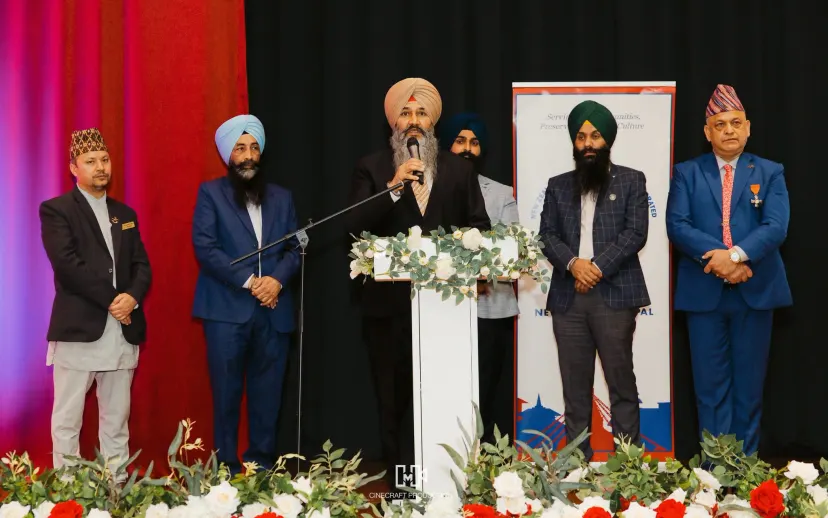
The Ministry of Foreign Affairs and Trade says police are supporting the families of five New Zealanders who remain missing after August’s catastrophic flash flood at the Nepal-China border.
A massive flash flood, believed to have been triggered by a glacial collapse, tore through a Himalayan valley on 26 August, burying villages.
The disaster killed more than 1300 people, with at least 5000 others unaccounted for, according to latest reports on both sides of the border.
In New Zealand, community groups have raised more than $200,000 for the flood victims, according to former honorary consul for Nepal Dinesh Khadka.
“I’m so proud of the Indian community here who … supported us, saying it is not a Nepal problem but our problem,” Khadka said.
He said about 80 percent of the donations had come from New Zealand’s Indian community.
Supplied
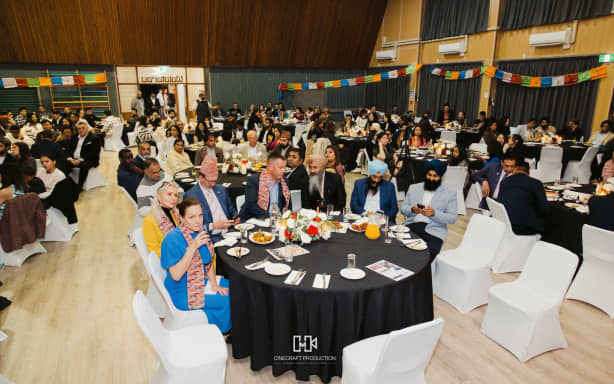
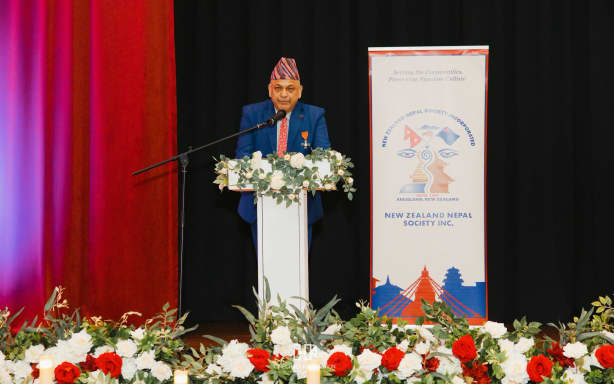
Last week, the Nepali community raised $100,000 through a fundraising dinner at the Freemans Bay Community Centre in Auckland.
The Central Sikh Association donated $50,000 to Nepal that same night.
Earlier this month, Gurdwara Shri Dashmesh Darbaar Sahib in Papatoetoe pledged $15,000, which was matched by the New Zealand Indian Central Association.
Shiv Mandir in Manurewa donated $4000, while Manurewa Local Board member Marshal Ahluwalia and National Party Manurewa candidate Ghouse Majeed donated $7500.
Khadka said the Federation of Islamic Associations of New Zealand had pledged $5000, which would be directly deposited into Nepal’s Prime Minister’s Disaster Relief Fund.
Other fundraising events included a dosa event in Māngere organised by Thiru Subramaniyar Aalayam on 5 September, and a fundraising dinner organised by the Nepal-New Zealand Friendship Society of Canterbury in Rolleston on 12 September.
A similar dinner was organised by the Waikato Indian Association and Nepal-New Zealand Waikato Friendship Society in Hamilton on 9 September, while the Taranaki Nepalese Community is planning a fundraising dinner in New Plymouth on 26 September.
He said the fundraising was a temporary effort to support people who had lost everything in the floods.
“Nepal will take decades to rebuild and whatever we raise now will go to the people who are in most need right now,” he said.
Khadka said more fundraising events were being planned across New Zealand.
Next week, Wellington Mutamizh Sangam’s youth wing will hold a youth festival to raise funds for Nepal, while the Indian Film Festival in October has also pledged to support fundraising efforts for the country, with a Nepali film included in its programme.
Khadka said the response had shown him how much New Zealanders cared about Nepal.
“Wherever we go, I see New Zealanders approaching me and asking how they can support Nepal,” he said.
“That makes me proud of New Zealand and how lucky we are to be called New Zealanders.”
Khadka also warned that some organisations were using the disaster to make money.
“It is very sad to see that there are organisations who are raising money but it doesn’t reach the Prime Minister’s Disaster Relief Fund, so my request to people who are donating their hard-earned money is to make sure that you donate through the right channels,” he said.
Supplied
Khadka said he was receiving regular updates from Nepal Police, who were doing their best to recover bodies and search for survivors.
“More than 1400 bodies [have] already [been] found but they’re looking through the rubble and buildings to find more than 5000 bodies or even survivors,” he said.
Khadka said he did not have an update on the missing New Zealanders.
Five New Zealanders remain missing following the deadly flash floods: Dejan Kuzmic, Shweta Mhatre, Mihir Patel, Kinnari Patel and Suhasini Reddy.
More than 300 foreign nationals have been rescued, according to an update from Nepal’s National Disaster Risk Reduction and Management Authority.
No New Zealanders have been included in that number.
RNZ understands Mhatre and Kuzmic were part of the Isha Foundation’s pilgrimage, and Sadhguru had previously said two New Zealanders were missing from his trekking group.
Meanwhile, Reddy’s family has called on rescuers not to stop searching for the 44-year-old after conflicting reports about her status emerged online.
Reddy’s brother Rajeev and his wife Lauren urged people to keep searching for survivors in a Facebook post several weeks ago.
A spokesperson for the Ministry of Foreign Affairs and Trade said New Zealand’s consular response team in Kathmandu was engaged with local authorities and the Nepalese Government.
“However, challenges on the ground mean that new, verified information will continue to take time to emerge.”
A spokesperson for the Ministry of Foreign Affairs and Trade said New Zealand had extended an offer of technical expertise to aid Nepal’s response effort in addition to humanitarian assistance worth $3.5 million to support the humanitarian response.
rnz
Latest News
NRL finals schedule: Who plays who in week 2 and how the Warriors can make the Grand Final

The Warriors will need to take the hard path to the NRL Grand Final, having lost to the Dolphins in their qualifier at Go Media Mount Smart Stadium.
A victory in week one would have seen the Warriors take a week off and advance straight to the preliminiary finals in week three.
Instead they’ll take on the Newscastle Knights in a must-win elimination final on Sunday.
Here’s who plays who next:
Week two: Semi-finals
The teams that lost their qualifying finals get another chance. They play the winners of the elimination finals in two sudden death games.
The two winners would then move on to the preliminary finals.
- Cronulla Sharks v Sydney Roosters, Saturday, 9.50pm at Allianz Stadium, Sydney
- Warriors v Newcastle Knights, Sunday 6.05pm at Eden Park, Auckland
Warriors boss Cameron George is expecting Sunday’s game to sell out, in what he describes as an international for his side.
“It’s us versus Australia. So the more people we get there, the better New Zealand will be.
“There are 17 teams in this comp and we’re the only one from here so it’s us against them. This is our New Zealand grand final in the NRL and it’s pretty special.”
Warriors club members can buy tickets from midday Monday with general public tickets going on sale Tuesday.

Andrew Cornaga/www.photosport.nz
Week three: Preliminary final
The four remaining teams play in the preliminary finals.
The Panthers and Dolphins have advanced straight to the prelims where they’ll meet the winners of the semi finals.
If the Warriors win against the Knights this weekend, they’ll go on to play the Panthers.
The winner of the Sharks v Roosters match this weekend will face the Dolphins.
The winners book their place in the Grand Final.
rnz


National vows to try to split Pak’nSave and New World

Tom Phillips report: The missed opportunities to find the children

Pieces still missing from Tom Phillips inquiry – academic


-

 Fiji News2 months ago
Fiji finalising diaspora policy to ensure citizens abroad ‘keep coming back’
-

 Latest News2 months ago
41 percent of Kiwis taking on debt to cover increased living costs – Kiwibank
-

 NZ News2 months ago
Mother of Marokopa children says Tom Phillips would take her phone to stop 111 calls
-
 NZ News2 months ago
Coroner told about LynnMall terrorist’s time in prison’s extreme risk unit
-

 Latest News2 months ago
Police searching for missing woman recover body in West Auckland
-

 NZ News2 months ago
Queenstown bouncers guilty of selling drugs while on the job
-

 Sports2 months ago
Junior Bula Boys reach OFC U-16 final, seal U-17 World Cup berth
-
 World2 months ago
Ex-Fiji prosecutions office employee ‘scared to leave Australia’ after leaked corruption allegations