

NZ News
More than a dozen arrested, $6.5m worth of cannabis seized in Rotorua operation


More than a dozen people have been arrested and $6.5 million worth of cannabis removed from the black market after a six month police operation.
Detective Inspector Lindsay Pilbrow, Bay of Plenty Field Crime Manager said the significant operation shut down 14 grow houses in Rotorua.
The operation was a joint investigation between Police and Immigration New Zealand officers from the Ministry of Business, Innovation and Employment (MBIE).
It was targeting residential rental properties being used to house large-scale commercial cannabis growing operations involving Vietnamese organised crime groups.
Of the 16 Vietnamese nationals arrested, 14 were facing charges related to the cannabis growing setup and other associated offences. Two were arrested in relation to Immigration Act Offences.
Five residential properties, 21 bank accounts and two vehicles were also been restrained.

SUPPLIED/POLICE
As well as cannabis, tens of thousands of dollars of cash were seized, along with cannabis growing equipment.
Police had searched 21 residential properties searched across Rotorua and found 14 had “active and significant” cannabis growing operations. Ten of the houses were rental properties located in residential areas.
“This was a well organised, significant and well-resourced grow operation with all the properties were linked to the same criminal network. Police believe the drugs were destined for sale to other organised criminal groups to on sell,” Pilbrow said.

SUPPLIED/POLICE
“Over 3500 high value plants were seized along with 97 pounds of dried cannabis head packaged and ready for the wholesale market
“The cannabis seized has a bulk sale value of $1.8 million, but has a potential street market value well in excess of $6.5 million depending on how it is sold.”
Police were also alleging all the houses had been using stolen power illegally diverted by the offenders from nearby power boxes, estimating $30,000 worth of power had been diverted per week to run the grow houses.
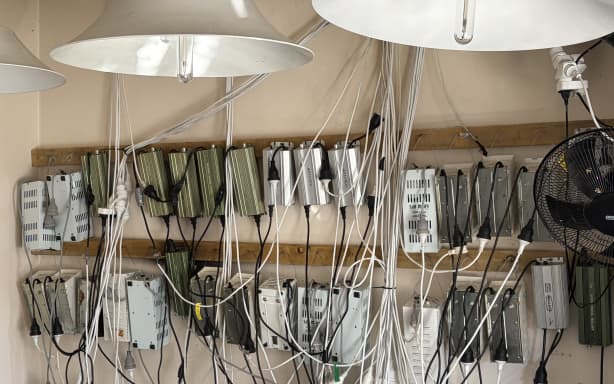
“The scale of this operation is one I’ve not seen before. It is a multimillion-dollar business used to fund other organised criminal activities. We believe the equipment located and seized at the grow houses is worth more than $1 million alone,” Pilbrow said.
SUPPLIED/POLICE
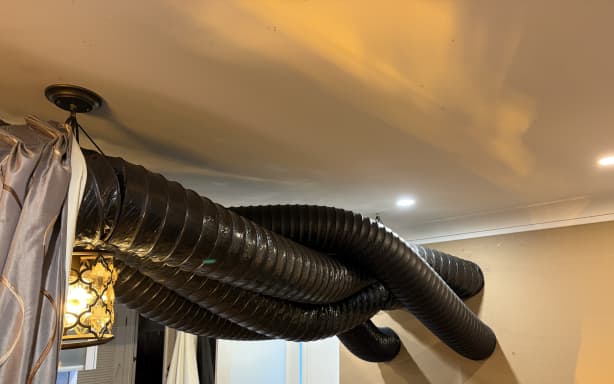
“Many of these houses were packed to the brim with cannabis plants at various stages of growth. Houses had been altered to allow maximum use of space, with specialised timing and ventilation systems fitted to assist in the growing and to also avoid detection.
Pilbrow said this would be a “significant blow” to those involved in the drug operation.
“These organised criminal groups have embedded themselves within communities simply to cause harm. Not only does the drug use put people at harm, but the associated offending such as the theft of electricity is a significant risk to households and members of the public.”
More than 220 staff from across Bay of Plenty, Waikato and Auckland districts were involved, as well as support from electrical companies to make the properties safe and assist with the investigation phase.

SUPPLIED/POLICE
The operation is still ongoing, and police say more search activity is planned in Auckland and the Bay of Plenty with further arrests and charges have not been ruled out.
Police said they continue to see an increase in rental properties in suburban areas being converted into large-scale cannabis growing operations funded and controlled by organised criminal groups.
Police said illegal drugs cause significant harm to individuals, families and communities and police encourage anyone with information about drug-related offending to come forward by calling 111 if it is happening now, or report information after the fact via 105.
Landlords urged to be ‘vigilant’
SUPPLIED/POLICE
Police are also encouraging landlords and property managers to be vigilant and look out for signs that a property may be being used for illegal drug cultivation. They said this activity can cause significant damage, pose a fire risk and may jeopardise insurance payouts.
“Landlords need to remember they have obligations to carry out due diligence on prospective tenants.”
Police recommend landlords to carry out checks before signing up tenants including carrying out reference checks, meet tenants face-to-face, check IDs and credit and income verifications.
“Always ensure you carry out regular inspections of your properties. If tenants have a preference to pay rent in cash or offer to pay more to avoid inspections, that should be a red flag.”
They said other warning signs can include blacked-out or permanently covered windows, extractor fans, ventilation systems or unauthorised structural changes to the exterior of the property or signs that an electricity meter has been tampered with or bypassed.
Police encouraged people to report anything suspicions to via 105 or Crime Stoppers anonymously on 0800 555 111.
Source: RNZ



Latest News
Opportunities to mitigate multi-million-dollar RNZ budget blowout likely missed – experts

Multiple opportunities to identify and mitigate a multi-million-dollar budget blowout at RNZ appear have been missed, according to the former executive director at Audit New Zealand.
The public broadcaster on Monday revealed a near $12 million shock financial loss after a litany of financial blunders, which will now lead to sweeping job cuts.
The $11.8m loss is more than 25 times the $470,000 RNZ had expected to lose over the year to June.
CEO Paul Thompson took responsibility for the result, and said internal reports gave an inaccurate picture of the finances, meaning the scale of the loss only became clear in October.
RNZ’s former chief financial officer Hilary Parker resigned unexpectedly in early October.
The board said it would commission an independent review into what went wrong.
Independent contractor Stephen Walker, who left the Audit Office earlier this year, said the size of the loss was surprising, as was the length of time it took to identify it – months after the financial year ended.

Supplied / OAG
“Probably more of a concern is that they had seemingly been unaware that they were running up a significant deficit until they were in the preparation stage of their annual report in October.”
Walker said public entities typically produced monthly financial reports.
An interim audit also took place before the end of the financial year, he said, but if the organisation hadn’t identified significant losses at that stage, the auditor could also be in the dark.
“It seems that there’s a real weakness in forecasting and budgeting that’s occurred here and that the monthly accounts, when they’re produced, either haven’t identified these significant variances against budget or the magnitude of them really hasn’t come to light until right towards the end of the financial year,” Walker said.
“And really at that point, there’s no opportunity for the chief executive, the leadership team to take, and the board to take, any corrective action because the year has effectively been completed.”
Walker said the “significant miss” was difficult to account for given it was more than 10 percent of RNZ’s total funding.
He said based on RNZ’s annual report, financial complexity didn’t appear to be a factor.
“This $11.8m loss isn’t made up of one particular item … it seems to have been contributed to by a number of separate expense lines running over budget. So I don’t think it’s necessarily to do with complexity.”
Among the errors, RNZ wrongly counted $2m from land sales as income in its budget. Staff costs also came in $3.2m over budget, including $1.4m in redundancy payments.
Professor at Auckland University’s business school Norman Wong said based on media reports the issues identified were “significant and troubling”.

Supplied / University of Auckland
“But recognising the sale of land as income in their budget is a basic error that one would have expected to have been caught and corrected well before it got to this point.”
With funding reductions at RNZ over the past two years, Walker expected greater scrutiny of financial results.
“Virtually every public entity has had their annual budget reduced. And so you would expect … the leadership team on a monthly basis and board – I’m not sure how frequently the board will consider the information – but you would expect them to be interrogating the results on a regular basis throughout the year,” he said.
Walker said initiating an independent review was the correct course of action and that he’d want to understand what information the leadership team and the board were regularly receiving.
He said he’d “love to say” surprising financial results were rare, but conceded they occured on a semi-frequent basis during his time leading the Audit Office.
“The benefit of independent scrutiny by the Audit Office – and the auditors providing that support to the Auditor General – [is] that the reporting is fairly presented at the end of the year, whether it’s good, bad or ugly.”
rnz


Police say person who fired gun at officers still at large

New Zealand sides named for RLWC finals

Parliamentary Service working on extra chairs and offices for increased number of MPs


-

 Latest News2 months ago
‘Chilling’: Business groups speak out against National’s supermarket break-up plan
-

 NZ News2 months ago
Tom Phillips report: The missed opportunities to find the children
-

 Politics2 months ago
National vows to try to split Pak’nSave and New World
-

 Latest News2 months ago
Cars bearing Chinese police markings stir unease in Auckland
-

 Fiji News2 months ago
Plans to have new Constitution by Dec 24th 2026
-

 NZ News2 months ago
Cop who stole $68,000 can now be named as champion Muay Thai fighter Haimona Tamati-Te Paki
-

 Politics2 months ago
MBIE confirms botched biometric projects costs blown out to $50.7 million
-

 Latest News2 months ago
Five Karangahape Road venues lose their liquor licences after police intervention