

NZ News
Police reopen sexual assault case after review finds sportsman’s career prioritised over complainant


A police sexual assault investigation into a young man with a “promising” sporting career was so flawed that the case has been re-opened, with the officer in charge of the case also under investigation, RNZ can reveal.
An internal police review has found an investigation by former Detective Senior Sergeant Darren Folau was “poor”, that the complainant was “not listened to and not believed” and that the young man’s sporting career was “prioritised over [the complainant] and any offending against her”.
The review also said that based on its review of the original investigation the sportsman did not have a defence and was culpable of sexual conduct with a person under 16 years old.
The sportsman has been granted an injunction after he was approached by RNZ. The injunction means RNZ is not able to report his identity.
The original investigation into the sportsman and another man has been re-opened, meanwhile the former police officer is also under investigation.
Territorial Superintendent Ross McKay confirmed in a statement to RNZ that police had reopened an investigation into historical claims of sexual assault dating back to 2010, after an initial review in 2025 found “concerning management of the original file”.
“An independent investigation team from another district is now leading the reinvestigation, and review into the handling of the original inquiry.”
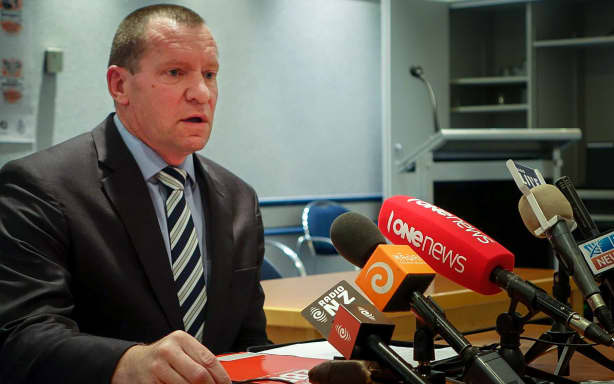
RNZ / Max Towle
The sportsman said in a brief statement to RNZ he understood police were re-investigating the matter.
“So, it would be improper of me to make any comments at this stage. I have complete trust in the police.”
RNZ approached Folau for comment on Wednesday. He said he was “not in a position to make any decisions or commentary”.
In response to further questions, Folau said because of the little information he had, he did not think he could make any comments.
“The context I have is that I understand a review of an historical case is underway.
“I am comfortable that any recommendations I may have had input into will have been evidence based.”
The woman who made the complaint says she’s “angry and hurt”.
“I’d spent half my life feeling like what happened to me wasn’t bad enough for the police to do anything, felt shame and blame…” she said.
“It was like no one had given me a second thought… no one cared about the impact on me. I just feel used and discarded, and I feel naive for believing in the police in the first place.”
The complainant, then 16, went to the Christchurch Police Station in 2011 wanting to report a sexual violation which allegedly happened in June 2010 when she was 15.
RNZ / Diego Opatowski
The complainant said she had gone to a party with some friends. She remembered waking up the next morning without any clothes on next to a man who was 20 years old.
She said the following day she was contacted by the sportsman who told her she should have the emergency contraceptive pill as they had sex the previous night. At the time the woman could not recall having sex with him.
No charges were laid as a result of the investigation.
Then, in June 2025, the complainant contacted police requesting the investigation be reviewed.
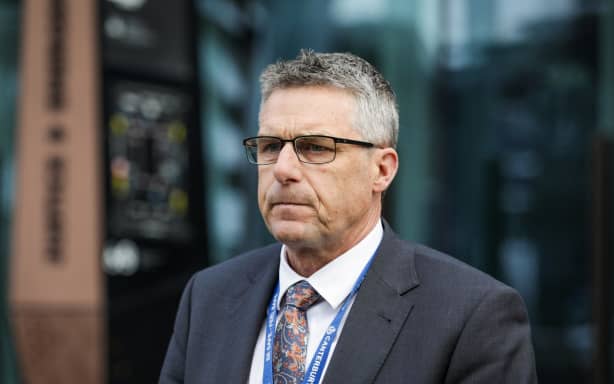
The review, seen by RNZ, was carried out by Detective Inspector Scott Anderson.
“It cannot be considered a quality investigation,” Anderson said of the original investigation carried out by Folau.
The review said that after the complainant went to police in 2010 a detective did a “scoping interview” and prepared a file which was coded unlawful sexual connection with a female 12-16.
The file was then received by Detective Senior Sergeant Darren Folau from the Child Protection Unit who contacted the woman’s parents for a meeting on 27 June.
Folau then conducted inquiries into the suspects with the offence of sexual conduct with a person under 16 years old in mind before the complainant was interviewed and the details of her complaint recorded, Anderson said.
Folau’s inquiries revealed that the 20-year-old had left New Zealand for Australia in March and had not returned.
Then on 22 June Folau spoke to the sportsman, then 20, in the presence of his parents at their home.
“It is recorded that [the sportsman] had an honest belief that [the complainant] was 16 as she is his sister’s best friend, and his sister is 16,” the review said.
Anderson said the complainant’s evidential interview on 30 June created “a number of lines of inquiry” that should have been pursued prior to the sportsman being interviewed.
Anderson said that while there was “absolutely no criticism” of the complainant reporting approximately one year later, it did preclude some lines of inquiry such as a medical examination, search warrants for messages and photos from the man’s phones and statements from witnesses in relation to the complainant’s intoxication state.
RNZ / Nate McKinnon
In Folau’s five-page report on the investigation, seen by RNZ, he concluded that he did not believe any sexual activity took place between the complainant and the 20-year-old.
In relation to the sportsman, Folau said he believed he had “formed sufficiently reliable grounds” at the time to believe the complainant was 16.
This included that the sportsman believed she was the same age as his sister, who was friends with the complainant, who was at the time over 16. Folau said at the time of the incident the complainant was 15 years and 7 months, and the sportsman was 18 [the sportsman was actually almost 20].
Folau had told the complainant’s parents that his recommendation was that no prosecution could take place.
“The view of [the complainant] is that [they] only wanted the matter brought to [the sportsman’s] attention that at the time of sexual intercourse, she believed she could not have been in the frame of mind to consent, although that cannot be forensically established due to the time delay of the reporting.”
Folau then said the sportsman had just been offered a contract to play sport professionally “and it appears that he has a promising career as a professional athlete”.
“I believe this to be an occasion where alcohol is a factor for both [the sportsman] and [the complainant], where it has impaired good judgement.
“It cannot be established in any way whether consent was an issue or not for both parties. I am of the firm belief that there is a defence available for [the sportsman] in relation to the charge of sexual conduct with a girl under 16 years.”
Folau said his recommendation was that there be no prosecution against the sportsman, “however a warning would be appropriate”.
The investigation was reviewed by a Detective Senior Sergeant who agreed on Folau’s assessment that there was insufficient evidence to proceed with a prosecution.
Anderson said in his review that it was a “poor investigation” and that the complainant deserved an apology.
“It appears that [the complainant] was not the centre of this investigation, not listened to and not believed.”
Anderson said the “red flag” was that on the evening of the party the complainant and the sportsman’s sister were 15, not 16.
“The [sportsman] would have known that his sister was 15 years old… he does not have the defence that he believed [the complainant] was 16 years old, the same age as his sister.”
RNZ / REECE BAKER
Anderson added that it appeared no fact checking had been done prior to speaking to the sportsman.
“This is in part due to this being done prior to [the complainant’s] EVI.”
Anderson said that the sportsman did not appear to have been treated as a suspect.
“There is no record of a suspect recorded interview on the file, being spoken to in front of his parents given that he was 20 years old, also the fact that he was spoken to as a suspect before [the complainant’s] EVI does not follow best practice.”
In relation to culpability, Anderson said he believed the sportsman was criminally liable for sexual conduct with a young person under 16 and did not believe he had a defence.
“[He] would have known that his sister was not 16 years old and therefore could not have reasonably believed that [the complainant] was over 16 years. It is of no matter if [she] consented. The fact that [the complainant] may have had sexual intercourse with others prior to this is also a moot point.”
Anderson also believed the 20-year-old was criminally liable for sexual conduct with a young person under 16.
“Although investigations such as these are difficult and not helped by being historic, objectivity is the key.
“It is my opinion that DS Folau had formed his belief that no prosecution was going to be proceeded with very early on, and his report is reflective of that. It is my belief that [the sportsman’s sporting] career was prioritised over [the complainant] and any offending against her.”
He said it was unclear if the sportsman had been warned by police.
“If DS Folau believed [the sportsman] had a defence, then why is there a need for a warning! There is no record of [the sportsman] actually being warned and the File stats do not reflect a warning.”
Anderson detailed some of the options the complainant had going forward. This included doing nothing further with the police investigation or requesting that the investigation be investigated further “with a view to prosecution”.
“It would have to be explained that once the investigation is completed the Solicitor General Prosecution Guidelines would have to be meet for a prosecution and this may require a legal opinion (e.g. [the sportsman] being warned in 2011, if in fact he was).
“There is no guarantee a prosecution would be commenced and accordingly if a prosecution was commenced there is no guarantee of a conviction.”
There was also an option of some other sort of restorative justice resolution.
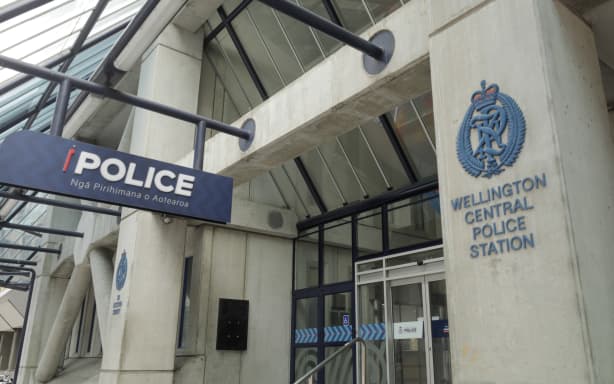
The complainant also lodged a complaint with the Independent Police Conduct Authority (IPCA) about a meeting she had at the Wellington police station to discuss the investigation.
RNZ / REECE BAKER
Correspondence from the IPCA, seen by RNZ, referred to Anderson’s review.
“[He] found that your original complaint was poorly handled and there were multiple issues with the investigation. There has subsequently been a conflict of interest identified between [the sportsman] and former Detective Sergeant Folau.”
The letter also referenced a meeting the complainant had with two police officers to discuss her case.
“They acknowledged the original investigation was poor and [a police officer] apologised on behalf of New Zealand Police and told you that an investigation into the conduct of former Detective Sergeant Folau with the view of identifying any attempts to pervert the course of justice by him will be completed by Canterbury Police.”
In relation to the complainant’s case about the other two police officers she had spoken to earlier, they said they were “professional and empathetic and say they did not dismiss what you were saying”.
“However, Police acknowledge that, despite the officers’ intentions, you found the meeting very distressing.
“The officers accept that they talked about the CIB caseload but say this was an attempt to give you realistic expectations about possible timeframes for any action. They appear to have relied on the previous investigation report in discussing the detail of your case, and I acknowledge that Police now accept that that investigation was poor.
“They say they did tell you that they didn’t believe the new information you provided warranted re-opening the investigation because it didn’t provide positive evidence about what happened to you. The officers say they believe it is important to be honest and realistic with complainants about the prospects of charges and/or conviction and whether information has evidential value.”
As there was no record of the meeting, the IPCA was unable to assess the tone of the conversation.
“We consider it is reasonable for Police to try to make sure complainants have honest and realistic expectations about the process and likely timeframes, but we expect officers to explain these matters in a respectful and empathetic way.”
The IPCA closed the complaint.
The complainant told RNZ she asked police to reinvestigate her 2011 complaint.
“I just want accountability. I suppose I’m not hopeful that they’ll lay charges, because I don’t have much trust in them as an organisation anymore, but I feel that I owe it to my younger self to have the investigation carried out, that’s what I wanted back then, and I don’t have anything to lose.”
Folau, who worked in Police for 28 years, was awarded a Queen’s Service Medal for services in the Solomon Islands in 2004.
He holds several roles including board member of charitable trust STOP, a community based organisation that says it provides support and therapy for people “who have engaged in, or are demonstrating, concerning or harmful sexual behaviour”.
In May he was announced as the co-chair of the Brainwave Trust Aotearoa board.
The announcement said Folau “contributes to a number of governance and advisory roles, including Oranga Tamariki, STOP Trust, and Moana Vā, supporting Pacific Rainbow+ communities”.
Folau is also a member of the Sport Integrity Disciplinary Panel.
rnz



Latest News
Opportunities to mitigate multi-million-dollar RNZ budget blowout likely missed – experts
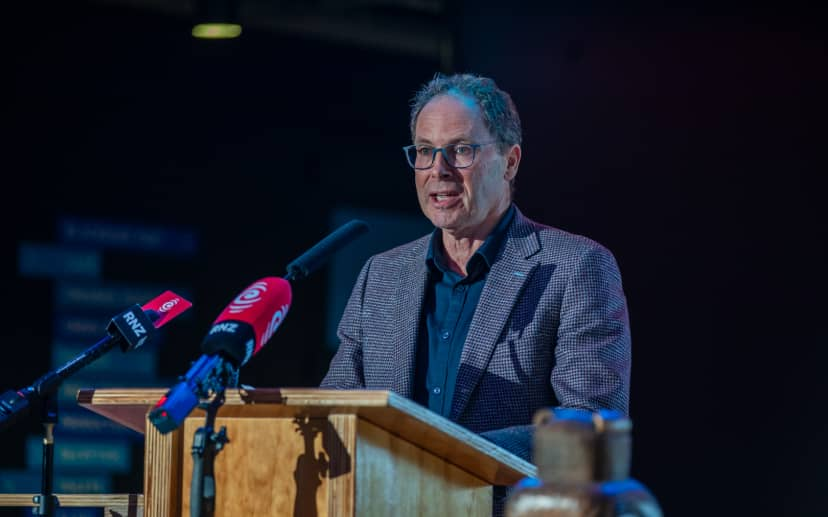
Multiple opportunities to identify and mitigate a multi-million-dollar budget blowout at RNZ appear have been missed, according to the former executive director at Audit New Zealand.
The public broadcaster on Monday revealed a near $12 million shock financial loss after a litany of financial blunders, which will now lead to sweeping job cuts.
The $11.8m loss is more than 25 times the $470,000 RNZ had expected to lose over the year to June.
CEO Paul Thompson took responsibility for the result, and said internal reports gave an inaccurate picture of the finances, meaning the scale of the loss only became clear in October.
RNZ’s former chief financial officer Hilary Parker resigned unexpectedly in early October.
The board said it would commission an independent review into what went wrong.
Independent contractor Stephen Walker, who left the Audit Office earlier this year, said the size of the loss was surprising, as was the length of time it took to identify it – months after the financial year ended.

Supplied / OAG
“Probably more of a concern is that they had seemingly been unaware that they were running up a significant deficit until they were in the preparation stage of their annual report in October.”
Walker said public entities typically produced monthly financial reports.
An interim audit also took place before the end of the financial year, he said, but if the organisation hadn’t identified significant losses at that stage, the auditor could also be in the dark.
“It seems that there’s a real weakness in forecasting and budgeting that’s occurred here and that the monthly accounts, when they’re produced, either haven’t identified these significant variances against budget or the magnitude of them really hasn’t come to light until right towards the end of the financial year,” Walker said.
“And really at that point, there’s no opportunity for the chief executive, the leadership team to take, and the board to take, any corrective action because the year has effectively been completed.”
Walker said the “significant miss” was difficult to account for given it was more than 10 percent of RNZ’s total funding.
He said based on RNZ’s annual report, financial complexity didn’t appear to be a factor.
“This $11.8m loss isn’t made up of one particular item … it seems to have been contributed to by a number of separate expense lines running over budget. So I don’t think it’s necessarily to do with complexity.”
Among the errors, RNZ wrongly counted $2m from land sales as income in its budget. Staff costs also came in $3.2m over budget, including $1.4m in redundancy payments.
Professor at Auckland University’s business school Norman Wong said based on media reports the issues identified were “significant and troubling”.

Supplied / University of Auckland
“But recognising the sale of land as income in their budget is a basic error that one would have expected to have been caught and corrected well before it got to this point.”
With funding reductions at RNZ over the past two years, Walker expected greater scrutiny of financial results.
“Virtually every public entity has had their annual budget reduced. And so you would expect … the leadership team on a monthly basis and board – I’m not sure how frequently the board will consider the information – but you would expect them to be interrogating the results on a regular basis throughout the year,” he said.
Walker said initiating an independent review was the correct course of action and that he’d want to understand what information the leadership team and the board were regularly receiving.
He said he’d “love to say” surprising financial results were rare, but conceded they occured on a semi-frequent basis during his time leading the Audit Office.
“The benefit of independent scrutiny by the Audit Office – and the auditors providing that support to the Auditor General – [is] that the reporting is fairly presented at the end of the year, whether it’s good, bad or ugly.”
rnz


Police say person who fired gun at officers still at large

New Zealand sides named for RLWC finals

Parliamentary Service working on extra chairs and offices for increased number of MPs


-

 Latest News2 months ago
‘Chilling’: Business groups speak out against National’s supermarket break-up plan
-

 NZ News2 months ago
Tom Phillips report: The missed opportunities to find the children
-

 Latest News2 months ago
Cars bearing Chinese police markings stir unease in Auckland
-

 Politics2 months ago
National vows to try to split Pak’nSave and New World
-

 Fiji News2 months ago
Plans to have new Constitution by Dec 24th 2026
-

 Politics2 months ago
MBIE confirms botched biometric projects costs blown out to $50.7 million
-

 NZ News2 months ago
Cop who stole $68,000 can now be named as champion Muay Thai fighter Haimona Tamati-Te Paki
-

 Latest News2 months ago
Five Karangahape Road venues lose their liquor licences after police intervention