Connect with us

HTML Image

i

Latest News

New Zealand ‘on track for net zero’, says prime minister

Published

on

The prime minister insists New Zealand will meet its climate change targets, despite a report saying they are very much at risk of being missed.

The Climate Change Commission’s third annual monitoring report tracked New Zealand’s progress in reducing emissions, as well as how it was tracking to meet its emissions goals.

The report showed time was running out to correct course, with the next 12 to 24 months critical to get things back on track.

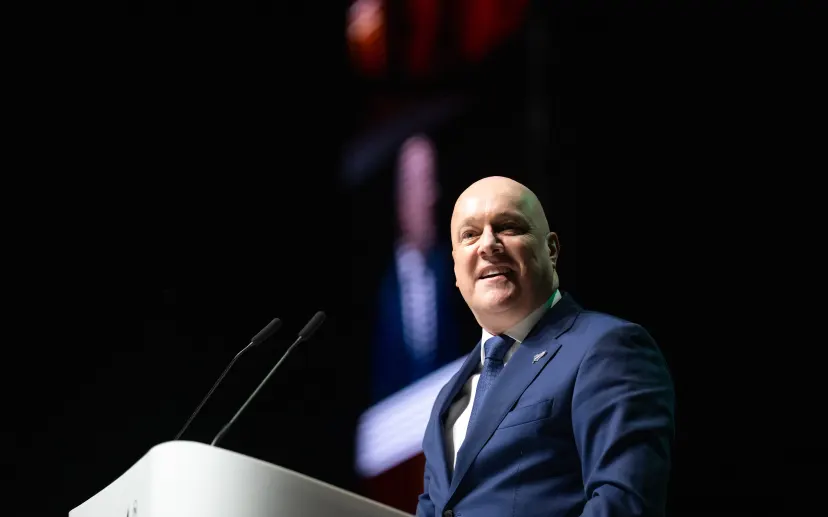
But on Tuesday, prime minister Christopher Luxon said things were on track.

“Our view is based on the fact we’re on track to deliver emissions budgets one and two. There’s more work to do for emissions budget three and beyond, and our indications are we’re on track for net zero. We may even do it a few years earlier.”

The emissions budgets are the maximum quantity of emissions permitted over a five-year period. It has a sinking lid approach, with each budget setting a lower maximum.

Despite the prime minister’s confidence, the commission said the current budget was at significant risk, and the subsequent one could not be met with current plans and policies.

Labour leader Chris Hipkins said things had been on track, but the government had unwound that.

“We were making good progress until about 2024 as a country. The current government have wound back all of the things that were contributing to that progress. We’ve got to tackle our emissions, and it’s actually good for New Zealanders. It’s not only environmental benefits to it. There’s cost of living benefits to it as well.”

The commission’s report noted the 2024 stalling was largely due to a dry year that meant coal was used to generate electricity.

The government has sought to address dry year risk, with its plans for a liquefied natural gas import terminal. Even then, the commission believed that would increase emissions, as it signalled delay to the transition from fossil fuels.

The commission said the Emissions Trading Scheme (ETS) was “not efficiently driving emissions reductions now, due to low market confidence, price volatility, and uncertainty about the long-term future of the scheme.”

Green Party co-leader Chlöe Swarbrick accused the government of being responsible for the falling confidence in the ETS.

“The government’s absolutely screwed it,” she said.

“The government has actively undermined confidence in the Emissions Trading Scheme, which also happens to be the only major tool that they have left for reducing emissions.”

There are some things the government is doing that the commission has identified could reduce emissions, such as the Gas Transition Loan Scheme and time-of-use charges.

But the scales are tipped in the other direction, with policies like removing agriculture from the ETS, and committing to the LNG terminal.

The commission believed the ETS would need to be amended by 2030 in order for it to be effective.

But Hipkins did not seem keen on putting agriculture back into the scheme, instead preferring more investment in agri-tech.

“You’re not going to bring down methane emissions just by saying, ‘we must bring down methane emissions.’ You actually have to support the technology, the science that allows you to do that.”

The commission did identify some initiatives to get things back on track, like increased uptake of EVs and solar.

National, Labour, and the Greens are all proposing household solar at the election, highlighting the intersection between energy and cost of living policy.

Te Pāti Māori does not have a specific energy policy yet, but supports more regenerative and sustainable approaches.

Co-leader Rawiri Waititi said renewables would lift more people out of poverty.

“We’ve got a huge cost of living crisis at the moment when it comes to power, when it comes to fuel, when it comes to all of those types of things. And there’s no strong move towards electrification of this country. Aotearoa should be the first electric country in the world.”

New Zealand First wants to break up the gentailers, and identify and create a single dataset across oil, gas, geothermal, and carbon dioxide storages sites.

Deputy leader Shane Jones said there was “a lot of speculation” around climate change reporting thresholds, and expected climate change response and reforms would play a key part of the election campaign.

“No target should stand if it results in the impoverishment of New Zealand. No target should stand if it represents the hollowing out or the degradation of our industrial resilience. We’ve got to think about jobs and economic viability.”

Earlier this week, the government announced a bail-out of up to $60 million to keep Golden Bay Cement’s plant at Whangarei going.

Its owner, Fletcher Building, noted a “carbon cost disadvantage” Golden Bay Cement faced compared to imported cement.

ACT leader David Seymour said that was the bigger issue.

“We are now coming up against the reality, a lot of our competitors and friends around the world are not putting these costs onto business. Are we seriously saying we want New Zealand business to go out of business so that New Zealand consumers can pay to keep other people in jobs overseas?

“That’s the reality that’s hitting the road. I don’t care what the Climate Change Commission is saying. They’ve been out of it for a long time.”

Swarbrick suggested a fix through a climate border adjustment mechanism, such as the one the European Union applies.

She said the Greens had proposed such a mechanism in 2024, and also pointed to the party’s energy policy released on Monday.

“To be perfectly honest with you, with this report on the table today, the other parties that are not willing to take New Zealanders and our future seriously just need to get out of the goddamn way.”

rnz

Continue Reading
Click to comment

Leave a Reply

Your email address will not be published. Required fields are marked *

Latest News

Pieces still missing from Tom Phillips inquiry – academic

Published

on

An expert on family violence says it is indefensible Family Court proceedings were excluded from the government’s inquiry into the Tom Phillips case.

She says the government should be looking at reinstating protective mechanisms that were stripped out of the Care of Children Act in 2014, and she is “a little sympathetic” to police, with a caveat that she doesn’t usually say that.

“It’s just really hard for me to know whether we should be stringing them up by their toenails or not when we just don’t know what came out of the Family Court.”

Phillips was shot dead by police a year ago, after nearly four years on the run with his children.

Government ministers apologised on Tuesday after the damning inquiry found multiple failings by authorities including information sharing and following up certain leads.

Oranga Tamariki and police have admitted errors, although police dispute the inquiry’s finding that agencies working together could have prevented the children’s disappearance or brought them back sooner.

University of Auckland associate law professor Carrie Leonetti told RNZ the principal judge of the Family Court court could have opened its files to the inquiry, and although such files would be sensitive they could have been redacted from public view.

“The inquiry starts four years too late,” she said.

“Tom Phillips had court ordered care of the children from 2019 at least, and was given court ordered care of the children back, it appears, in October 2021 after the first abduction.

“The inquiry makes very clear that Oranga Tamariki had… very limited involvement with Tom Phillips and the children before 2021… we’re starting the movie half-way through.”

Leonetti said the children’s mother’s concerns were not taken seriously partly because of her Family Court dispute with Phillips.

“It’s pretty clear that these agencies brushed her concerns off … It’s well established in the social science literature that there’s just this pervasive societal myth that women fabricate claims of domestic violence for some kind of tactical purpose in custody proceedings.

“And I think it’s even worse for the Phillips kids’ mother because she’s Māori… a Māori woman trying to get the police and Oranga Tamariki to take her Pākehā ex-husband’s threat to their children seriously.

“He made threats to her at the time of their separation in 2017 that he was going to take the kids and not let her see them again, and he he made those threats to third parties that he was going to take off with the kids and go bush.”

She said there was a “weird sort of hot potato problem”, where police, Oranga Tamariki and the Family Court would defer responsibility for a case to whichever of the three was approached first.

“If people go first to the Family Court and they award care to the person, then I think Oranga Tamariki and the police say to themselves, ‘well, how dangerous can he be?'”

She said the report seemed to indicate police and Oranga Tamariki had made errors in the investigation or passing on information, but without the details from the Family Court “it’s like we’re looking at this mosaic with half of it blacked out”.

Phillips may never have had unsupervised care of the children in 2019 and 2021 had the “Bristol clauses” that required courts to ensure a child’s safety before granting custody in domestic violence-related cases not been scrapped under the John Key government in 2014.

“You go to Family Court, you lose custody of your kids to the perpetrator. You go to the police, they seem to write a lot of reports but not take a lot of action. You go to Oranga Tamariki and they roll your eyes and think you’re a disgrunted ex-wife.”

However, she said police may be right to say the situation may not have ended differently “if they had done everything right, but the Family Court and Oranga Tamariki still failed”.

“We actually need all of these agencies to get it right as often as possible to have an appropriate safety net.”

rnz

Continue Reading

Latest News

Police supporting families of New Zealanders missing in Nepal floods

Published

on

The Ministry of Foreign Affairs and Trade says police are supporting the families of five New Zealanders who remain missing after August’s catastrophic flash flood at the Nepal-China border.

A massive flash flood, believed to have been triggered by a glacial collapse, tore through a Himalayan valley on 26 August, burying villages.

The disaster killed more than 1300 people, with at least 5000 others unaccounted for, according to latest reports on both sides of the border.

In New Zealand, community groups have raised more than $200,000 for the flood victims, according to former honorary consul for Nepal Dinesh Khadka.

“I’m so proud of the Indian community here who … supported us, saying it is not a Nepal problem but our problem,” Khadka said.

He said about 80 percent of the donations had come from New Zealand’s Indian community.

A fundraising dinner was organised by the New Zealand Nepal Society at the Freemans Bay Community Centre in Auckland last week.

Supplied

Last week, the Nepali community raised $100,000 through a fundraising dinner at the Freemans Bay Community Centre in Auckland.

The Central Sikh Association donated $50,000 to Nepal that same night.

Earlier this month, Gurdwara Shri Dashmesh Darbaar Sahib in Papatoetoe pledged $15,000, which was matched by the New Zealand Indian Central Association.

Shiv Mandir in Manurewa donated $4000, while Manurewa Local Board member Marshal Ahluwalia and National Party Manurewa candidate Ghouse Majeed donated $7500.

Khadka said the Federation of Islamic Associations of New Zealand had pledged $5000, which would be directly deposited into Nepal’s Prime Minister’s Disaster Relief Fund.

Other fundraising events included a dosa event in Māngere organised by Thiru Subramaniyar Aalayam on 5 September, and a fundraising dinner organised by the Nepal-New Zealand Friendship Society of Canterbury in Rolleston on 12 September.

A similar dinner was organised by the Waikato Indian Association and Nepal-New Zealand Waikato Friendship Society in Hamilton on 9 September, while the Taranaki Nepalese Community is planning a fundraising dinner in New Plymouth on 26 September.

He said the fundraising was a temporary effort to support people who had lost everything in the floods.

“Nepal will take decades to rebuild and whatever we raise now will go to the people who are in most need right now,” he said.

Khadka said more fundraising events were being planned across New Zealand.

Next week, Wellington Mutamizh Sangam’s youth wing will hold a youth festival to raise funds for Nepal, while the Indian Film Festival in October has also pledged to support fundraising efforts for the country, with a Nepali film included in its programme.

Khadka said the response had shown him how much New Zealanders cared about Nepal.

“Wherever we go, I see New Zealanders approaching me and asking how they can support Nepal,” he said.

“That makes me proud of New Zealand and how lucky we are to be called New Zealanders.”

Khadka also warned that some organisations were using the disaster to make money.

“It is very sad to see that there are organisations who are raising money but it doesn’t reach the Prime Minister’s Disaster Relief Fund, so my request to people who are donating their hard-earned money is to make sure that you donate through the right channels,” he said.
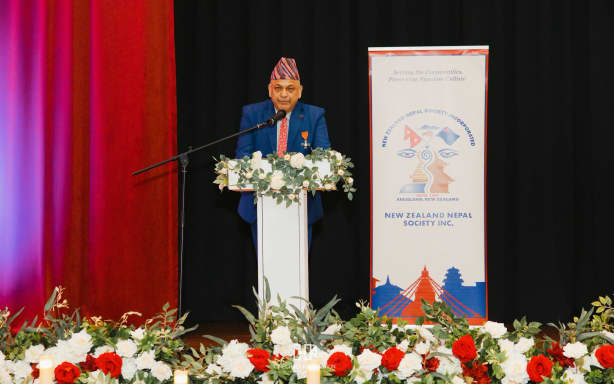
Dinesh Khadka is leading the fundraising for Nepal flood victims in New Zealand.
Dinesh Khadka is leading fundraising efforts for Nepal flood victims in New Zealand.

Supplied

Khadka said he was receiving regular updates from Nepal Police, who were doing their best to recover bodies and search for survivors.

“More than 1400 bodies [have] already [been] found but they’re looking through the rubble and buildings to find more than 5000 bodies or even survivors,” he said.

Khadka said he did not have an update on the missing New Zealanders.

Five New Zealanders remain missing following the deadly flash floods: Dejan Kuzmic, Shweta Mhatre, Mihir Patel, Kinnari Patel and Suhasini Reddy.

More than 300 foreign nationals have been rescued, according to an update from Nepal’s National Disaster Risk Reduction and Management Authority.

No New Zealanders have been included in that number.

RNZ understands Mhatre and Kuzmic were part of the Isha Foundation’s pilgrimage, and Sadhguru had previously said two New Zealanders were missing from his trekking group.

Meanwhile, Reddy’s family has called on rescuers not to stop searching for the 44-year-old after conflicting reports about her status emerged online.

Reddy’s brother Rajeev and his wife Lauren urged people to keep searching for survivors in a Facebook post several weeks ago.

A spokesperson for the Ministry of Foreign Affairs and Trade said New Zealand’s consular response team in Kathmandu was engaged with local authorities and the Nepalese Government.

“However, challenges on the ground mean that new, verified information will continue to take time to emerge.”

A spokesperson for the Ministry of Foreign Affairs and Trade said New Zealand had extended an offer of technical expertise to aid Nepal’s response effort in addition to humanitarian assistance worth $3.5 million to support the humanitarian response.

rnz

Continue Reading

Latest News

NRL finals schedule: Who plays who in week 2 and how the Warriors can make the Grand Final

Published

on

The Warriors will need to take the hard path to the NRL Grand Final, having lost to the Dolphins in their qualifier at Go Media Mount Smart Stadium.

A victory in week one would have seen the Warriors take a week off and advance straight to the preliminiary finals in week three.

Instead they’ll take on the Newscastle Knights in a must-win elimination final on Sunday.

Here’s who plays who next:

Week two: Semi-finals

The teams that lost their qualifying finals get another chance. They play the winners of the elimination finals in two sudden death games.

The two winners would then move on to the preliminary finals.

  • Cronulla Sharks v Sydney Roosters, Saturday, 9.50pm at Allianz Stadium, Sydney
  • Warriors v Newcastle Knights, Sunday 6.05pm at Eden Park, Auckland

Warriors boss Cameron George is expecting Sunday’s game to sell out, in what he describes as an international for his side.

“It’s us versus Australia. So the more people we get there, the better New Zealand will be.

“There are 17 teams in this comp and we’re the only one from here so it’s us against them. This is our New Zealand grand final in the NRL and it’s pretty special.”

Warriors club members can buy tickets from midday Monday with general public tickets going on sale Tuesday.

NZ Warriors fans.
If the Warriors win against the Knights this weekend, they’ll go on to play the Panthers.

Andrew Cornaga/www.photosport.nz

Week three: Preliminary final

The four remaining teams play in the preliminary finals.

The Panthers and Dolphins have advanced straight to the prelims where they’ll meet the winners of the semi finals.

If the Warriors win against the Knights this weekend, they’ll go on to play the Panthers.

The winner of the Sharks v Roosters match this weekend will face the Dolphins.

The winners book their place in the Grand Final.

rnz

Continue Reading

Trending

Copyright © 2026 The Buzz: Powered by Apna Network Limited - Concept by Digital Hub NZ