

NZ News
David Seymour bites back at Auditor-General over lunch report


This article describes the murder of a woman in an act of extreme family violence and may be distressing for some readers.
A man bombarded his former partner with thousands of calls, messages and texts after she ended their relationship, then went to her house and stabbed her 13 times.
The fatal stabbing came just weeks after Lance Dickinson searched the internet using the phrases “lawyer Taupō” and “how long jail for murder”.
Now the 28-year-old has been jailed for life, with no parole possible for 17 years, for murdering Cheri-Lee Bell.
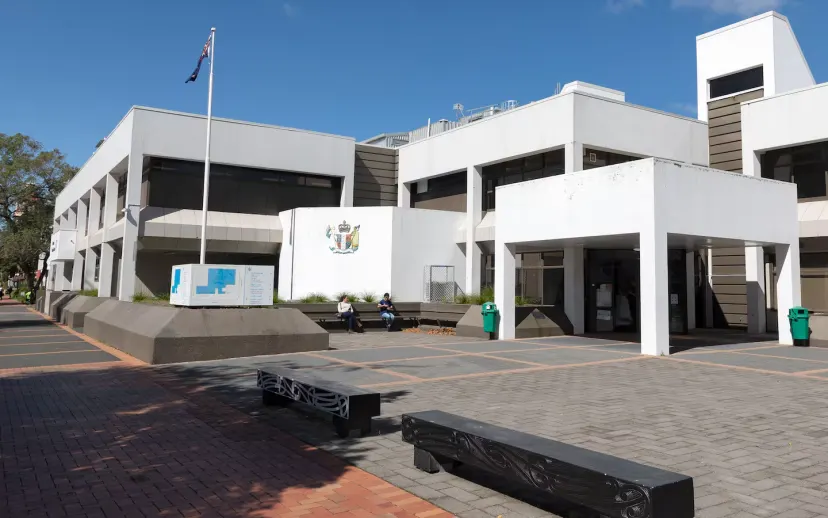
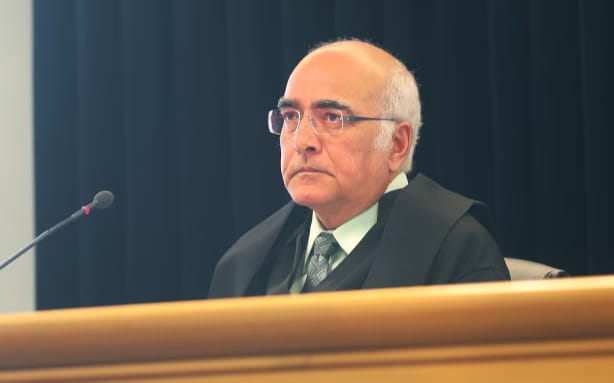
At his sentencing in the High Court at Rotorua on Thursday, Justice Pheroze Jagose said Dickinson and his victim met as teenagers at Tongariro College in Tūrangi and were in a relationship for 12 years.
He killed her early on 20 June last year, after entering her home uninvited, and in the presence of a child and Bell’s teenage sister.
Dickinson and Bell had two children together.
In response to escalating family violence from Dickinson during the latter part of their relationship, Bell obtained a protection order against him in December 2023.
She then ended the relationship in April 2025.
In defiance of the protection order, Dickinson kept pestering Bell, sending her messages and going to her workplace, her parents’ house and her home in Tūrangi.
He accused her of seeing other people and, when asked repeatedly to leave, said to her, “Just tell me the truth”, and “I just want to be a family again”.
Justice Jagose said Dickinson’s calls, messages and texts to Bell numbered in the thousands, were made at all times of the day and night and were often abusive.
“They continued despite her requests you leave her alone. You threatened to stab and kill Ms Bell.”
On 30 May, 2025, Dickinson was released from custody on bail, after being charged with breaching the protection order.
Over the next three weeks, he repeatedly breached his bail conditions by contacting Bell, going to her home, and defying a night-time curfew requiring him to be at his mother’s house.
Early on 16 June, he drove past Bell’s house and took videos of a car parked in the driveway belonging to a friend she had invited to stay with her.
He then parked in a neighbouring street, walked back to the house and entered unannounced.
NZME
Bell came out of the bedroom and found Dickinson hiding in the kitchen. They argued.
He held her by the hair and repeatedly stabbed her with a knife in her chest, stomach, back, upper arm, wrist and hands, before making a final slash to her neck which severed her right carotid artery, trachea and oesophagus.
Bell’s sister, hearing her scream, came out of her bedroom to see Bell holding her neck with blood spurting between her fingers before collapsing to the ground.
She died at the scene.
The sister retreated to protect Bell’s four-year-old child in the bedroom while Davidson ran to his car and drove to Taumarunui.
He later told police he had gone to Bell’s home to get their daughter.
He said that, during the argument with Bell, he grabbed a knife but “then blacked out and did not recall what happened”.
The knife has not been recovered.
Dickinson declined to be interviewed by a probation officer for a pre-sentence report, which had to be compiled using other information available about him.
The report writer assessed that he carried a high risk of reoffending and a high risk of causing harm to others.
She also said that, in the weeks before the murder, Davidson made internet searches for the phrases “how to track phone”, “lawyer Taupō” and “how long jail for murder”.
This indicated the murder was “calculated, premeditated and planned”.
‘Brutal and persisting impact’
Justice Jagose said he had read multiple victim impact statements from Bell’s parents, brother, sister and a friend.
“They painfully illustrate how your terrible actions removed a much-loved person from their own and her children’s lives, with brutal and persisting impact on all of them and radiating out into the wider community.
“Some forgive you; some do not.”
He counted at least nine aggravating features in Dickinson’s attack on Bell, meeting the criteria for extended jail time without parole beyond the minimum of 10 years for a life sentence for murder.
These were his unlawful entry into the house, the actual violence, the use of a weapon, the attack to the neck, cruelty and brutality, offending while on bail, the family violence context, the breach of the protection order, the fear and distress caused, and the loss of life.
He imposed the non-parole period of 17 years and, in addition to the life sentence for murder, a concurrent jail term of six years and nine months for multiple breaches of the protection order.
Davidson was also given a first warning under the three-strikes law, which would limit his parole options should he offend again.
Where to get help:
- Need to Talk? Free call or text 1737 any time to speak to a trained counsellor, for any reason
- Lifeline: 0800 543 354 or text HELP to 4357
- Suicide Crisis Helpline: 0508 828 865 / 0508 TAUTOKO. This is a service for people who may be thinking about suicide, or those who are concerned about family or friends
- Depression Helpline: 0800 111 757 or text 4202
- Samaritans: 0800 726 666
- Youthline: 0800 376 633 or text 234 or email talk@youthline.co.nz
- What’s Up: 0800 WHATSUP / 0800 9428 787. This is free counselling for 5 to 19-year-olds
- Asian Family Services: 0800 862 342 or text 832. Languages spoken: Mandarin, Cantonese, Korean, Vietnamese, Thai, Japanese, Hindi, and English.
- Victim Support 0800 842 846.
- Rural Support Trust Helpline: 0800 787 254
- Healthline: 0800 611 116
- Rainbow Youth: (09) 376 4155
- OUTLine: 0800 688 5463
- Aoake te Rā bereaved by suicide service: or call 0800 000 053
If it is an emergency and you feel like you or someone else is at risk, call 111.
Sexual Violence
- NZ Police.
- Rape Crisis: 0800 88 33 00.
- Rape Prevention Education.
- Empowerment Trust.
- HELP (Auckland): 09 623 1700, (Wellington): 04 801 6655.
- Safe to talk: 0800 044 334.
- Tautoko Tāne Male Survivors Aotearoa.
- Survivors Network of those Abused by Priests (SNAP) 022 344 0496.
Family Violence
- Women’s Refuge: 0800 733 843.
- It’s Not OK 0800 456 450.
- Shine: 0508 744 633.
- Victim Support: 0800 842 846.
- HELP Call 24/7 (Auckland): 09 623 1700, (Wellington): 04 801 6655.
- The National Network of Family Violence Services NZ has information on specialist family violence agencies.
* This story originally appeared in the New Zealand Herald.
Source: RNZ
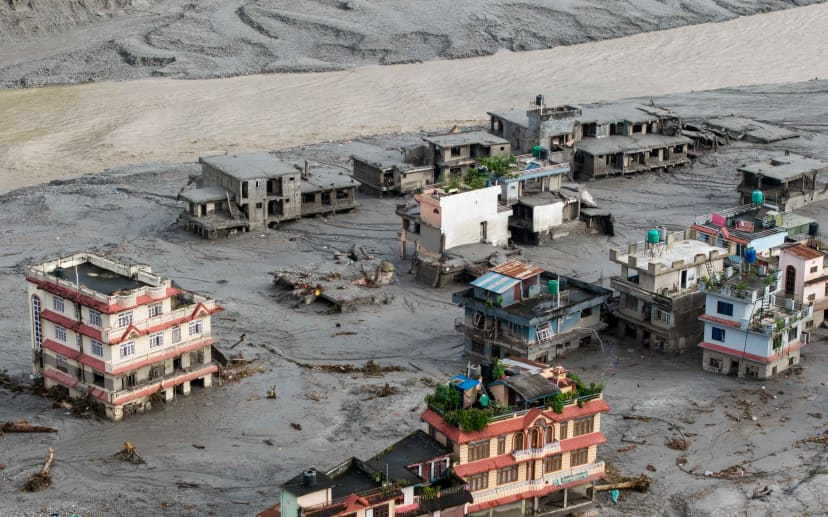
- A flash flood and landslide hit the Nepal-China border on Wednesday
- Police in Nepal say 362 bodies have been found
- Hundreds of tourists are among more than 1000 people missing
- Five Kiwis are among the missing, MFAT says
- It’s believed a glacier collapse may have caused the disaster
Horrifying pictures of the Nepal flash flood are being described as “like watching a movie” by a New Zealand-based Nepali man.
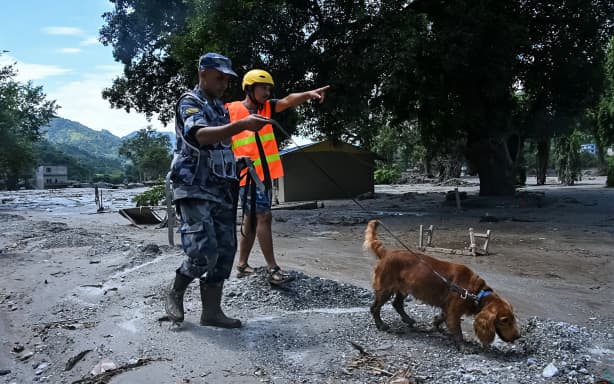
Five New Zealanders are among more than 1000 people missing following Wednesday’s catastrophic flash flooding on the Nepal-China border which killed at least 362 people.
RNZ understands four of the five New Zealanders missing are Suhasini Reddy, who lives in Australia, Auckland man Dejan Kuzmic, and Hamilton couple Mihir and Kinnari Patel.
The identity of the fifth person has not yet been confirmed.
Based in the Canterbury town of Lincoln, Dr Sulav Paudel said seeing the disaster unfold was unlike anything he had seen.
“It’s horrifying. It’s like things we see in dramatic movies,” he said.
“Most of us haven’t slept well.”
Dr Paudel was the treasurer for the New Zealand chapter of the Non-Resident Nepali Association (NRNA).
The group had issued an urgent plea for donations as it tries to raise emergency relief funding for the Nepal government.
NRNA New Zealand was working with other NRNA groups within its international network, including a team on the ground in Nepal.
Its executive team met on Thursday to discuss how New Zealand-based Nepali could respond to the disaster.
PRAKASH MATHEMA / AFP
Dr Paudel said the group had reached out to the Ministry of Foreign Affairs and Trade to advocate for support from the New Zealand government for the disaster recovery.
He hoped the government would soon formally acknowledge the event, including what support it might be able to offer.
“In the meantime we’re also looking after our members to see whether there are any families or people who have loved ones that need support,” he said.
Given the event was still unfolding, Dr Paudel said it was too early to determine to what extent New Zealand-based Nepali may have been personally impacted.
“There are so many people that are out of reach that we don’t know what has happened to them yet,” he said.
“In terms of actual casualties, I don’t think we’ve heard from anyone.
“We expect the number (of casualties) to go up.”
There were about 1350 members of NRNA New Zealand.
A candlelight vigil for the victims of the Nepal disaster was due to be held in Auckland’s Aotea Square on Saturday.
rnz
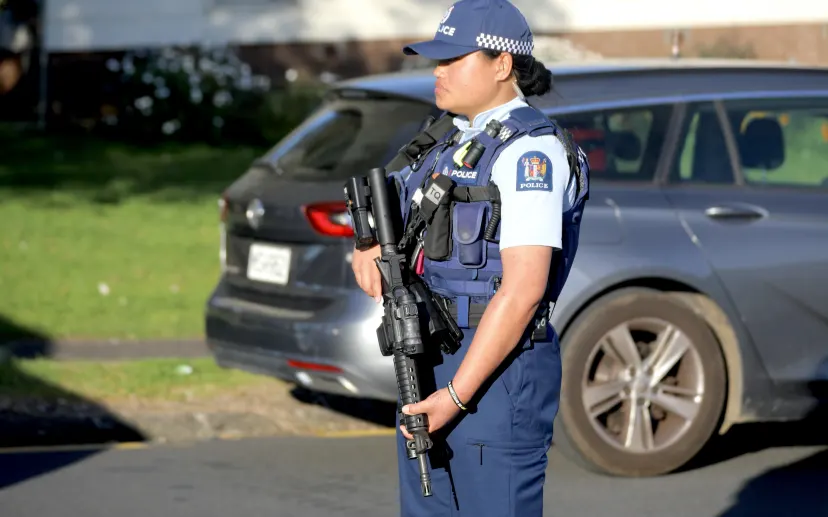
Police have been hunting through the night for those responsible for a suspected double homicide in Wattle Downs, South Auckland, on Thursday.
Emergency services responded to reports of a woman unresponsive at an address on Gambare Place about 1.45pm.
The woman was pronounced dead at the scene and, during a search of the property, police found a man who was also pronounced dead.
Detective Inspector Tofilau Faamanuia Va’aelua said the offender or offenders fled the scene prior to officers arriving.
On Thursday evening, armed police stood guard in front of the house, as neighbours looked on.
Dianna Kereopa-Turner had lived in the street her whole life. She told RNZ she had just returned home when “havoc started going on” outside.
“We thought it was our nail gun for our sleepout that we’re building going off … and then it was quite loud,” Kereopa-Turner said.
“But no, it was shooting. All we heard was gun. Then my sister came out of her room and said ‘somebody out there’s shooting’, so we gathered in whoever was loose around the house and stayed inside.”
She said the victims had only just moved in to the street: “It’s sad to know that whatever trouble was following them, obviously followed them right to the doorstep, and unfortunately it happened on this street where there’s a lot of kids and a lot of elderly people.”
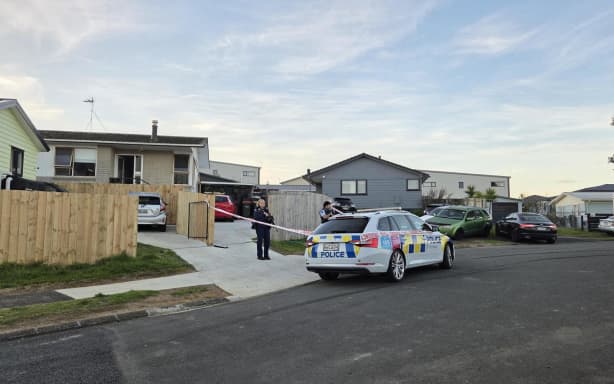
RNZ / Erin Johnson
Many residents had been unable to return to their homes on Gambare Place and adjoining Volante Avenue while police cordons closed the roads on Thursday afternoon, with armed police stationed at the cordons.
Another Gambare Place resident, Bobbie, said she had been at the doctors and tried to return home around 2.45pm.
“The street was already closed off, so I thought, ‘oh better shoot over to the school and pick up my niece’, got over there and it was locked down as well.”
Bobbie said they were allowed to go home just after 5pm.
She said, once home, she talked with neighbours and some were quite shocked.
While the cordon was in place, police were seen working behind a white tarpaulin on Volante Avenue. Police later confirmed staff had moved the victims to a safe location, away from the scene, to render first aid, while other staff continued working to clear the scene and make it safe.
Va’aelua said the incident appeared to be isolated, but police were not able to “rule anything out”, and were now determining the exact cricumstances of the incident.
“This is an awful set of events and no doubt unsettling for everyone involved and the wider community.”
Anyone with information on the incident that could help police with enquiries could contact 105.
rnz


Killer searched ’how long jail for murder’ before stabbing ex 13 times

What we know – and don’t know – about what caused the Nepal flood wave

Bower, Parker and Carter into All Blacks starting XV for second test against Springboks


-

 Latest News2 months ago
RNZ investigation finds uranium, lead in black-market tobacco
-

 Latest News2 months ago
Kaixiao Liu’s journey from failed China’s Got Talent contestant to Auckland mystery death
-

 NZ News2 months ago
Fresh drone shots show extent of weather damage to SH1 near Kaikōura
-

 Sports2 months ago
Paraguay knock Germany out of World Cup on penalties in major upset
-

 Sports2 months ago
‘They’ll bring everything’ – All Blacks don’t consider France a ‘B’ team
-
 NZ News2 months ago
Caregiver who was jailed for raping elderly woman and sexually assaulting another named
-

 Latest News2 months ago
Barrister takes health insurer to court over refusal to pay for ADHD diagnosis
-

 Fiji News1 month ago
Fiji finalising diaspora policy to ensure citizens abroad ‘keep coming back’