

NZ News
Gulf Harbour trial: Leader of fringe religious group and wife guilty of kidnapping and manslaughter

Warning: This story contains content some may find disturbing.
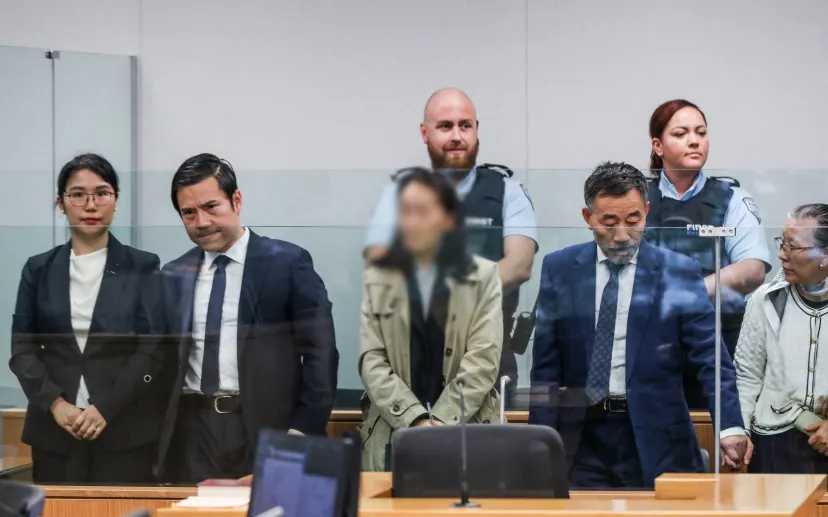
The leader of a fringe religious group has been found guilty of the kidnapping and manslaughter of one of his followers who was found bound in tape, wrapped in black plastic rubbish bags and floating in Gulf Harbour.
A High Court jury has found the leader of a religious group Kaixiao Liu and his wife, Lanyue Xiao, guilty of the kidnapping and manslaughter of one of Liu’s followers, Shulai Wang.
The pair have also been found guilty of misconduct to human remains and perverting the course of justice.
The 70-year-old’s body was found wrapped in rubbish bags in Auckland’s Gulf Harbour more than two years ago.
The Crown says Wang was put in a suitcase, denied food and water, and likely later suffocated.
Liu’s mother Xiuyun Li has been found guilty of kidnapping, but the jury could not reach a verdict on her manslaughter charge.
Liu’s father Jingui Liu has been found guilty of misconduct to human remains, but the jury couldn’t reach a verdict on his kidnapping and manslaughter charges.
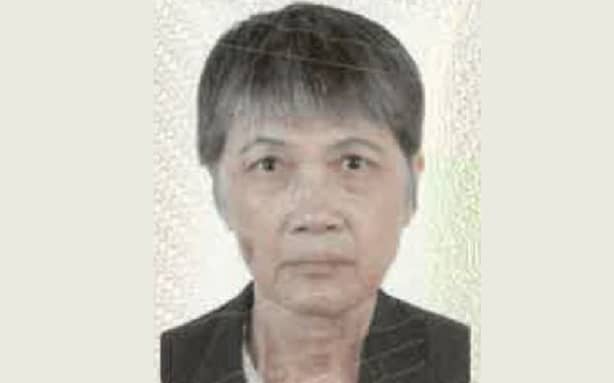
Shulai Wang was 69 years-old when she came to New Zealand from her home on China’s Hainan Island in August 2023.
She moved in with Liu and his family as a follower of his brand of religion.
The Crown’s case was that she and five other women lived in isolation and practical “servitude” to Liu and his family. They called Liu “the Lord”.
A notebook with Wang’s fingerprint recorded schedules consisting of studying scriptures, looking after the children in the house, and planting vegetables – one daily schedule showed she spent four hours planting vegetables in one morning.
Letters were found in the house that the Crown said showed some of the women pledged their bodies and souls to Liu
Crown prosecutor Henry Steele told the jurors that Wang had been starved as punishment, locked in a tent at one point, and following a failed escape bid on 6 March 2024, she was locked in a suitcase and likely suffocated.
Steele argued that the household acted together “in concert” in detaining Wang, but ultimately at the direction of Kaixiao Liu.
Supplied / Police
Seven months after arriving in New Zealand, her body was hauled from the sea by a fisherman who had hooked into the package.
Wrapped in layers of plastic bags, and weighed down with rice bags full of stones, she had been taped into the foetal position and weighed just under 26kg.
But while police had a body, it would be months before they learned of her identity.
She had not been reported missing to authorities and no one had asked where she was.
It was eventually the serial numbers on the rice bags, and an unusually large purchase of over 20 large bags of a specific brand of rice, that led police to Kaixiao Liu and his home on Harvest Avenue in suburban Orewa.
But Kaixiao Liu denied the kidnapping and manslaughter charges and at one point said he “almost” had no contact with “the elderly”; his wife Xiao told the jury in her closing address that the Crown had no sufficient scientific evidence to prove how or when Wang died.
Forensic pathologist Dr Kilak Kesha told the jury there were no signs of any illness or physical injury that could’ve killed Wang, but he could not rule out suffocation.
All four defendants represented themselves in trial, with the assistance of standby lawyers.
The suburban house where punishments are meted out
The centrepiece of the Crown’s case consisted of handwritten notes and recordings, made inside Liu’s home, which detailed daily life.
The Crown said those notes depicted a household with a hierarchical structure that placed Liu at the top. When Wang eventually fell out of favour and “struggled to keep up” with a point-based compliance system, she was punished for her perceived misdemeanours.
Some of the notes and diaries had the fingerprints of Xiao and Li, and some were signed off by Jingui Liu.
Justice Mathew Downs referred to the defendants as “the great historians of this household” during his summing up of the case. The Judge pointed to the notes and recordings which the Crown believes to be first hand evidence.
The documents described Wang as “evil” and included the denial of meals and deductions of points from Wang for “violations” such as not kneeling straight, exceeding her eating time, and taking too long in the bathroom.
In a recording found on a laptop belonging to Kaixiao Liu and Lanyue Xiao, dated 6 March 2024, when Wang was believed to have attempted to escape, Liu is heard saying that Wang didn’t need to be given food if “she hasn’t truly and thoroughly repented”, and that there would not be any problems because she was just lying there and not consuming any energy.
The Crown said the notes and recordings showed Wang was detained after she was caught. She was tied up, put in a suitcase and, at some point, a towel was stuffed in her mouth to stop her screaming, limiting her ability to breathe.
She was held like that for between 24 and 30 hours, the Crown said.
Kaixiao Liu’s standby lawyer Nick Leader pointed out that some of the words in the notes said “if” or “in case” which did not prove what was done to Wang.
A note said: “As long as you scream again, you will be tied even tighter, If you scream at night again, you will be put into the suitcase”.
In one recording from March 8 2024 – a day after the Crown believes Wang died – Kaixiao Liu asked the other defendants and other women in the house to provide ideas of how to dispose of Wang’s body.
CCTV footage from the same day captured the family’s van and a group of people moving something between the van and the Gulf Harbour Marina.
Bugged conversations between Kaixiao Liu and Wang’s youngest son Chunhong Wu show Liu provided several explanations of how Wang died. He said Wang had fallen, had injured herself in the yard, that she had died of a heart attack and that she didn’t want to live.
The Crown said those bugged calls also reveal Liu and his wife coaching Wu on what to say to the police.
But all four defendants denied any responsibility for Wang’s death and defended the charges.
Liu and his wife Xiao said they weren’t given the chance to have an independent pathologist carry out a post-mortem examination of Wang’s body before it was cremated.
Police witnesses said the defendants never asked for that opportunity and the decision of cremation was made by Wang’s oldest son.
The defendants also argued that the five other women who stayed in the house were deported when they could have been witnesses, but the police said they refused to engage with the police and the decision to deport was made by Immigration authorities.
Source: RNZ



Latest News
Opportunities to mitigate multi-million-dollar RNZ budget blowout likely missed – experts

Multiple opportunities to identify and mitigate a multi-million-dollar budget blowout at RNZ appear have been missed, according to the former executive director at Audit New Zealand.
The public broadcaster on Monday revealed a near $12 million shock financial loss after a litany of financial blunders, which will now lead to sweeping job cuts.
The $11.8m loss is more than 25 times the $470,000 RNZ had expected to lose over the year to June.
CEO Paul Thompson took responsibility for the result, and said internal reports gave an inaccurate picture of the finances, meaning the scale of the loss only became clear in October.
RNZ’s former chief financial officer Hilary Parker resigned unexpectedly in early October.
The board said it would commission an independent review into what went wrong.
Independent contractor Stephen Walker, who left the Audit Office earlier this year, said the size of the loss was surprising, as was the length of time it took to identify it – months after the financial year ended.

Supplied / OAG
“Probably more of a concern is that they had seemingly been unaware that they were running up a significant deficit until they were in the preparation stage of their annual report in October.”
Walker said public entities typically produced monthly financial reports.
An interim audit also took place before the end of the financial year, he said, but if the organisation hadn’t identified significant losses at that stage, the auditor could also be in the dark.
“It seems that there’s a real weakness in forecasting and budgeting that’s occurred here and that the monthly accounts, when they’re produced, either haven’t identified these significant variances against budget or the magnitude of them really hasn’t come to light until right towards the end of the financial year,” Walker said.
“And really at that point, there’s no opportunity for the chief executive, the leadership team to take, and the board to take, any corrective action because the year has effectively been completed.”
Walker said the “significant miss” was difficult to account for given it was more than 10 percent of RNZ’s total funding.
He said based on RNZ’s annual report, financial complexity didn’t appear to be a factor.
“This $11.8m loss isn’t made up of one particular item … it seems to have been contributed to by a number of separate expense lines running over budget. So I don’t think it’s necessarily to do with complexity.”
Among the errors, RNZ wrongly counted $2m from land sales as income in its budget. Staff costs also came in $3.2m over budget, including $1.4m in redundancy payments.
Professor at Auckland University’s business school Norman Wong said based on media reports the issues identified were “significant and troubling”.

Supplied / University of Auckland
“But recognising the sale of land as income in their budget is a basic error that one would have expected to have been caught and corrected well before it got to this point.”
With funding reductions at RNZ over the past two years, Walker expected greater scrutiny of financial results.
“Virtually every public entity has had their annual budget reduced. And so you would expect … the leadership team on a monthly basis and board – I’m not sure how frequently the board will consider the information – but you would expect them to be interrogating the results on a regular basis throughout the year,” he said.
Walker said initiating an independent review was the correct course of action and that he’d want to understand what information the leadership team and the board were regularly receiving.
He said he’d “love to say” surprising financial results were rare, but conceded they occured on a semi-frequent basis during his time leading the Audit Office.
“The benefit of independent scrutiny by the Audit Office – and the auditors providing that support to the Auditor General – [is] that the reporting is fairly presented at the end of the year, whether it’s good, bad or ugly.”
rnz


Police say person who fired gun at officers still at large

New Zealand sides named for RLWC finals

Parliamentary Service working on extra chairs and offices for increased number of MPs


-

 Latest News2 months ago
‘Chilling’: Business groups speak out against National’s supermarket break-up plan
-

 NZ News2 months ago
Tom Phillips report: The missed opportunities to find the children
-

 Politics2 months ago
National vows to try to split Pak’nSave and New World
-

 Latest News2 months ago
Cars bearing Chinese police markings stir unease in Auckland
-

 Fiji News2 months ago
Plans to have new Constitution by Dec 24th 2026
-

 NZ News2 months ago
Cop who stole $68,000 can now be named as champion Muay Thai fighter Haimona Tamati-Te Paki
-

 Politics2 months ago
MBIE confirms botched biometric projects costs blown out to $50.7 million
-

 Latest News2 months ago
Five Karangahape Road venues lose their liquor licences after police intervention