

NZ News
Winston Peters defends Shane Jones’ $63k travel bill including private limo on standby for 24 hours

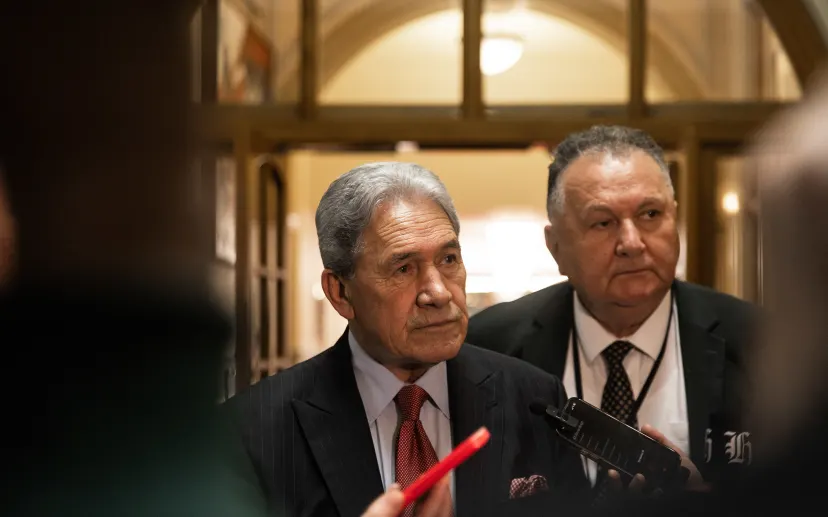
The Finance Minister has criticised Shane Jones for a $30,000 budget blowout incurred while attending a mining conference in Canada, saying he has made “significant errors”.
But Jones has immediately fired back, telling RNZ, Nicola Willis “must be in possession of information I don’t have, because to the best of my knowledge there were no errors made by my office”.
Speaking from Christchurch, Prime Minister Christopher Luxon struck a more understanding tone.
“It genuinely was an administrative error,” Luxon said. “I expect it won’t happen again.”
Luxon said he expected his ministers to stay within their approved budgets for overseas travel.
And New Zealand First leader Winston Peters is defending his deputy’s travel expenses including a private limousine on standby and an upgrade to business class flights, saying it’s “nothing out of the ordinary”.
Shane Jones travelled to Canada in March last year to attend the Prospectors and Developers Association of Canada convention, said to be the world’s largest mining conference.
The original trip was budgeted and approved by Cabinet to cost $33,000 but ended up blowing out to $63,000.
Significant errors – Willis
Nicola Willis told RNZ on Thursday afternoon that she took spending limits set out by Cabinet for international travel “extremely seriously, as does my office”.
“Having reviewed how we’ve come in against budget on all of my international travel, we’ve consistently spent less than we sought from Cabinet, and that I think is good practice, that you should never exceed what Cabinet grants you in terms of your travel budget, and I think this reflects significant errors on the part of the minister and his office.”
Asked if New Zealand First was out of touch with New Zealanders who are doing it tough, Willis told RNZ that was a matter for that party but she had a track record of sticking to budgets, and others should do the same.
Willis said all ministers “including Mr Jones” should take budgets set by Cabinet “very seriously”.

RNZ / Samuel Rillstone
Asked whether Willis was interfering, Jones told RNZ, “look, I’ve been down this track before”.
“I will compose myself and keep political firepower to the six weeks before the election – but I’ve got a message for my coalition partners – provoke the matua at your peril.”
Speaking to media on his way into a select committee scrutiny hearing as Regional Development Minister, Jones said his officials were responsible for his travel costs and sign-off was overseen by the finance department – “well above my pay grade”.
It’s reported Jones had a private limo on standby for a total of 24 hours over three days at a cost of C$3791.15, while the original budget for land transport was set down and approved at $500.
Asked why he needed the limo, Jones said “I presume that’s when I was in chilly cold snow blizzard-riddled Toronto”.
He said whether he should have taken a taxi was a matter for officials who he “presumed” booked his trip.
When asked if he requested the limo, Jones said, “look, all those details – I’m up in the wheelhouse – all those details would have been attended to by the trip organiser”.
As to why he flew business class when premium economy was approved for the trip, Jones blamed a booking error.
“To the best of my knowledge there was some sort of cock-up with the original booking, and then it was corrected, and by the time they corrected it there must have been a change in the cost structure of the trip.”
“I tend not to book my own travel,” Jones said.
“I mean, these things are detached from the politicians, so that there’s accountability, and the system runs the budgetary travel, and then it’s signed off, I think, by the Prime Minister’s department or something like that.”
Nothing out of the ordinary – Peters
Peters was also stopped by reporters at Parliament on Thursday morning where he insisted Jones had done nothing wrong.
“There’s nothing out of the ordinary on this matter at all, and by any other comparison with other ministers
“They made a budgetary mistake at the start as to what it costs were when I saw that, actually I couldn’t believe that they were so low, so what you’ve got is normalcy in this case, and there’s nothing for us to apologise here for,” Peters said.
“You can say there might be a budget, but when you get there, you have to deal with the realities.”
On the upgrade from premium economy to business class, Peters said that was within the rules when it’s 20 hours of flying.
“I’ve flown personally half way around the world on economy and nobody’s ever reflected on that, have you?…but in this case what he did was normal.”
Ministerial Services began chasing an explanation about an initial $20,000 overspend in May last year, and had to send several follow-up emails.
In January Jones wrote to the prime minister’s chief of staff seeking retrospective approval, which was approved the following month.
Responding to the delay between Jones being asked for an explanation and the approval being sought, Peters said those sorts of issues often take a lot of time “and it’s not the minister’s fault”.
This will be the system’s delay – that’s why things take that long,” he said.
Labour leader Chris Hipkins has also piled in on Jones, telling reporters he was not “walking the talk” and living up to the government’s rhetoric around fiscal restraint.
“They’re telling everybody else to tighten their belts and make do with less [while] Shane Jones is living it up large around the world.”
Source: RNZ



Latest News
Opportunities to mitigate multi-million-dollar RNZ budget blowout likely missed – experts
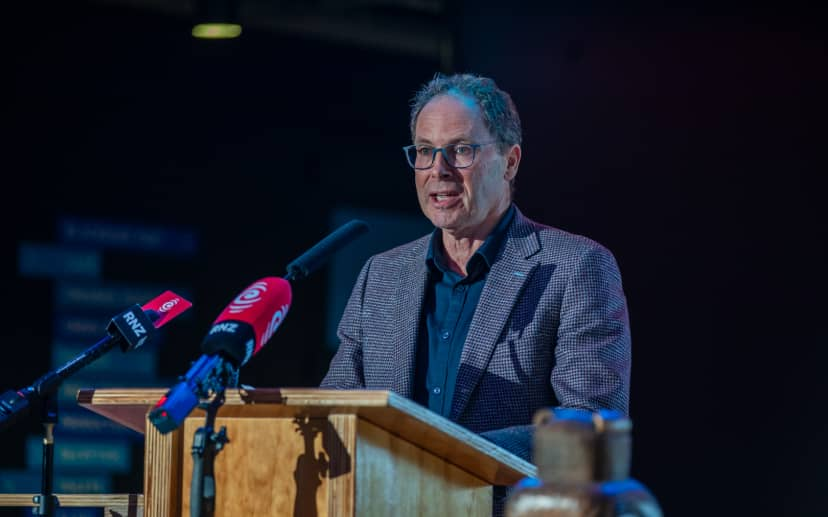
Multiple opportunities to identify and mitigate a multi-million-dollar budget blowout at RNZ appear have been missed, according to the former executive director at Audit New Zealand.
The public broadcaster on Monday revealed a near $12 million shock financial loss after a litany of financial blunders, which will now lead to sweeping job cuts.
The $11.8m loss is more than 25 times the $470,000 RNZ had expected to lose over the year to June.
CEO Paul Thompson took responsibility for the result, and said internal reports gave an inaccurate picture of the finances, meaning the scale of the loss only became clear in October.
RNZ’s former chief financial officer Hilary Parker resigned unexpectedly in early October.
The board said it would commission an independent review into what went wrong.
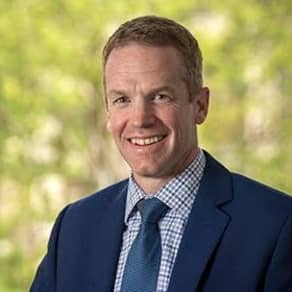
Independent contractor Stephen Walker, who left the Audit Office earlier this year, said the size of the loss was surprising, as was the length of time it took to identify it – months after the financial year ended.
Supplied / OAG
“Probably more of a concern is that they had seemingly been unaware that they were running up a significant deficit until they were in the preparation stage of their annual report in October.”
Walker said public entities typically produced monthly financial reports.
An interim audit also took place before the end of the financial year, he said, but if the organisation hadn’t identified significant losses at that stage, the auditor could also be in the dark.
“It seems that there’s a real weakness in forecasting and budgeting that’s occurred here and that the monthly accounts, when they’re produced, either haven’t identified these significant variances against budget or the magnitude of them really hasn’t come to light until right towards the end of the financial year,” Walker said.
“And really at that point, there’s no opportunity for the chief executive, the leadership team to take, and the board to take, any corrective action because the year has effectively been completed.”
Walker said the “significant miss” was difficult to account for given it was more than 10 percent of RNZ’s total funding.
He said based on RNZ’s annual report, financial complexity didn’t appear to be a factor.
“This $11.8m loss isn’t made up of one particular item … it seems to have been contributed to by a number of separate expense lines running over budget. So I don’t think it’s necessarily to do with complexity.”
Among the errors, RNZ wrongly counted $2m from land sales as income in its budget. Staff costs also came in $3.2m over budget, including $1.4m in redundancy payments.
Professor at Auckland University’s business school Norman Wong said based on media reports the issues identified were “significant and troubling”.

Supplied / University of Auckland
“But recognising the sale of land as income in their budget is a basic error that one would have expected to have been caught and corrected well before it got to this point.”
With funding reductions at RNZ over the past two years, Walker expected greater scrutiny of financial results.
“Virtually every public entity has had their annual budget reduced. And so you would expect … the leadership team on a monthly basis and board – I’m not sure how frequently the board will consider the information – but you would expect them to be interrogating the results on a regular basis throughout the year,” he said.
Walker said initiating an independent review was the correct course of action and that he’d want to understand what information the leadership team and the board were regularly receiving.
He said he’d “love to say” surprising financial results were rare, but conceded they occured on a semi-frequent basis during his time leading the Audit Office.
“The benefit of independent scrutiny by the Audit Office – and the auditors providing that support to the Auditor General – [is] that the reporting is fairly presented at the end of the year, whether it’s good, bad or ugly.”
rnz


Police say person who fired gun at officers still at large

New Zealand sides named for RLWC finals

Parliamentary Service working on extra chairs and offices for increased number of MPs


-

 Latest News2 months ago
‘Chilling’: Business groups speak out against National’s supermarket break-up plan
-

 NZ News2 months ago
Tom Phillips report: The missed opportunities to find the children
-

 Politics2 months ago
National vows to try to split Pak’nSave and New World
-

 Latest News2 months ago
Cars bearing Chinese police markings stir unease in Auckland
-

 Fiji News2 months ago
Plans to have new Constitution by Dec 24th 2026
-

 NZ News2 months ago
Cop who stole $68,000 can now be named as champion Muay Thai fighter Haimona Tamati-Te Paki
-

 Politics2 months ago
MBIE confirms botched biometric projects costs blown out to $50.7 million
-

 Latest News2 months ago
Five Karangahape Road venues lose their liquor licences after police intervention