

Latest News
Government floats using emergency fund on public transport, Labour asks why it wasn’t in Budget

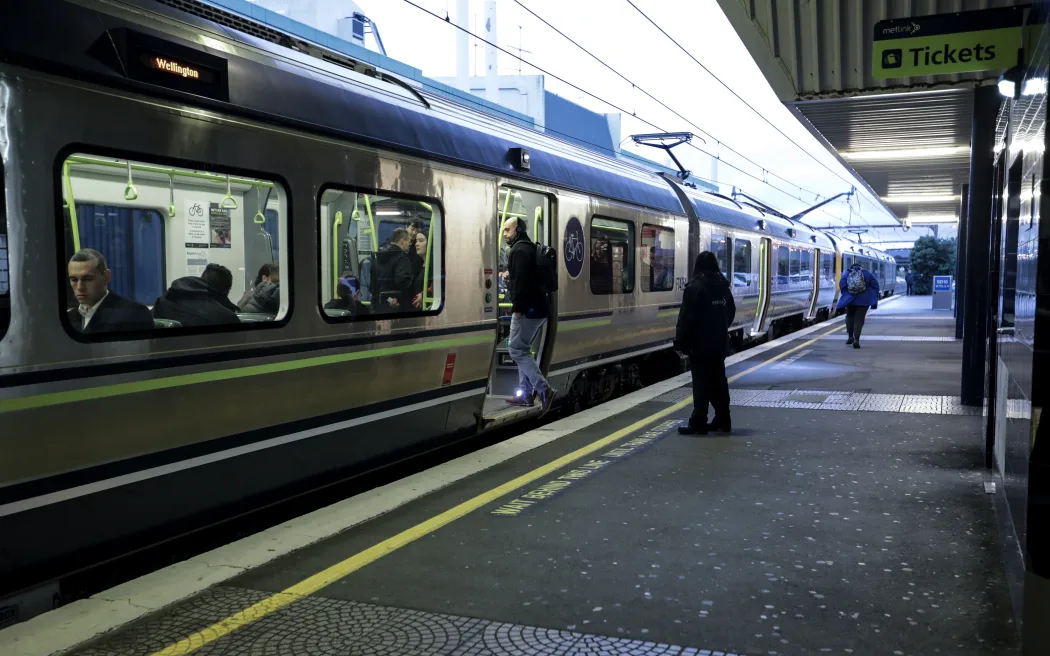
The government says it could use its emergency fund on better public transport services, but the opposition says it’s surprising that was now on the government’s agenda given there was no evidence of that in the Budget.
The transport minister says if the government used the $450 million set aside on public transport, it would be to put on more trains and buses during peak periods.
“The public transport authorities are working with NZTA on that at the moment.”
Labour announced on Wednesday it would cap public transport fares at $20 a week in Auckland, Wellington and Christchurch and $10 everywhere else, if elected.
The party said it would cost about $65m each year, using about 1 percent of the National Land Transport Fund (NLTF).
Transport Minister Chris Bishop criticised the focus of the spend, saying officials have indicated money is best spent on services rather than subsidies.
He said the government had looked at a range of fare subsidy options as a response to the fuel crisis.
“The advice from the officials is ‘don’t do this’.
“If you’re going to spend another dollar on public transport, it should go into public transport services rather than subsidies, which tend to be untargeted and tend not to be effective.”
He then went on to say if the government used the $450m emergency fund set aside in the Budget on public transport, it would be used on services in order to put on more trains and buses during peak periods.
“The public transport authorities are working with NZTA on that at the moment.”

Transport Minister Chris Bishop. Photo: RNZ / Mark Papalii
He said the Labour Party “asserts in their policy document” that there’s “all this latent service capacity in public transport networks around the country”.
He acknowledged that might be true during off-peak hours, but during peak demand hours, “there isn’t actually any extra capacity in some parts of the country”.
Bishop also questioned the $65m cost of the policy, saying Labour “haven’t even got their numbers right” and that it wasn’t less than 1 percent of the NLTF.
“The National Land Transport Fund is $4 to $5 billion per year in revenue.
“$65 million is more than 1 percent – they don’t even have their numbers done properly, so they have no idea, they have no idea what they’re talking about.”
But Labour rejects that – pointing to the total revenue of the NLTF for the financial year of 2026/27: $7.8b, with expenditure being $6.85b.
“So, less than 1 percent,” Labour’s transport spokesperson Tangi Utikere told RNZ.
Bishop said the “easiest thing to do when you’re the Labour Party” was to “get out the money hose and spray it around a bit, and hope for the best”.
“That is not the long-term answer to New Zealand’s challenges.”
Labour hits back
Utikere also told RNZ the $65m was a “net cost”.
He said the policy does cost money, but it also results in increased patronage and therefore increased revenue, “offsetting some of the cost”.
The party estimated its fare cap would increase patronage by 6 percent.
Utikere said when Auckland Transport introduced its fare cap in 2023, it did “extensive modelling and surveys on the effects at different price points”.
“They modelled that a $20 a fare cap would drive a slightly higher than 6 percent increase in patronage.”

Labour’s transport spokesperson Tangi Utikere. Photo: RNZ / Samuel Rillstone
He explained Labour took that modelling and updated it to “reflect today’s patronage data, fare prices, and costs of the services”.
“We calculated this across all of New Zealand’s public transport networks.”
The party said the country’s public transport systems had sufficient capacity to deal with increased demand.
But it said only Auckland and Christchurch’s ticketing systems could currently apply a fare cap, while Wellington and other regional systems need more work.
Speaking to RNZ, Utikere said Wellington had had the lowest patronage numbers in “20 odd years” according to publicly available reporting.
He also pointed to Auckland Transport’s reporting during peak utilisation that indicates on its frequent routes “that’s just at 46 percent capacity”.
“So there is capacity within the network, and you know we will obviously be working with councils around implementation or any nervousness that they might have about peak travel times well ahead of the one-July time frame of next year.
“We are confident that capacity and utilisation will go hand in hand.”
Utikere hit back at the transport minister’s suggestion the government might fund better public transport services.
“It’s great that public transport now surprisingly seems to be a focus of the government, or indeed on its agenda,” he said, because in the Budget they delivered just a couple of weeks ago, “there was nothing in there in terms of public transport support”.
“Chris Bishop may want to put the $450 million emergency fund into services,” but Utikere said the government hasn’t proven it would do that.
He said Labour’s policy was a measure to address the “cost of living pressures right now”.
But he acknowledged the nature of services and the fare structure worked in parallel.
During the announcement on Wednesday, Labour leader Chris Hipkins said the party was committed to “doing both”.

Labour leader Chris Hipkins. Photo: RNZ / Mark Papalii
Auckland Transport example
A spokesperson for Auckland Transport confirmed it had considered introducing a fare cap in early 2023 as an initiative to encourage Aucklanders to hop back on public transport.
Its analysis included estimates of potential passenger number and revenue changes for a range of options.
The fare cap wasn’t implemented at the time, because the government extended its half-prices fares policy and affordability the spokesperson said, however, a $50 fare cap was then introduced in mid-2024 as part of Auckland Council’s Long-term Plan.
“Since July 2024, more than 107,000 AT HOP cards have hit the $50 weekly cap threshold at least once, with an average of 6900 Aucklanders benefitting each week and many more Aucklanders reaching the cap from time-to-time, depending on their travel patterns.”
That’s expected to increase once the City Rail Link opened, the spokesperson said.
Greater Wellington points to ‘fish hooks’ and wants more detail
Deputy chair of the Greater Wellington Regional Council, and chair of the Public Transport Committee, Ros Connelly, told RNZ she loved any policies that made public transport more affordable, but said there were some “fish hooks” she wanted to get to the bottom of.

Deputy chair of the Greater Wellington Regional Council, and chair of the Public Transport Committee, Ros Connelly. Photo: RNZ / Reece Baker
She said the public transport network “particularly in Wellington” was under quite a lot of pressure, and the KiwiRail assets weren’t “where we need them to be”.
“We really need investment in the network, as well as to support Labour’s policy around capping fares.
“We also need to be able to provide that public transport, and undoubtedly more people will be seeking to use it if they can afford to do so.”
Connelly said many of the routes were already “reasonably full” and did not have a lot of spare capacity in the network. She said Wellington would need support to be able to deliver on any increased demand the policy would introduce.
“There’s also problems with the network that this will just exacerbate.”
She said more demand was awesome but that would bring certain problems into “a more stark relief”.
She reiterated the policy was great, but financial support would be needed to implement it.
rnz



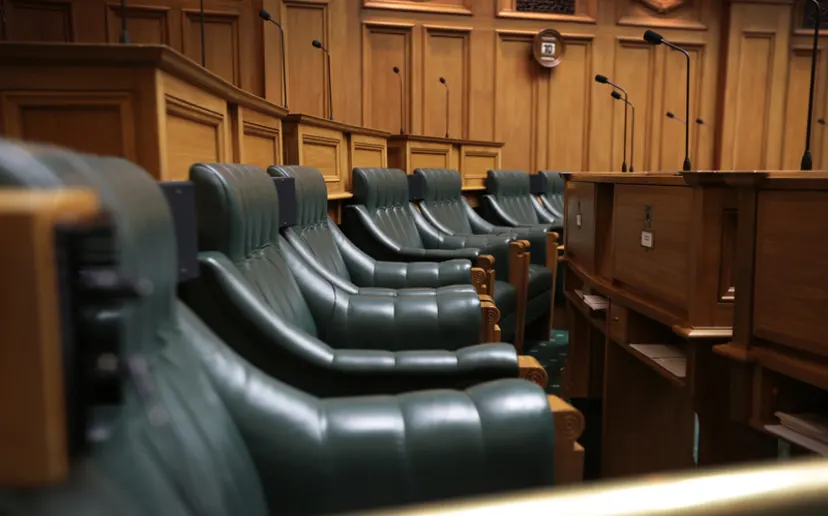
The chief executive of the Parliamentary Service is confident there will be enough room to accommodate the increased number of MPs and their staff coming into Parliament.
On current numbers, up to 131 MPs could be sitting in the Chamber following the election, brought on by a record overhang result.
Clerk of the House of Representatives Dr David Wilson told the Spinoff that currently the debating chamber had enough chairs to seat 124 MPs – including the Speaker of the House – and work was being done to accommodate more by altering the seating arrangement.
In a statement, Parliamentary Service chief executive Rafael Gonzalez-Montero said planning for a larger Parliament had been going for “some time”.
“Now that the election results have confirmed an increase to the number of members we are looking at several options.
“We are confident we will be able to accommodate all members within the Chamber.”
VNP / Phil Smith
Gonzalez-Montero said office accommodation for members and their staff would be “stretched” for a short time, but the new Members’ Building was only a few months away from “practical completion”.
That building – located behind Parliament – was due to be ready to occupy in April next year and had capacity to accommodate around 30 backbench MPs.
“All members should be in fit-for-purpose accommodation from that point,” Gonzalez-Montero said.
Following the 2023 election, 123 MPs sat in the Chamber – a record number at the time. That decreased to 122 following the resignation of National MP Judith Collins.
Collins held the seat of Papakura and stepped down in May and Parliament voted against holding a by-election because it was too close to the election.
The election result also meant high-ranking National Party MPs like Chris Bishop, Paul Goldsmith, Nicola Willis and Gerry Brownlee – Speaker of the House and an MP for 30 years – would likely not make it back into Parliament.
Only resigning or retiring MPs were permitted to give a valedictory speech meaning none of them would get the chance to give a valedictory statement.
Asked if their would be special allowances for valedictories, Wilson said in a statement that normally only MPs were allowed to speak in the House but the House could suspend its own rules or temporarily alter them.
“It could do so to allow former members to address the House.”
Wilson said no such arrangements could be made until the next Parliament opened and members sworn in.
rnz


Police say person who fired gun at officers still at large

New Zealand sides named for RLWC finals

Parliamentary Service working on extra chairs and offices for increased number of MPs


-

 Latest News2 months ago
‘Chilling’: Business groups speak out against National’s supermarket break-up plan
-

 NZ News2 months ago
Tom Phillips report: The missed opportunities to find the children
-

 Politics2 months ago
National vows to try to split Pak’nSave and New World
-

 Latest News2 months ago
Cars bearing Chinese police markings stir unease in Auckland
-

 Fiji News2 months ago
Plans to have new Constitution by Dec 24th 2026
-

 NZ News2 months ago
Cop who stole $68,000 can now be named as champion Muay Thai fighter Haimona Tamati-Te Paki
-

 Politics2 months ago
MBIE confirms botched biometric projects costs blown out to $50.7 million
-

 Latest News2 months ago
Five Karangahape Road venues lose their liquor licences after police intervention