

NZ News
Bay of Plenty Snapchat offender, rapist Raveen Saily sentenced for grooming, sexual offending against young girls


Warning: This story discusses graphic details of sexual violence and assault.
Snapchat predator and rapist Raveen Saily’s offending has been described as driven by a “desire to demean and degrade” his victims.
The 25-year-old recently appeared in the High Court at Rotorua, where Justice Dani Gardiner was tasked with deciding whether he should be given a sentence of preventive detention.
Saily’s latest offending involved two girls, aged 11 and 13.
The 11-year-old’s mother’s victim impact statement, read by Crown prosecutor Erin Reilly, explained that at the time, her daughter had been living with her grandmother.
The grandmother had tried to put boundaries in place for online access, but “didn’t know that much about online stuff, which made things harder to manage”.
“[My daughter] wasn’t supposed to be using Snapchat because I know how dangerous it is myself,” the girl’s mother said.
“But it’s hard because, socially, that was her way to engage with certain friends. She should have been safe using Snapchat to chat with people she knew instead of being taken advantage of.”
She noticed her daughter had started acting cagey about her phone. Then, the screen got damaged.
When she told her daughter she needed the passcode to get the phone fixed, her daughter was hesitant, making her mother promise not to look at any of her interactions.
The girl’s mother checked her WhatsApp and Snapchat.
“There were explicit messages and photos of my daughter, but specifically Snapchat… When I saw these images, I felt sick to my stomach.”
She realised her 11-year-old was being asked to send nudes, and was receiving nudes and other explicit material from someone she hadn’t met – Saily.
The mother said she went into shock and that it was scary to think about what might have happened if she hadn’t checked the phone.
It had taken time for her to rebuild trust with her daughter, and she had to explain to her why she searched the phone and how it was to keep her safe.
Her daughter now struggled to socialise, had changed schooling arrangements and was getting treatment from psychologists.
The mother’s statement addressed Saily directly: “You have taken my child’s ability to be a child away from her.”
She had seen things “she should never have seen as an 11-year-old child”.
One of the explicit videos the 11-year-old received was of Saily having a sexual act performed on him by the other victim – a 13-year-old from Rotorua.
That offending was detected after Saily was stopped at a routine traffic stop with the 13-year-old in his car, and police officers became suspicious about the age gap.
The night of the traffic stop was the weekend before Saily went on trial, charged with rape and other sexual violations of a 16-year-old girl, whom he’d also been in contact with on Snapchat.
He’d been on bail with conditions not to contact girls under the age of 16, or have access to the internet, but his Snapchat offending against the 11-year-old and 13-year-old happened while he awaited trial.
He was found guilty of the 2021 rape, violations and assaults of the 16-year-old.
In that trial, the jury heard how he had met the girl at Bayfair Shopping Centre in Mount Maunganui, before they went for a walk at nearby Arataki Park and ended up in the changing rooms at the community centre.
There, he threatened her with a knife, which he drew across her skin, drawing blood, and raped and violated her.
It was her first sexual experience, she told the jury, and the first time she’d met up with a boy alone.
He was sentenced to nine years and two months’ imprisonment for that offending. He also has previous convictions for possession of objectionable images.
Last week, he was sentenced on the remaining matters, including charges of sexual violation, sexual connection with a young person, possessing and distributing objectionable material, grooming and indecent communication, variously relating to the 11-year-old and 13-year-old, for which he had earlier pleaded guilty.

The Arataki Community Centre public changing rooms where a 16-year-old was raped and violated by Raveen Saily. Photo: Open Justice
Preventive detention, or a lengthy finite sentence?
The Crown sought a sentence of preventive detention, submitting that Saily showed a pattern of sustained offending that had caused serious harm to his victims, and two psychological report writers had found him to be at a high risk of reoffending.
Reilly said he seemed to have no remorse, nor any inclination to take part in rehabilitation.
While acknowledging Saily hadn’t yet had an opportunity to have treatment, Reilly said there were concerns he wouldn’t “genuinely engage” in that process.
“Particularly when you look at his capacity for duplicitousness,” Reilly said, referring to a comment from a report writer.
While he was only in his 20s, it wasn’t the typical impulsive offending of youth.
“It’s predatory, it’s grooming, it’s sustained over three victims,” she said.
“Having the order of preventive detention would mean that there would be more incentive to actually engage meaningfully in any treatment before being released.”
However, Saily’s lawyer Bill Nabney said his client had changed his position and now accepted he needed treatment.
“He, to be quite frank, had a fairly naive attitude, shall we say, towards the severity of his offending,” Nabney said.
In talking about the significant periods of imprisonment, there had “finally” been a recognition from Saily that he required treatment.
Nabney said the risk factors could still be addressed by a lengthy finite sentence, with treatment while in prison, and where he would still have to convince the Parole Board he had been rehabilitated before being granted parole.
He used ‘age and power to manipulate’ young victims
In sentencing Saily, Justice Gardiner first assessed the seriousness of the offending itself.
Referring to the 13-year-old, Justice Gardiner said Saily had “forced her to take part in demeaning and degrading acts”, taking video recordings and photographs of her in those acts.
“I consider it relevant and aggravating the manner in which your offending has been driven by power and coercion and a desire to demean and degrade your victim.”
He had used his “age and power to manipulate the victim”.
“Your actions during the course of offending indicated that you derived pleasure from this aspect of the offending.”
Saily added the 13-year-old girl on Snapchat in May 2024, claiming he was 16. He groomed her over a month and encouraged her to send him sexually explicit photographs.
They met at night in June 2024 and he drove her to several private locations where he sexually violated her, at times as she cried in pain.
She repeatedly told him to stop, but he told her to shut up.
‘You groomed her persistently over months’
Justice Gardiner found the offending against the 11-year-old was aggravated by the fact the girl was “very young”.
“You knew she was that young, she told you. You groomed her persistently over months,” the judge said.
Saily never met the 11-year-old victim in person; they lived in different cities and communicated on Snapchat.
The summary of facts stated that during a video call, Saily asked the girl to be his girlfriend. She told him she was only 11 and too young to have a boyfriend.
However, Saily continued to pressure her until she agreed and their conversations continued over text and Snapchat, and with audio and video calls.
She became “increasingly emotionally dependent” on Saily, believing she was in a relationship with him.
Saily told the 11-year-old he loved her, while encouraging her to send him sexually explicit images.
He would ask her to “get naked” and tell her about his sexual preferences, describing himself as “freaky”.
He told her she would be a “good SCAT girl”, which describes sexual arousal from faecal matter.
“Your offending escalated to requiring her to perform demeaning sexual acts for you and sending her images of another victim performing a degrading sexual act,” the judge said.
It had caused distress and pain to the girl and her family.
“You stole the victim’s innocence at 11 years old. She has been left psychologically damaged by your actions, unable to attend school, and requiring clinical treatment,” the judge said.

The knife Raveen Saily threatened a 16-year-old girl with after meeting up after exchanging messages on Snapchat. Photo: Open Justice
Violent videos, extreme explicit material and a ‘distorted understanding of healthy sexual relationships’
After looking at the offending itself, the judge turned her mind to the ongoing risk Saily posed to the community to consider if a sentence of preventive detention was appropriate.
“There is a pattern of grooming young women online for sexual purposes,” she said.
“While you appear to have met the [16-year-old] victim through a friend, you then engage with her online, providing a false name. As your offending progressed, you engaged with younger victims, whom you’ve groomed on social media. You have admitted to numerous online relationships with young girls beyond the victims.”
In the cases of the 16-year-old raped by Saily and the 13-year-old, he had met with them before “sexually violating them in violent and degrading ways”.
Justice Gardiner considered the psychological reports – Saily had a longstanding pattern of “compulsive pornography consumption”.
“You described a rabbit hole effect whereby you became increasingly drawn to extreme material, which led you towards paedophilia content, and eventually to the development of sexual interest in young women and girls,” the judge said.
He’d also consumed non-sexual violent content, such as beheadings.
The ongoing exposure to increasingly extreme sexual material had “distorted [his] understanding of healthy relationships, consent and age-appropriate intimacy”.
“Your sexual deviancy has contributed to associated health problems, including difficulty being sexually fulfilled by developmentally appropriate and healthy relationships,” the judge said.
However, Justice Gardiner concluded that given Saily was still relatively young, there was an ability for him to engage in rehabilitative programmes that targeted things such as cognitive distortions, intimacy deficits, arousal management, victim empathy, safety planning and relapse prevention.
“According to [the psychologist] your deviant sexual predispositions are likely to be, at least in part, borne out of childhood trauma and compulsive consumption of increasingly extreme pornography from late childhood.
“You may be able to address these contributing causes through rehabilitation.”
He could also be subject to an extended supervision order, and was not guaranteed parole as soon as he became eligible.
She decided a finite sentence would be sufficient to deter and denounce the offending, and to protect the community.
In terms of what that sentence would be, the judge had to look not just at the latest offending but the sentence he was already serving.
It was agreed by the Crown and defence that the sentences would be cumulative, not concurrent, so she had to apply totality.
She adopted a starting point of 13 years and six months for the offending against the 11-year-old and 13-year-old, but adjusted the end sentence to eight years, to be served cumulatively with the nine-year, two-month sentence for the rape and violation of the 16-year-old.
This meant that for all the offending, Saily is serving a sentence of 17 years and two months’ imprisonment.
She also imposed a minimum period of imprisonment so that Saily would have to serve at least six and a half years before being eligible for parole.
Where to get help:
- NZ Police.
- Victim Support 0800 842 846.
- Rape Crisis: 0800 88 33 00.
- Rape Prevention Education.
- Empowerment Trust.
- HELP (Auckland): 09 623 1700, (Wellington): 04 801 6655.
- Safe to talk: 0800 044 334.
- Tautoko Tāne Male Survivors Aotearoa.
- Survivors Network of those Abused by Priests (SNAP) 022 344 0496.
Source: NZ Herald & RNZ



Latest News
Opportunities to mitigate multi-million-dollar RNZ budget blowout likely missed – experts
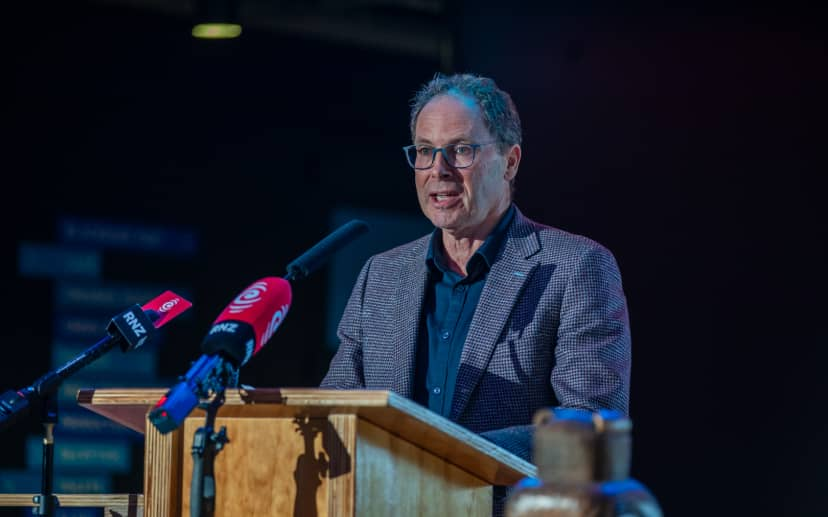
Multiple opportunities to identify and mitigate a multi-million-dollar budget blowout at RNZ appear have been missed, according to the former executive director at Audit New Zealand.
The public broadcaster on Monday revealed a near $12 million shock financial loss after a litany of financial blunders, which will now lead to sweeping job cuts.
The $11.8m loss is more than 25 times the $470,000 RNZ had expected to lose over the year to June.
CEO Paul Thompson took responsibility for the result, and said internal reports gave an inaccurate picture of the finances, meaning the scale of the loss only became clear in October.
RNZ’s former chief financial officer Hilary Parker resigned unexpectedly in early October.
The board said it would commission an independent review into what went wrong.
Independent contractor Stephen Walker, who left the Audit Office earlier this year, said the size of the loss was surprising, as was the length of time it took to identify it – months after the financial year ended.

Supplied / OAG
“Probably more of a concern is that they had seemingly been unaware that they were running up a significant deficit until they were in the preparation stage of their annual report in October.”
Walker said public entities typically produced monthly financial reports.
An interim audit also took place before the end of the financial year, he said, but if the organisation hadn’t identified significant losses at that stage, the auditor could also be in the dark.
“It seems that there’s a real weakness in forecasting and budgeting that’s occurred here and that the monthly accounts, when they’re produced, either haven’t identified these significant variances against budget or the magnitude of them really hasn’t come to light until right towards the end of the financial year,” Walker said.
“And really at that point, there’s no opportunity for the chief executive, the leadership team to take, and the board to take, any corrective action because the year has effectively been completed.”
Walker said the “significant miss” was difficult to account for given it was more than 10 percent of RNZ’s total funding.
He said based on RNZ’s annual report, financial complexity didn’t appear to be a factor.
“This $11.8m loss isn’t made up of one particular item … it seems to have been contributed to by a number of separate expense lines running over budget. So I don’t think it’s necessarily to do with complexity.”
Among the errors, RNZ wrongly counted $2m from land sales as income in its budget. Staff costs also came in $3.2m over budget, including $1.4m in redundancy payments.
Professor at Auckland University’s business school Norman Wong said based on media reports the issues identified were “significant and troubling”.

Supplied / University of Auckland
“But recognising the sale of land as income in their budget is a basic error that one would have expected to have been caught and corrected well before it got to this point.”
With funding reductions at RNZ over the past two years, Walker expected greater scrutiny of financial results.
“Virtually every public entity has had their annual budget reduced. And so you would expect … the leadership team on a monthly basis and board – I’m not sure how frequently the board will consider the information – but you would expect them to be interrogating the results on a regular basis throughout the year,” he said.
Walker said initiating an independent review was the correct course of action and that he’d want to understand what information the leadership team and the board were regularly receiving.
He said he’d “love to say” surprising financial results were rare, but conceded they occured on a semi-frequent basis during his time leading the Audit Office.
“The benefit of independent scrutiny by the Audit Office – and the auditors providing that support to the Auditor General – [is] that the reporting is fairly presented at the end of the year, whether it’s good, bad or ugly.”
rnz


Police say person who fired gun at officers still at large

New Zealand sides named for RLWC finals

Parliamentary Service working on extra chairs and offices for increased number of MPs


-

 Latest News2 months ago
‘Chilling’: Business groups speak out against National’s supermarket break-up plan
-

 NZ News2 months ago
Tom Phillips report: The missed opportunities to find the children
-

 Politics2 months ago
National vows to try to split Pak’nSave and New World
-

 Latest News2 months ago
Cars bearing Chinese police markings stir unease in Auckland
-

 Fiji News2 months ago
Plans to have new Constitution by Dec 24th 2026
-

 NZ News2 months ago
Cop who stole $68,000 can now be named as champion Muay Thai fighter Haimona Tamati-Te Paki
-

 Politics2 months ago
MBIE confirms botched biometric projects costs blown out to $50.7 million
-

 Latest News2 months ago
Five Karangahape Road venues lose their liquor licences after police intervention