

Latest News
Hiringa-TR Group partnership close to getting a dozen hydrogen-fuelled trucks on the road

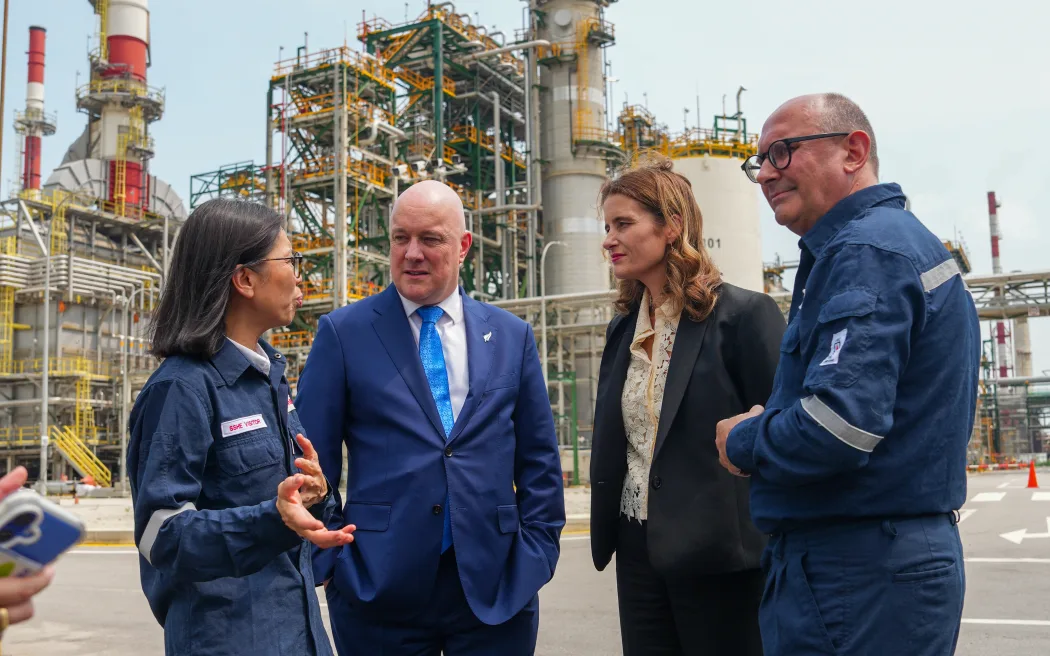
A partnership to get green hydrogen trucks up and running in New Zealand says there is renewed interest in the technology as diesel prices remain high.
Hydrogen fuel company Hiringa and heavy vehicle leasing business TR Group have faced delays getting their model up and running, but say they are now close to getting a dozen hydrogen fuel cell trucks on the road.
They, and other advocates for sustainable transport, say they offer a helpful alternative to battery electric vehicles for heavy freight.
However, not everyone sees hydrogen as a viable way to decarbonise heavy vehicles, with some critics saying New Zealand should focus on building out battery technology instead.
Transport is New Zealand’s second-largest source of greenhouse gases after the dairy industry, accounting for 18 percent of total emissions in 2024.
Uptake of electric passenger vehicles slowed after the government ended the Clean Car Discount, although spiked again recently after the conflict in Iran sparked an ongoing fuel crisis.
Energy Efficiency and Conservation Authority (EECA) delivery and partnerships manager Richard Briggs said the heavy vehicle fleet had proved even tougher to decarbonise.
“There’s been a lot of tyre-kicking, literally, and early adopters are looking at both battery electric and hydrogen, but really only those with relatively deep pockets who are prepared to take a risk and invest are looking at this.”
Five years ago, TR Group and Hiringa signed an agreement to establish an initial network of both hydrogen trucks and refuelling stops.
The government contributed $6 million for the purchase of 20 trucks, through the Covid Response Fund, and loaned Hiringa $16m to build four refuelling stations in Auckland, Tauranga, Hamilton and Palmerston North.

The compressed hydrogen gas is made and stored on-site at Hiringa’s Wiri refuelling station. Photo: RNZ / Kate Newton
Hiringa’s compressed gas is made and stored onsite at the refuelling stations, by using electrolysis to split water back into its components of hydrogen and oxygen.
The company uses off-peak renewable energy for the process, to make it as cheap as possible -TR Group said it was currently paying less for it per kilometre than diesel.
A battery fuel cell onboard each truck then converted the gas back into energy with water and heat as the by-products, with no tailpipe emissions.
Renewed interest after slow uptake
A handful of hydrogen heavy vehicles have been making use of the refuelling stations, including a New Zealand Post truck that has clocked a quarter of a million kilometres.
However, difficulties in procuring trucks after TR Group’s initial US supplier went bust had delayed getting the additional 20 trucks.
TR Group’s project manager Grant Doull said Rolleston-based company GVB had instead completed conversions of nine diesel trucks to hydrogen, with the final 11 due to start arriving at TR’s depot in Auckland from July.
The company had been training drivers and extensively testing routes since the first trucks arrived.
The delivery delays, combined with a post-Covid recession and cost-of-living crisis had “slowed progress” in securing commercial leases, Doull said.
“But we’ve definitely seen a massive uplift these days with the current fuel situation.”
The company was now in final contract negotiations to get 12 of the trucks out on the road.
Hiringa chief executive Andrew Clennett – whose business relied on having a fleet of vehicles to supply fuel to – said uptake had been slower than Hiringa would have liked.
“Obviously, sitting there with a network that’s been underutilised has put some pressure on,” he said.

Hiringa chief executive Andrew Clennett. Photo: Supplied
That was changing now, he said.
“The market is definitely showing a lot more interest now. I think the penny’s dropped a little bit, that with the Ukraine war, we had a fuel crisis, we’ve got another one which is bigger and worse and longer, and it would be a brave director of a company that would bank on not having this again.”
Battery electric or hydrogen?
Doull said TR Group was already leasing out battery electric trucks and vans, which were a good zero-emissions choice in many cases.
“Let’s say if they operate the truck, four or five hours, maybe – it could be 500, 600 kilometres a day – say they have a depot where they’re loading and unloading and they’ve got good charging infrastructure at that depot, then it’s probably something that’s going to get solved with a battery electric truck quite easily.”
However, the battery on an electric truck could weigh several tonnes, limiting the rest of the payload, and long-haul trucks that operated round the clock could not easily be charged, he said.
The other advantage hydrogen offered at the moment was that the infrastructure was already available.
“The reality is there’s no heavy vehicle fast charging for trucks in the country at the moment,” Doull said.
“There are, however, four high-speed heavy commercial vehicle hydrogen refuelling sites.”

TR Group’s Grant Doull has led the project to introduce 20 hydrogen-powered trucks to the company’s fleet. Photo: RNZ / Kate Newton
University of Canterbury Sustainable Energy Research Group co-leader Rebecca Peer said the previous hype of green hydrogen as a “Swiss Army knife” for decarbonisation had passed.
However, heavy transport was a “niche” that still had potential in New Zealand.
“The advantages I see for the hydrogen vehicles are particularly acute when you have very long distance or highly variable routes with unpredictable fuelling times,” she said.
From her perspective, it was not an either-or argument.
“My answer, as a researcher who looks at energy transitions, is yes to both.”
Briggs said because hydrogen had to be created, stored, and then converted back into energy, it was three to five times less efficient than battery electric.
Battery electric vehicles were also cheaper – with some good-quality models now achieving parity with their diesel equivalents, once EECA subsidies were included.
“On the surface of it, you say, it’s a no-brainer – why on earth would you consider hydrogen?”
There were other aspects to consider, though, including the “huge investment” needed for charging infrastructure, especially as megawatt batteries become available, Briggs said.

TR Group driver trainer Paul Fair fills up one of the company’s hydrogen fuel cell trucks at the Hiringa refuelling station in Wiri, Auckland. Photo: RNZ / Kate Newton
Like Peers, he believed there were still some good use-cases for hydrogen.
“There’s going to be more and more battery technology emerging in the next 10 years… but certainly from what we’re seeing I don’t think it’s yet game over for hydrogen,” he said.
“That long distance heavy haulage where you’re carrying maximum payload weights, where you’re needing to double-shift a vehicle – so refuelling time is needed in minutes, not hours – is still a use application for hydrogen.”
However, the time had passed where it was seen as a good answer to decarbonising passenger cars.
“Hydrogen doesn’t really make sense, largely because every car can be charged at home, and also the car battery then can be an integral part of the home energy system,” Briggs said.
“That’s just not a thing that hydrogen vehicles can replicate.”
EECA said the data collected from Hiringa and TR Group, once trucks were on the road carrying full pay-loads, would be shared with other operators considering purchasing or leasing a hydrogen vehicle – together with its existing data on battery electric heavy vehicles.
There is still $24m remaining in its low-emissions heavy vehicle fund, which provides companies with a subsidy of up to 25 percent of the cost of a hydrogen or battery electric heavy vehicle.
RNZ



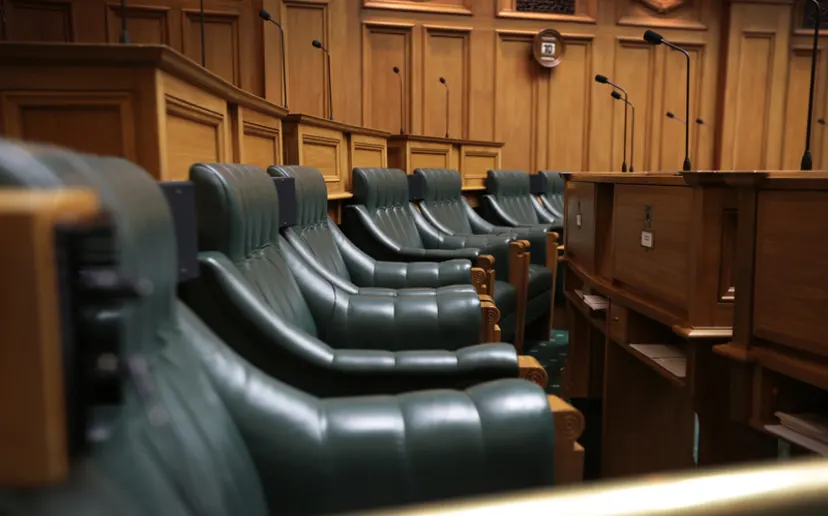
The chief executive of the Parliamentary Service is confident there will be enough room to accommodate the increased number of MPs and their staff coming into Parliament.
On current numbers, up to 131 MPs could be sitting in the Chamber following the election, brought on by a record overhang result.
Clerk of the House of Representatives Dr David Wilson told the Spinoff that currently the debating chamber had enough chairs to seat 124 MPs – including the Speaker of the House – and work was being done to accommodate more by altering the seating arrangement.
In a statement, Parliamentary Service chief executive Rafael Gonzalez-Montero said planning for a larger Parliament had been going for “some time”.
“Now that the election results have confirmed an increase to the number of members we are looking at several options.
“We are confident we will be able to accommodate all members within the Chamber.”
VNP / Phil Smith
Gonzalez-Montero said office accommodation for members and their staff would be “stretched” for a short time, but the new Members’ Building was only a few months away from “practical completion”.
That building – located behind Parliament – was due to be ready to occupy in April next year and had capacity to accommodate around 30 backbench MPs.
“All members should be in fit-for-purpose accommodation from that point,” Gonzalez-Montero said.
Following the 2023 election, 123 MPs sat in the Chamber – a record number at the time. That decreased to 122 following the resignation of National MP Judith Collins.
Collins held the seat of Papakura and stepped down in May and Parliament voted against holding a by-election because it was too close to the election.
The election result also meant high-ranking National Party MPs like Chris Bishop, Paul Goldsmith, Nicola Willis and Gerry Brownlee – Speaker of the House and an MP for 30 years – would likely not make it back into Parliament.
Only resigning or retiring MPs were permitted to give a valedictory speech meaning none of them would get the chance to give a valedictory statement.
Asked if their would be special allowances for valedictories, Wilson said in a statement that normally only MPs were allowed to speak in the House but the House could suspend its own rules or temporarily alter them.
“It could do so to allow former members to address the House.”
Wilson said no such arrangements could be made until the next Parliament opened and members sworn in.
rnz


Police say person who fired gun at officers still at large

New Zealand sides named for RLWC finals

Parliamentary Service working on extra chairs and offices for increased number of MPs


-

 Latest News2 months ago
‘Chilling’: Business groups speak out against National’s supermarket break-up plan
-

 NZ News2 months ago
Tom Phillips report: The missed opportunities to find the children
-

 Politics2 months ago
National vows to try to split Pak’nSave and New World
-

 Latest News2 months ago
Cars bearing Chinese police markings stir unease in Auckland
-

 Fiji News2 months ago
Plans to have new Constitution by Dec 24th 2026
-

 NZ News2 months ago
Cop who stole $68,000 can now be named as champion Muay Thai fighter Haimona Tamati-Te Paki
-

 Politics2 months ago
MBIE confirms botched biometric projects costs blown out to $50.7 million
-

 Latest News2 months ago
Five Karangahape Road venues lose their liquor licences after police intervention