

NZ News
Wellingtonians face average $2400 water bill next year, massive increases to follow


Wellingtonians will face “really steep” increases in their water bills over the next decade, to as high as $6831 a year, as the city’s new water entity tries to fix old, failing infrastructure, its chairman says.
That would start with an average increase in water charges of 14.7 percent, or an extra $310 this year, with charges possibly increasing by 28 percent in 2027-2028, and more than doubling by 2036.
Those living in Wellington City, Porirua, Hutt City, and Upper Hutt have been paying an average of $2100 a year for water through council rates. From July, they will receive separate quarterly water bills, and would have to set up new payments to Tiaki Wai.
Put another way, an average household across the region’s four cities – Wellington, Lower Hutt, Upper Hutt and Porirua – was set to pay about $2418 per year this coming year, and pay $6831 (with inflation) by 2036.
Releasing the indicative charges in its water services strategy on Wednesday, Tiaki Wai board chairman Will Peet said he knew the price rises would be unpopular under cost-of-living pressures, but the topic needed to be addressed now.

Chair of Tiaki Wai Will Peet. Photo: Supplied / Tiaki Wai
“We’re conscious that everyone’s been facing rising costs over the past few years, and that any increase is challenging for people,” Peet said.
“And I think, also for me, It’s taken 30 years to get to this position, and it will take more than five minutes to fix.”
Tiaki Wai was replacing Wellington Water and inheriting the region’s assets – managing and providing drinking water, wastewater, and piped stormwater services from July.
Peet said this year the exact amount of bills would vary from city to city and property to property, in the same way rates varied.
For example, Porirua residents would pay an average increase of $368 per year for water charges, Lower Hutt residents an extra $349, Upper Hutt residents an extra $278 and Wellington residents an extra $275.
The four councils’ rating model was being transferred to Tiaki Wai for the first year’s bills, but over time, the organisation would move to a common pricing model.
Peet said he wanted to be upfront with residents about what costs would look like, and to ask them for feedback on the organisation’s strategy.
“That said, these are still really steep increases and I know you’ll see some of that from other water authorities around the country, but these are significant increases.”
He said no one would have their water turned off if they were struggling to pay a bill.

Wellingtonians are facing “really steep” increases in their water bills. Photo: RNZ / Nate McKinnon
According to its strategy document, Tiaki Wai had a hardship policy, including issuing reminder notices and contacting external debt collecting agencies if necessary, but Peet said debt collecting was not what the organisation was considering right now.
‘Hard decisions’ needed
Peet was blunt about the challenges for the organisation, saying it would take many years to catch up with decades of underinvestment.
“Infrastructure everywhere, you can’t keep on kicking the can down the road otherwise it comes back to bite you,” he said.
“We have been deferring expenditure in water for a long time, and it’s not my place to determine past decisions, what I can tell you now is that we need to make the hard decision and start to invest.”
The strategy document noted many critical assets were in a poor condition, too old and presenting a “significant risk of failure”, including that three out of four wastewater treatment plants were non-compliant, with problems going back many years.
Wastewater networks were overflowing and stormwater systems were regularly contributed to flooding and pollution, it said.
Added to this was the organisation’s financial position – Tiaki Wai needed more money to operate, Peet said.
The organisation would take over $9 billion of water assets and around $1.7b of debt from the councils, but the amount of revenue being collected by councils – about $385 million in 2025-2026 – had not been enough to meet the long term cost for water services.

One of the organisation’s main priorities from July is to fix the Moa Point Treatment Plant. Photo: RNZ / Samuel Rillstone
One of the organisation’s main priorities from July was to fix the Moa Point Treatment Plant, Peet said, which was still spewing raw sewage into the sea after a catastrophic failure in February.
Peet would not comment on if there was a plan to stop that, and said it was a “bit early to say” how much it would take to fix the plant, referring those questions to current owner Wellington City Council.
“We’ll be working really closely with Wellington City, as they work through the Moa Point issue. I live near the South Coast myself, I know what an impact it’s having, we all know we need to do the right fix, at the right time to make sure it stops.”
He would also not comment on any current suppliers operating the plants, including Veolia.
The organisation had been set some strict targets by Wellington regions’ mayors and mana whenua partners, including that it would not receive any abatement notices, fines, or prosecutions from Greater Wellington Regional Council for non-compliant plants.
Peet said it was the right target to aim for, but with long-standing infrastructure issues, it would not happen in first year.
“We won’t be meeting those in the initial stages, because Wellington Water is not meeting them.
“What happens on the 30 June, will be pretty much what happens on 1st July – that said I think it’s an entirely reasonable expectation that the people of Wellington, through the partner’s committee, should set us some aspirational goals to improve things.”
Source: RNZ


Latest News
Opportunities to mitigate multi-million-dollar RNZ budget blowout likely missed – experts
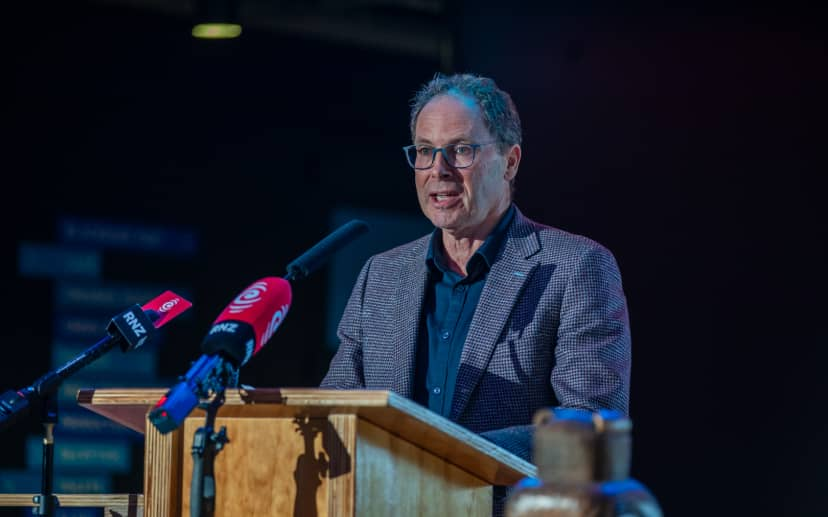
Multiple opportunities to identify and mitigate a multi-million-dollar budget blowout at RNZ appear have been missed, according to the former executive director at Audit New Zealand.
The public broadcaster on Monday revealed a near $12 million shock financial loss after a litany of financial blunders, which will now lead to sweeping job cuts.
The $11.8m loss is more than 25 times the $470,000 RNZ had expected to lose over the year to June.
CEO Paul Thompson took responsibility for the result, and said internal reports gave an inaccurate picture of the finances, meaning the scale of the loss only became clear in October.
RNZ’s former chief financial officer Hilary Parker resigned unexpectedly in early October.
The board said it would commission an independent review into what went wrong.
Independent contractor Stephen Walker, who left the Audit Office earlier this year, said the size of the loss was surprising, as was the length of time it took to identify it – months after the financial year ended.
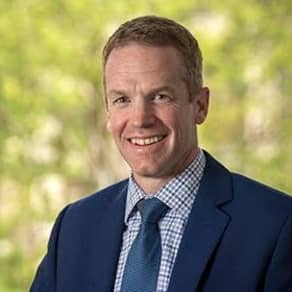
Supplied / OAG
“Probably more of a concern is that they had seemingly been unaware that they were running up a significant deficit until they were in the preparation stage of their annual report in October.”
Walker said public entities typically produced monthly financial reports.
An interim audit also took place before the end of the financial year, he said, but if the organisation hadn’t identified significant losses at that stage, the auditor could also be in the dark.
“It seems that there’s a real weakness in forecasting and budgeting that’s occurred here and that the monthly accounts, when they’re produced, either haven’t identified these significant variances against budget or the magnitude of them really hasn’t come to light until right towards the end of the financial year,” Walker said.
“And really at that point, there’s no opportunity for the chief executive, the leadership team to take, and the board to take, any corrective action because the year has effectively been completed.”
Walker said the “significant miss” was difficult to account for given it was more than 10 percent of RNZ’s total funding.
He said based on RNZ’s annual report, financial complexity didn’t appear to be a factor.
“This $11.8m loss isn’t made up of one particular item … it seems to have been contributed to by a number of separate expense lines running over budget. So I don’t think it’s necessarily to do with complexity.”
Among the errors, RNZ wrongly counted $2m from land sales as income in its budget. Staff costs also came in $3.2m over budget, including $1.4m in redundancy payments.
Professor at Auckland University’s business school Norman Wong said based on media reports the issues identified were “significant and troubling”.

Supplied / University of Auckland
“But recognising the sale of land as income in their budget is a basic error that one would have expected to have been caught and corrected well before it got to this point.”
With funding reductions at RNZ over the past two years, Walker expected greater scrutiny of financial results.
“Virtually every public entity has had their annual budget reduced. And so you would expect … the leadership team on a monthly basis and board – I’m not sure how frequently the board will consider the information – but you would expect them to be interrogating the results on a regular basis throughout the year,” he said.
Walker said initiating an independent review was the correct course of action and that he’d want to understand what information the leadership team and the board were regularly receiving.
He said he’d “love to say” surprising financial results were rare, but conceded they occured on a semi-frequent basis during his time leading the Audit Office.
“The benefit of independent scrutiny by the Audit Office – and the auditors providing that support to the Auditor General – [is] that the reporting is fairly presented at the end of the year, whether it’s good, bad or ugly.”
rnz


Police say person who fired gun at officers still at large

New Zealand sides named for RLWC finals

Parliamentary Service working on extra chairs and offices for increased number of MPs


-

 Latest News2 months ago
‘Chilling’: Business groups speak out against National’s supermarket break-up plan
-

 NZ News2 months ago
Tom Phillips report: The missed opportunities to find the children
-

 Politics2 months ago
National vows to try to split Pak’nSave and New World
-

 Latest News2 months ago
Cars bearing Chinese police markings stir unease in Auckland
-

 Fiji News2 months ago
Plans to have new Constitution by Dec 24th 2026
-

 NZ News2 months ago
Cop who stole $68,000 can now be named as champion Muay Thai fighter Haimona Tamati-Te Paki
-

 Politics2 months ago
MBIE confirms botched biometric projects costs blown out to $50.7 million
-

 Latest News2 months ago
Five Karangahape Road venues lose their liquor licences after police intervention