

Latest News
National ticketing system on public transport rolls out in Christchurch

When the New Zealand Transport Agency signed off on an integrated national ticketing system in 2009, John Key was prime minister, Avatar ruled at the box office and a pound of butter cost about $3.60.
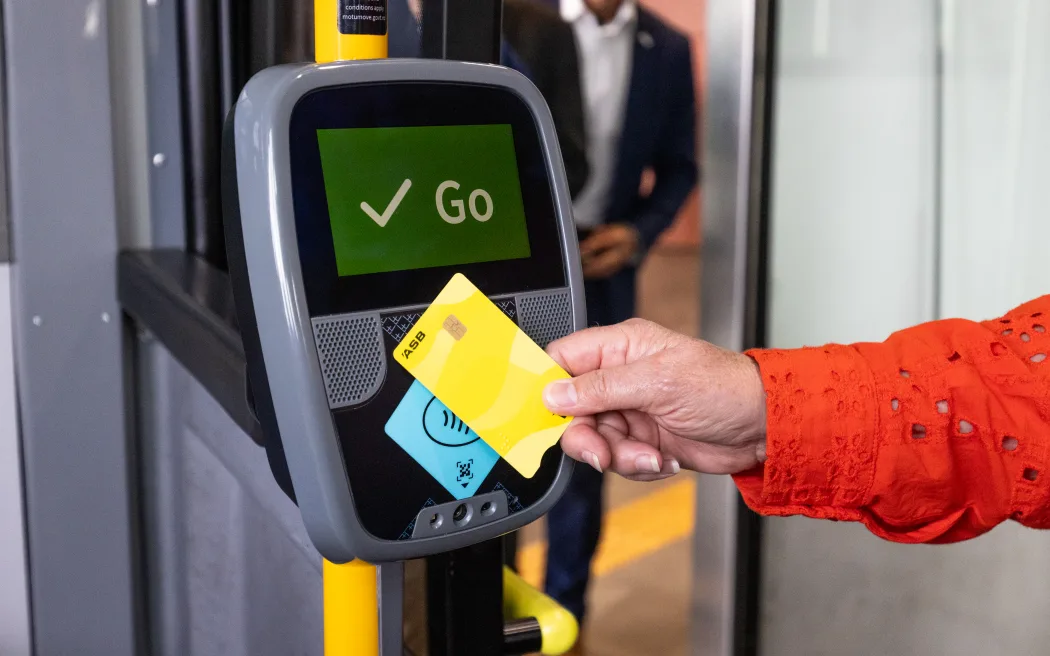
After more than 16 years, the first stage of the $1.4 billion National Ticketing Solution’s (NTS) latest iteration, known as Motu Move, was launched on Monday in Christchurch, rolling out contactless payment options on bus and ferry services across Greater Christchurch.
The option to pay with contactless debit or credit cards and digital payments like Apple Pay and Google Pay on phones or smart watches on buses and ferries will work on three hundred buses across Christchurch, Waimakariri and Selwyn, but only for those paying full fare.
A system to enable concession holders to pay less and the Motu Move cards themselves have been relegated to later stages.

Photo: RNZ / Nate McKinnon
The programme, a partnership between the NZTA, Auckland Transport and a dozen regional and city councils – will be rolled out in Wellington next, and it’s hoped the whole country (except for Marlborough and the West Coast) will be part of the long awaited integrated system by the end of 2027.
Following repeated delays and a critical independent review earlier in the year, the planned launch in Timaru and Temuka was scrapped in favour of a phased approach, which saw the launch relocated to Christchurch.
It was also downsized to just the first phase, contactless payment, after delays to “some of the more complex system components” saw the rollout changed to “a phased approach”, according to NZTA.

Transport Minister Chris Bishop. Photo: RNZ / Nick Monro
The NTS was slated to be launched in South Canterbury in 2024, but by the middle of this year, Transport Minister Chris Bishop weighed in, saying the project was facing technology, delivery and governance issues and was “not on track”.
Bishop said nothing was “off the table”, as consultants conducted an independent review of the project.
Councils in Auckland and Wellington raised concerns, and some councillors publicly mused about pulling out of the scheme.
The wide-ranging – though heavily redacted – review was released in September.
It raised concerns about the capacity of the US multinational transport and defence contractor delivering the system, Cubic Corporation, and stated the company “must commit additional global expertise dedicated to the programme”.
The review found deficiencies in a number of areas including poor communication, “optimism bias” from some senior programme leaders, limited public transport and ticketing knowledge, slow decision making, the “urgent need” to support legacy fare collection systems, pressure on budgets and the “very high likelihood of further significant delays”.
In the meantime, a pilot of contactless payment options on Christchurch’s Airport to City bus – which began in December 2024 – saw more than a third of adult passengers using the debit or credit card option.

Canterbury Regional Council chair Dr Deon Swiggs. Photo: RNZ / Nate McKinnon
Canterbury Regional Council chair Dr Deon Swiggs said the launch had been a long time coming.
“We are proud Canterbury has taken a lead role in this nationally significant evolution of a payment system in New Zealand.
“Our region has a history of contributing nationally to public transport innovation and we are pleased to be trusted with the first step of the national ticketing system.”
Swiggs said more than 500 people had already taken advantage of the new payment system by the time he addressed the launch at 1pm.
Previously, using cash to pay instead of a Metrocard incurred an extra dollar charge.
The project had seen the regional council work closely with central government, Cubic, bus and ferry operators and other regional councils.
Swiggs acknowledged the complex programme of work hadn’t been “always easy”, but said strong relationships and customer focus had got the launch over the line.
“We wanted to get the base functionality right – because we’ve been saying this is coming, this is coming, this is coming – so with the vendor, we’ve said let’s get the base functionality right, get people used to tapping on, the new system – you’ve got the dual system at the moment – get people used to interacting with it.”
Concession holders will have to continue to use their Metrocards until the next phase of the project is rolled out.
Card readers allowing users to ‘tag off’ will be introduced in later stages, as will a physical Motu Move card.
The card would allow those who cannot or will not use bank cards or digital payments to continue to load money onto a card once the Metrocards are defunct, NZTA chief customer and services officer Sarina Pratley said.
“We want to make sure public transport is accessible to everybody – there are unbanked people… also students who may not have a bank card and also people who just prefer not to [use a debit or credit card].”
New Zealand would be the third country with a national ticketing system, along with the Netherlands and Singapore, Pratley said.
It was hoped making payment easier would encourage more use of public transport, and provide councils with “better data” on public transport use, the regional council said in a statement.
Cubic has previously declined to answer questions from RNZ on what data it would collect after concerns were raised by privacy advocates in the United States about the collection and use of data gathered by the company.
Peace organisations called on the government to cancel the deal when it was announced in 2022.
The group’s criticised the use of tax dollars to a company whose defence arm, Cubic Surveillance and Reconnaissance, developed intelligence systems for US Special Operations drones.



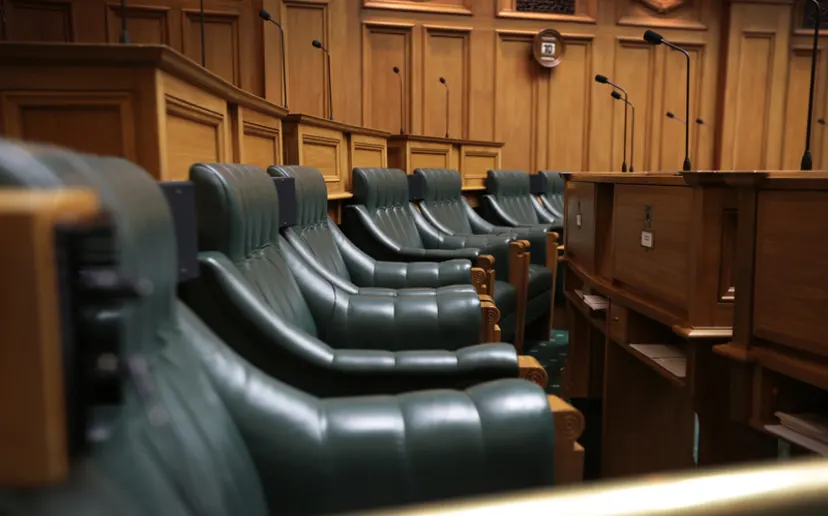
The chief executive of the Parliamentary Service is confident there will be enough room to accommodate the increased number of MPs and their staff coming into Parliament.
On current numbers, up to 131 MPs could be sitting in the Chamber following the election, brought on by a record overhang result.
Clerk of the House of Representatives Dr David Wilson told the Spinoff that currently the debating chamber had enough chairs to seat 124 MPs – including the Speaker of the House – and work was being done to accommodate more by altering the seating arrangement.
In a statement, Parliamentary Service chief executive Rafael Gonzalez-Montero said planning for a larger Parliament had been going for “some time”.
“Now that the election results have confirmed an increase to the number of members we are looking at several options.
“We are confident we will be able to accommodate all members within the Chamber.”
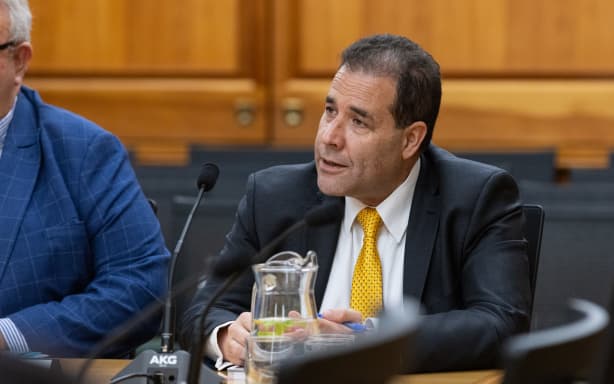
VNP / Phil Smith
Gonzalez-Montero said office accommodation for members and their staff would be “stretched” for a short time, but the new Members’ Building was only a few months away from “practical completion”.
That building – located behind Parliament – was due to be ready to occupy in April next year and had capacity to accommodate around 30 backbench MPs.
“All members should be in fit-for-purpose accommodation from that point,” Gonzalez-Montero said.
Following the 2023 election, 123 MPs sat in the Chamber – a record number at the time. That decreased to 122 following the resignation of National MP Judith Collins.
Collins held the seat of Papakura and stepped down in May and Parliament voted against holding a by-election because it was too close to the election.
The election result also meant high-ranking National Party MPs like Chris Bishop, Paul Goldsmith, Nicola Willis and Gerry Brownlee – Speaker of the House and an MP for 30 years – would likely not make it back into Parliament.
Only resigning or retiring MPs were permitted to give a valedictory speech meaning none of them would get the chance to give a valedictory statement.
Asked if their would be special allowances for valedictories, Wilson said in a statement that normally only MPs were allowed to speak in the House but the House could suspend its own rules or temporarily alter them.
“It could do so to allow former members to address the House.”
Wilson said no such arrangements could be made until the next Parliament opened and members sworn in.
rnz


Police say person who fired gun at officers still at large

New Zealand sides named for RLWC finals

Parliamentary Service working on extra chairs and offices for increased number of MPs


-

 Latest News2 months ago
‘Chilling’: Business groups speak out against National’s supermarket break-up plan
-

 NZ News2 months ago
Tom Phillips report: The missed opportunities to find the children
-

 Politics2 months ago
National vows to try to split Pak’nSave and New World
-

 Latest News2 months ago
Cars bearing Chinese police markings stir unease in Auckland
-

 Fiji News2 months ago
Plans to have new Constitution by Dec 24th 2026
-

 NZ News2 months ago
Cop who stole $68,000 can now be named as champion Muay Thai fighter Haimona Tamati-Te Paki
-

 Politics2 months ago
MBIE confirms botched biometric projects costs blown out to $50.7 million
-

 Latest News2 months ago
Five Karangahape Road venues lose their liquor licences after police intervention