

Breaking News
Holidays Act overhaul: Changes to annual leave, sick pay system

After years of payroll failures, billions in remediation payments and persistent calls for reform from businesses and unions alike, the Government is scrapping and replacing the Holidays Act in a move it says will finally fix New Zealand’s “broken” leave system.
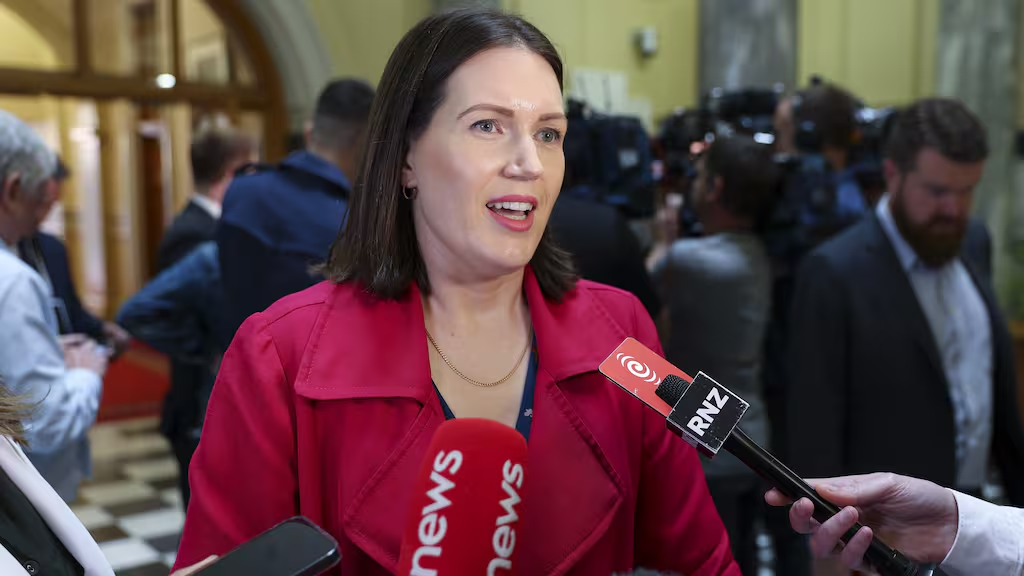
Workplace Relations and Safety Minister Brooke van Velden revealed today that Cabinet had agreed to repeal and replace the Holidays Act 2003 with a new Employment Leave Act.
The changes were aimed at making leave calculations more straightforward and ensuring that workers received their correct entitlements.
“Full-time and part-time workers will start earning annual and sick leave in direct proportion to the hours they work,” van Velden said.
“Parents returning from parental leave will no longer be penalised with lower pay if they take annual leave, sick leave can be taken in hours to match real life, and employers will finally have certainty with straightforward rules they can understand and apply.”
The 20-year-old leave legislation has long been criticised for being overly complex and difficult to apply, particularly for workers with variable hours, such as the tourism, hospitality and health sectors where non-traditional work patterns were common.
Employers often miscalculate entitlements, leading to widespread non-compliance and billions in remediation payments across both public and private sectors.
As of August, Health NZ Te Whatu Ora had paid out more than $544.2m in remediation payments to 72,296 current employees. For the health sector alone, the total financial liability was estimated to be more than $2 billion.
“Employers struggle to understand and apply the Holidays Act correctly, and employees struggle to understand their entitlements,” van Velden said.
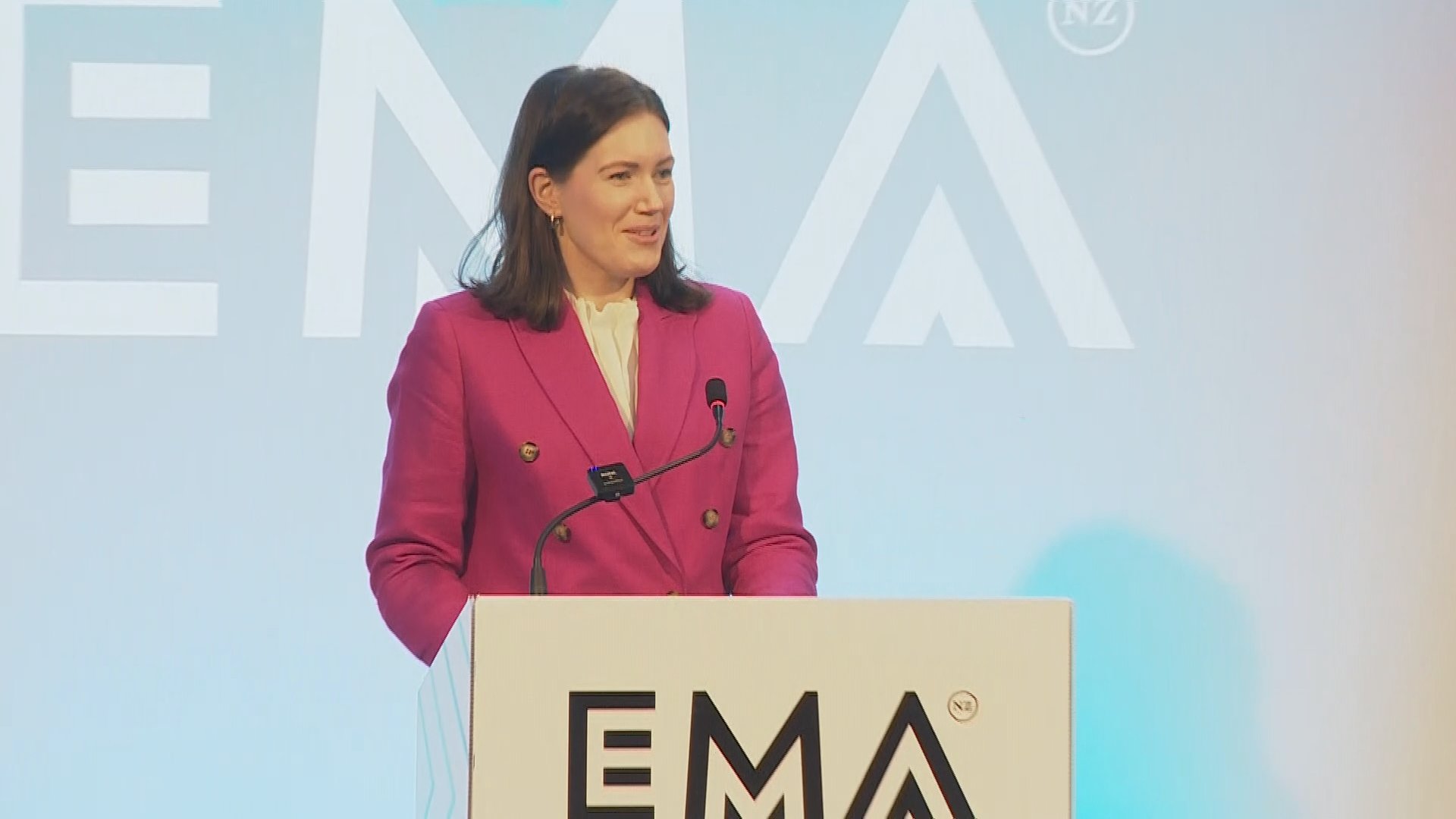
The current law is so confusing employers are forking out billions in back pay to workers for miscalculated earnings. (Source: 1News)
Under the current system, workers become entitled to four weeks of annual leave after completing 12 months of continuous employment. Sick leave kicks in after six months, with a lump entitlement of 10 days per year—regardless of how many days a week the employee works.
Under the proposed system, both annual and sick leave entitlements would accrue from the first day of employment and be based on the number of hours worked.
For example, a full-time worker on 40 hours a week would accrue 0.0769 hours of annual leave and 0.0385 hours of sick leave for every hour worked. Over a year, this would add up to 160 hours (four weeks) of annual leave and 80 hours (10 days) of sick leave.
Rather than a flat entitlement, employees would earn leave in direct proportion to their contracted hours.
Casual employees would receive a 12.5% leave compensation payment for each hour worked, instead of accruing annual and sick leave or receiving the current 8% “pay-as-you-go” payment.
Any additional hours worked on top of contracted hours would also attract the 12.5% payment, rather than accruing further leave.
The proposal also means workers would be able to take sick leave in hours rather than being forced to use a full day’s entitlement, bereavement leave or family violence leave would be accessible from the first day of employment, and new parents would receive their full pay of annual leave when they return from parental leave.
Employers would be required to provide clear itemised pay statements each pay period and show pay and leave in a transparent and easy to understand way.
Workers with large annual leave balances would have more flexibility to cash up their leave, with the option to request up to 25% of their total annual leave balance each year.
“Gone are the days of multiple, confusing calculations for leave payments,” said van Velden.
“One single streamlined and simplified leave payment method will apply for all types of leave. For many people, leave entitlements will stay the same – what will change is how it is calculated.”
She added that parents and casual workers would receive an increase in entitlements, with the full leave payout to new parents and additional 4% increase to recognise leave entitlements respectively.
“All workers, businesses, and their families will benefit from leave payments being simpler and more predictable, with greater transparency and certainty.”
The changes were expected to affect around 2.2 million workers with contracted hours, as well as tens of thousands of casual and part-time employees.
There would be a 24-month implementation period after the Employment Leave Bill was passed into law to allow for a smooth transition for employers and payroll providers. Until then, the Holidays Act would remain in place.
Public submissions would be invited during the select committee stage of the legislative process.

Labour has hit out at the prime minister over the proposed overhaul of employment leave legislation, accusing Luxon of breaking “yet another election promise” and saying he had “turned his back” on part-time workers.
The party’s workplace relations and safety spokesperson Jan Tinetti said the Government’s plan put people at risk and did not reflect the reality of illness.
“People don’t fall ill on a pro-rated schedule depending on how many hours they work. If someone starts a job and gets sick, they should be able to take leave to recover. It’s as simple as that. No one should be forced to work while sick or lose income because they are unwell.
“The Prime Minister has cut jobs and overseen rising unemployment and is now choosing to make life harder for those who work part-time. He is out of touch with working New Zealanders.”
‘Erosion of workers’ rights’ or ‘long-overdue fix’?
The Employers and Manufacturers’ Association says the announcement was a “long-overdue fix” to a system that had caused confusion and cost to both employers and employees.
Head of advocacy and strategy Alan McDonald said the act would bring “much-needed clarity and simplicity” to leave entitlements.
“Employers and employees should be able to more easily understand and apply the rules and that’s a win for everyone. Small to medium-sized businesses should welcome the changes as it brings clear calculations with few other considerations being required.”
He said he supported changes like pro-rata sick leave taken in hours and increased annual leave cash-out options.
“Under the current rules, someone working one shift a week could receive the same sick leave entitlement as someone working full-time. That imbalance needed to be addressed.”
The New Zealand Council of Trade Unions said in a statement that there would be “winners and losers” as a result of the changes to employment leave legislation.
In a release on Tuesday, it welcomed changes that would provide sick, bereavement, and family violence leave from day one of employment, increase casual compensation and provision of fairer pay statements.
However, it said some workers would miss out in the proposals, including the removal of commission and bonuses from holiday pay, reducing sick leave for part-timers, and the removal leave accruing for workers on ACC.
NZCTU president Richard Wagstaff said the unions had long advocated for improvements to the legislation
He said businesses and unions agreed when the review commenced under the last government that legislation should be simplified but not result in a reduction of worker leave entitlements.
“The proposed changes do not fully honour that understanding – they will reduce sick leave entitlements for part-time workers (and holiday pay for those on commission).
“The impacts will disproportionately fall on Māori, Pasifika, women and other vulnerable workers, who are more likely to be in part-time and insecure work.
“It is good that the Act will be simplified but that didn’t need to come at the expense of the hard-won entitlements of working people.”
Workers First Union, the country’s second-largest union, say the sick leave policy was a continuation of what they said was the Government’s “erosion of workers rights”.
“There is no defensible reason for a person working part-time to have access to less sick leave than someone working full-time,” said general secretary Dennis Maga.
“No matter what hours you work, everyone is prone to getting sick, and especially those with kids who are more likely to be in part-time work.”
He said he had heard of people in the retail sector being forced to use up annual leave to cover periods of illness beyond their statutory leave entitlements.
“Those who work customer-facing roles are much more likely to become ill, and it’s in everyone’s interest to ensure they can rest and not risk spreading illness by being forced into work to make ends meet.”
Business NZ’s Katherine Rich said fixing the Holidays Act had been a long time coming.
“Remedying the Act has been a long time coming, and it is positive that the planned new legislation will contain the policy recommendations of BusinessNZ members,” Rich said.
Her organisation had also long advocated for an hours-based approach to leave.
~VIA 1News


The Trump administration denounced CNN on Thursday (local time) for airing a portion of the new Iranian supreme leader’s public statement, the second time in three days the network has been targeted for reporting on how the regime is responding to the American attacks.
The attack illustrated the care news outlets must take in reporting during wartime, and the responsibilities of American journalists to report the perspective of countries its government views as enemies. It also exposed inconsistencies.
The message of Supreme Leader Ayatollah Mojtaba Khamenei during his first public statement since he succeeded his father, who was killed in an Israeli airstrike, was widely available elsewhere.
The White House said on social media that “fake news CNN just aired four straight minutes of uninterrupted Iranian state TV, run by the same psychotic and murderous regime that prided itself on brutally slaughtering Americans for 47 years”.
Earlier CNN interview criticised by Trump’s communications leader
Two days earlier, White House communications director Steven Cheung took issue with CNN anchor Erin Burnett’s interview with Hossein Mousavian, a former Iranian nuclear negotiator. Burnett asked Mousavian what he had been hearing about the Iranian government’s interest in having talks with the United States. There wasn’t much, he said.
“Ever notice how CNN just regurgitates quotes and unverified information from Iranian terrorists?” Cheung wrote on X.
“Total disgrace. They have become the murderous Iranian Regime’s version of Pravda,” he said, referring to the official newspaper of the former Soviet Union.
CNN did not address Cheung’s statement but did respond to the White House attack on Thursday. It noted that CNN, Sky News and Al Jazeera also showed portions of the ayatollah’s statement live.
“The world is watching with anticipation which direction this war will take,” CNN said. “Purported remarks from Iran’s new supreme leader are a critical component in helping audiences understand where this conflict is heading and were aired for their obvious news value.”
Other news outlets, including The Associated Press, sent out alerts on what Khamenei said. His vow to keep up attacks on other Arab countries in the region and plans to choke off the world’s oil supply were headlines.

The New York Times led its website with a story on the speech in its immediate aftermath, later writing that the speech “was an early indication of how the new supreme leader would approach the war, as well as how he would lead the country”.
CNN has long been a favoured target of President Donald Trump, dating back to his first term. It’s a particularly vulnerable time for the network with Paramount Global’s agreement to purchase CNN’s parent company, Warner Bros Discovery, raising questions about its future editorial independence.
CNN showed a news anchor reading a portion of Khameini’s remarks in Farsi, with an English translation. It did not air them in full. After the speech, correspondent Nick Paton Walsh gave a debrief to anchor Kate Bolduan, noting how the non-appearance of the leader — reportedly injured in an air attack — was as important as what he said.
“We were waiting to see the face of the man to have proof of his health and survival,” Walsh said, “and they’ve not met that moment. Instead, a handwritten message, it seems, that mostly reiterates things we kind of already knew.”
A social media message board for Iran’s point of view
The Tech Transparency Project has reported that several Iranian leaders and institutions maintain verified accounts on X, formerly Twitter, owned by Trump ally Elon Musk. CNBC said Thursday that Khamenei has one of them, and an X account with his portrait posted the text of his remarks, available in Farsi and in an English translation.
Even though Khamenei’s father is dead, an account with his portrait was active on Thursday, mainly reposting messages from his son. “The revenge we have in mind is not just because of the martyrdom of the illustrious Leader of the Revolution,” read one message posted Thursday. “Every member of the nation martyred by the enemy is a separate case that demands we seek revenge.”
X is officially blocked in Iran, although many use a virtual private network to bypass restrictions. A message sent to the platform on Thursday was not immediately returned.
There’s a long history of journalists seeking interviews with world leaders, even when they are regarded as enemies of the United States. Most notable was 60 Minutes correspondent Mike Wallace’s interview with Iran’s Ayatollah Ruhollah Khomeini in 1979, when that country was holding Americans hostage.
Thursday’s remarks by Iran’s new supreme leader were absolutely newsworthy and legitimate for CNN to air them, said Jane Ferguson, a veteran international correspondent and founder of the journalism platform Noosphere. It’s not the job of government leaders to pick apart what CNN is reporting, she said.
“We’ve always faced this,” she said, about when reporters interview leaders or other figures hostile to American interests. “This has been a bit of low-hanging fruit for a while.”
Historian Douglas Brinkley of Rice University said that it’s unfair for CNN to be singled out in this instance. He, too, believes it is newsworthy to learn what leaders of an adversary are thinking, but it’s important to make sure that journalists are careful.
“You have to be leery of being used as a propaganda tool by the Iranian regime,” he said. “On the other hand, knowing what the enemy is saying and looking for a sign of a peace offering or a nuance is important … It’s a difficult balance.”


Police say person who fired gun at officers still at large

New Zealand sides named for RLWC finals

Parliamentary Service working on extra chairs and offices for increased number of MPs


-

 Latest News2 months ago
‘Chilling’: Business groups speak out against National’s supermarket break-up plan
-

 NZ News2 months ago
Tom Phillips report: The missed opportunities to find the children
-

 Politics2 months ago
National vows to try to split Pak’nSave and New World
-

 Latest News2 months ago
Cars bearing Chinese police markings stir unease in Auckland
-

 Fiji News2 months ago
Plans to have new Constitution by Dec 24th 2026
-

 NZ News2 months ago
Cop who stole $68,000 can now be named as champion Muay Thai fighter Haimona Tamati-Te Paki
-

 Politics2 months ago
MBIE confirms botched biometric projects costs blown out to $50.7 million
-

 Latest News2 months ago
Five Karangahape Road venues lose their liquor licences after police intervention