

NZ News
Police, Oranga Tamariki failed 10-month-old killed by meth-using dad, coroner rules

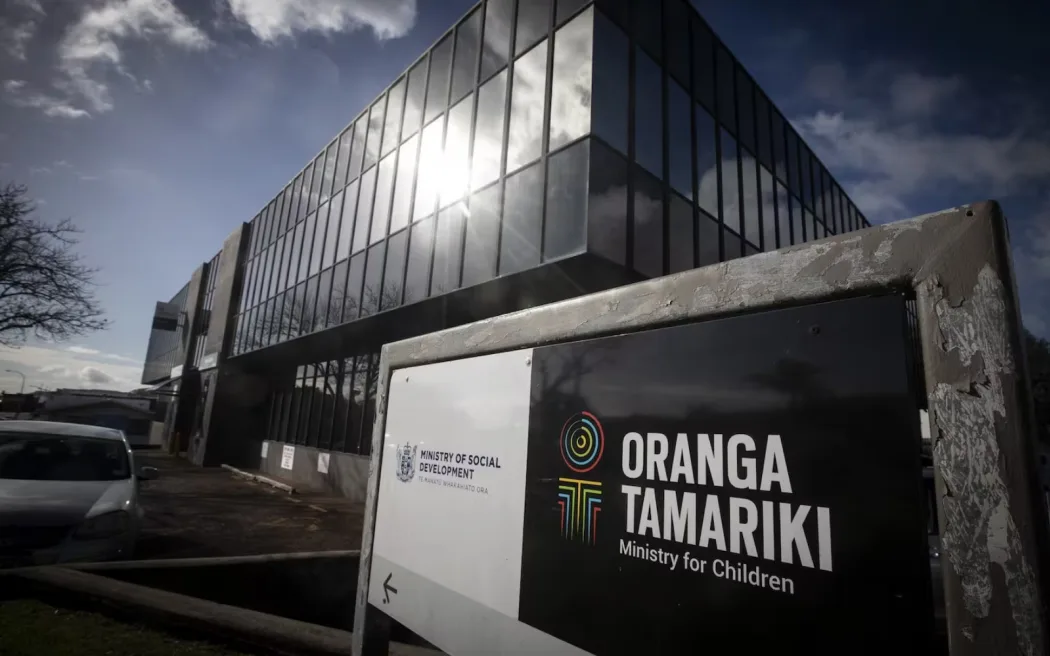
Warning: This story contains graphic details of child abuse and violence that may be disturbing.
Government agencies failed in their duty to protect a 10-month-old baby who was murdered by his father while high on methamphetamine.
Coroner Mary-Anne Borrowdale has laid bare what she described as a suite of failings by Oranga Tamariki and shortcomings by police in the lead-up to the death of infant CJ White.
CJ suffered unsurvivable head injuries at the hands of his father, David Sinclair, in Hokitika on 9 July, 2019.
The 10-month-old boy died the following day in the intensive care unit at Christchurch Hospital.
A paediatric radiologist likened CJ’s injuries to those caused by a high-impact road crash, while a pathologist found the boy had a skull fracture which extended from behind each ear and met at the top of his head.
Clinicians discovered a litany of injuries on the small boy’s body including bleeding in his brain and eyes; extensive bruising to his scrotum, groin, head, body and legs; and an older fracture in his left foot.
His mother Laura White – who was not in a relationship with Sinclair – had left her son with his father on 21 May 2019 after spending some time with the pair to be assured her child would be safe.
White told the coroner she immediately had misgivings about her decision and tried to get her son back.
She was assisted in the endeavour by her parents Hamish and Jill White, with all three concerned Sinclair was using and dealing drugs.
However, the coroner’s 54-page report said their efforts were not treated with the concern they should have been.
‘Bounced from agency to agency … increasingly desperate’
Only 12 days after leaving CJ with Sinclair, Laura went to his home to get her son back. Sinclair refused.
Laura told the coroner Sinclair had “enlarged pupils and looked like he had been smoking meth”.
She tried again the following day with Sinclair responding with a message saying he was seeking a final parenting order from the Family Court and “in regards to seeing him in mean time he aint [sic] going anywhere with anyone or leaving my sight again”.
Laura then approached Work and Income, Oranga Tamariki, Plunket, the Family Court, Family Start and, finally, the Police to get her son back.
“Oranga Tamariki told Laura to go to the Police. The Police told Laura to go to Oranga Tamariki. Laura was bounced from agency to agency as she – increasingly desperately – tried to ensure that someone would act in CJ’s interests by removing him from his father’s home. Both agencies let Laura and CJ down,” Borrowdale said.
Laura even applied to the Family Court for custody of CJ.
“In tragic timing, on 10 July 2019 – the day that CJ died – Laura’s lawyer advised that her without notice application to the Family Court for a parenting order had been declined,” Borrowdale said.
Hamish told the coroner of his regret in not trying harder to get Oranga Tamariki to act.
“It is sobering to now have Mr White say, ‘I don’t think we pushed … hard enough with Oranga Tamariki’,” Borrowdale said.
“They pushed as hard as they knew how. But in practice, the proper child protection response should not depend on the agency being repeatedly urged to act. Family had met their duty by registering their concerns with Oranga Tamariki, and it was then for the agency to act.”

Laura’s lawyer advised that her application to the Family Court for a parenting order had been declined on the day of her son’s death. Photo: RNZ/Marika Khabazi
Clues from a ‘strong chemical smell’
Plunket visited CJ and Sinclair on 12 June 2019 following Laura’s concerns.
The Plunket nurse believed CJ was doing well with Sinclair but noted a strong chemical smell during her visit and Sinclair was fidgety and talking fast – information she supplied to Oranga Tamariki.
Following formal reports of concern from Laura and Plunket, Oranga Tamariki sent two social workers to Sinclair’s home on 21 June 2019.
At the time, Oranga Tamariki’s West Coast site was allocated eight social workers, but only five were employed. Of those five, three were absent in early July 2019 because of leave and illness.
“Neither of the two social workers who visited CJ at home had completed their induction to Oranga Tamariki,” Borrowdale said.
“The staff on site were predominantly inexperienced, which meant capability was seriously impacted. The combined statutory experience of the social workers at the time of CJ’s death was less than 10 years.”
The social workers also noted the strong chemical smell at the property.
“The social workers did not think it suspicious. They did not ask Mr Sinclair about its origin,” Borrowdale said.
“They accepted at face value Mr Sinclair’s claim that he had spilled petrol earlier that day; they presumed that this explained the stench.
“The social workers ought not to have been persuaded by this invention, because they knew that this was not the first time the smell had emanated from the property, so, logically, recently spilled petrol was unlikely to be the cause.”
During the visit, Sinclair told the social workers he had recently been tested for drug use and agreed to take another test if requested. The social workers did not order such a test as they accepted Sinclair’s willingness to submit to a test as proof he was not using drugs.
“Oranga Tamariki correctly identified that its social workers – who were undoubtedly under pressure due to inadequate resourcing, training, and supervision – lacked the proper degree of ‘professional curiosity’. I agree,” Borrowdale said.

At the time, Oranga Tamariki’s West Coast site was allocated eight social workers, but only five were employed. Photo: RNZ
‘What are you going to do about it? That’s my grandson’: grandfather’s desperate plea to police
The coroner also took aim at the response of police.
Laura and Hamish visited Hokitika Police Station on 28 June 2019 to express their concerns for CJ and report Sinclair’s drug use.
They spoke to an unsworn watchhouse officer.
Laura told the coroner that when she told the officer about Sinclair smoking methamphetamine, he laughed and said “the whole town knows he smokes meth”.
Her father also told the coroner the officer confirmed to him Sinclair was dealing drugs and using methamphetamine.
“Laura says that her father began to cry, asking ‘Well, what are you going to do about it? That’s my grandson’,” the coroner said.
“Laura says that she told [the officer] that Mr Sinclair had no right to CJ, to which [he] replied, ‘He’s his father, isn’t he?’ and said that he had as many rights to CJ as Laura had. Mr White says that he was upset that they were not ‘taken into a room and taken seriously’.”
Laura’s father and mother returned to the station later that day and again spoke to the watchhouse officer.
“We came away feeling like we had hit a brick wall. Things were a little better, but I didn’t think we were taken seriously,” Hamish told the coroner.
The watchhouse officer later relayed the meeting to a constable, who contacted Laura and asked her to make a formal statement.
The constable texted Laura his phone number, but that was the last communication between the pair.
Hamish then made an anonymous report about Sinclair and his drug use on 2 July 2019.
“I was trying to do all I could to get CJ out of that situation legally. I had a big fear that CJ was in danger and was desperate to get him back,” he later told the coroner.
“I should have gone around to David’s. I wish we had. I had an overwhelming fear that CJ was going to die.”
A week later Sinclair inflicted CJ’s fatal injuries.
“The watchhouse officer who dealt with Laura when she went to the station with her concerns described her, in evidence, as ‘quite demanding and adamant’,” Borrowdale said.
“No criticism should attach to Laura if that was her approach, given what was at stake and how little police indicated they would do about it.”
“The officer says that Laura ‘had left her baby with his father and she now wanted him back’. That description of Laura’s position – while factually true – when read together with the staff member’s other recollections belies a scepticism of Laura and her expressed worries about CJ.”
Police had also failed to offer Laura anonymity as an informant against Sinclair.
Laura stated a key reason she failed to sign a formal statement was because of fear of reprisal from Sinclair or his associates.
“That ought to have been the signal for police to work harder with their informant to acquire information without placing her in personal jeopardy,” Borrowdale said.
Police records concerning Sinclair and his drug use were also lacking.
“The police initially reported to me that Mr White’s Crimestoppers report on 2 July 2019 was the ‘first recorded information’ about Mr Sinclair’s drug taking. If this were so, it could only have been because no records were made previously; family made multiple earlier reports during June 2019 on Mr Sinclair’s drug use. If no records were made, they should have been. Police have acknowledged this critical error,” Borrowdale said.
“Police say: Searches have now revealed that police hold five relevant historic informant reports from 2016-2018 that Mr Sinclair was drug dealing, drug using, and had gang associations. This information had been supplied upon receipt to the West Coast CIB and Organised Crime Unit.”
Oranga Tamariki and police respond
Both agencies held reviews of the case.
Police accepted the White family’s visit to Hokitika Police Station should have been recorded as a family harm incident. If that had happened it would have been referred to the Family Harm Team and raised with the multi-agency Family Violence Interagency Response System.
Oranga Tamariki identified the need for many changes, including greater education for social workers when caregivers were alleged to use methamphetamine and had a history of violence; more planning in their work; and training in triangulating information and practising “respectful uncertainty”.
Oranga Tamariki confirmed there were six social workers at the West Coast and four vacancies at present.
Borrowdale made no recommendations as Oranga Tamariki and police said they had made numerous changes since CJ’s death.
However, she held some reservations: “I conclude by saying that Oranga Tamariki failed to ‘connect the dots’ and to probe sufficiently to gain a proper appreciation of the risk that CJ was in,” Borrowdale said.
“Oranga Tamariki knows that it was unsafe and inadequate to place the vital assessment of baby CJ’s safety into the hands of junior and ill-equipped staff. The agency accepts that and has made some changes. Its continued under-staffing in the West Coast area, however, leaves me unpersuaded that the resourcing constraints that led to the mishandling of CJ’s case are not a continued problem, and concerned that they may yet resurface in future child protection cases.”
Oranga Tamariki chief social worker Nicolette Dickson told RNZ that staffing levels had increased but there were still vacancies.
“It does fluctuate. I think it’s increased slightly, but we still have vacancies in the West Coast and we still have an absolute need to make sure that we’re doing everything that we can to recruit and retain experienced staff on the coast. And we’re looking at a range of strategies to make sure that happens,” Dickson said.
“But there are still vacancies and there is still workload pressure in that community. But I do just want to acknowledge it’s very hard working team who are really joined up with their partner agencies to make sure that we are responding to the needs of the children who need that support.”

Oranga Tamariki chief social worker Nicolette Dickson. Photo: Supplied
Dickson also acknowledged there was pressure on the workforce throughout the country.
“Overall, we certainly have not got the full complement of social workers across the country. Social work is a challenging career to attract to so we have a range of things in place to try to attract and retain staff, including the professional development that we offer. But there are sites that have larger numbers of vacancies and then some sites that are keeping up relatively closely to the allocated figures.
“And in each case, we are very clear that we know which sites need that additional support and have a range of things that we do to provide additional support when there are high levels of vacancy.”
When asked how confident she was that the circumstances of CJ’s death would not be repeated today, Dickson said: “I’m confident that we have significantly strengthened training, support and resources for our social workers.”
“I do have to acknowledge, though, that children die at the hands of adults who harm them. Our role is to make sure that whenever we are made aware of concerns about a child, we are doing everything we can to understand that situation and then to make the kind of finely balanced decisions the public expects of us to help our children be safer.”
Oranga Tamariki accepted the coroner’s findings, Dickson said.
“I want to acknowledge CJ and his family and their ongoing grief, and I do want to acknowledge that Oranga Tamariki agrees with the findings of the coroner.
“The case happened a number of years ago and I think the coroner also recognised that over the last six years Oranga Tamariki had made significant changes that respond to a number of the things that were found in relation to our involvement with CJ.”
However, Dickson would not say whether Oranga Tamariki had apologised to the White family for its failings.
Tasman District Commander Superintendent Tracey Thompson did offer an apology.
“Police do acknowledge and accept the coroner’s findings for the shortcomings of police that were identified in their report. And I just want to offer my sincerest condolences to CJ’s family and an apology on behalf of the New Zealand Police for those shortcomings,” Thompson told RNZ.

Tasman District Commander Superintendent Tracey Thompson. Photo: RNZ / Angus Dreaver
There had been changes at police as a result, she said.
Key changes included training and processes in relation to information collection and recording, identifying family harm and dealing with them appropriately, information sharing with Oranga Tamariki including developing a child protection protocol between the two agencies.
If Laura and her father were to approach police today, their report would be treated as a family harm matter, escalated to a sworn officer and treated with confidentiality, Thompson said.
“It’s a tragic situation. The consequences were terrible for CJ’s family and the New Zealand police are extremely apologetic and sorry for the shortcomings in the service that we provided and we’re working really hard as a district to make sure that this doesn’t happen again.”
But even in 2019, Laura should have been treated with concern and care.
“There is that expectation now and there would have been that expectation then and actually that’s the expectation that we expect of our staff in New Zealand Police,” Thompson said.
“There was a training issue there – particularly in relation to reporting, handling information and what constitutes a family harm incident – absolutely, there was a training issue there and we are dedicated and we have been filling that training gap ever since.
“There was an opportunity that was missed and we accept that. We accept that we could have done more and that has been reviewed and we’ve looked at it and training was a very big issue in relation to that which we have addressed.”
Police Minister Mark Mitchell said it was a “tragic event”.
He said he acknowledged the Coroninal findings showed there were shortcomings by police.
“Police as an organisation are constantly looking for improvement, and while I know a number of changes have been made already, it is my expectation is that police address all issues identified to ensure that everything is done to help prevent this from happening again,” he said.
Killer jailed for life
Sinclair initially denied hurting CJ, claiming the infant fell off the bed and hit his head.
He described CJ’s injuries, which clinicians likened to a high-impact car crash, as “battle bruises”.
However, shortly before his November 2020 murder trial Sinclair changed his story and admitted lying to police, but instead claimed CJ had fallen down a flight of stairs at his house. He also admitted consuming cannabis and methamphetamine on the night CJ was injured.
Sinclair was convicted of CJ’s murder and in March 2021 sentenced to life imprisonment.
He would not be eligible for parole until 2036.
Where to get help:
- Women’s Refuge: 0800 733 843.
- It’s Not OK 0800 456 450.
- Shine: 0508 744 633.
- Victim Support: 0800 842 846.
- HELP Call 24/7 (Auckland): 09 623 1700, (Wellington): 04 801 6655.
- The National Network of Family Violence Services NZ has information on specialist family violence agencies.
If it is an emergency and you feel like you or someone else is at risk, call 111.
Source: RNZ



Latest News
Opportunities to mitigate multi-million-dollar RNZ budget blowout likely missed – experts

Multiple opportunities to identify and mitigate a multi-million-dollar budget blowout at RNZ appear have been missed, according to the former executive director at Audit New Zealand.
The public broadcaster on Monday revealed a near $12 million shock financial loss after a litany of financial blunders, which will now lead to sweeping job cuts.
The $11.8m loss is more than 25 times the $470,000 RNZ had expected to lose over the year to June.
CEO Paul Thompson took responsibility for the result, and said internal reports gave an inaccurate picture of the finances, meaning the scale of the loss only became clear in October.
RNZ’s former chief financial officer Hilary Parker resigned unexpectedly in early October.
The board said it would commission an independent review into what went wrong.
Independent contractor Stephen Walker, who left the Audit Office earlier this year, said the size of the loss was surprising, as was the length of time it took to identify it – months after the financial year ended.
Supplied / OAG
“Probably more of a concern is that they had seemingly been unaware that they were running up a significant deficit until they were in the preparation stage of their annual report in October.”
Walker said public entities typically produced monthly financial reports.
An interim audit also took place before the end of the financial year, he said, but if the organisation hadn’t identified significant losses at that stage, the auditor could also be in the dark.
“It seems that there’s a real weakness in forecasting and budgeting that’s occurred here and that the monthly accounts, when they’re produced, either haven’t identified these significant variances against budget or the magnitude of them really hasn’t come to light until right towards the end of the financial year,” Walker said.
“And really at that point, there’s no opportunity for the chief executive, the leadership team to take, and the board to take, any corrective action because the year has effectively been completed.”
Walker said the “significant miss” was difficult to account for given it was more than 10 percent of RNZ’s total funding.
He said based on RNZ’s annual report, financial complexity didn’t appear to be a factor.
“This $11.8m loss isn’t made up of one particular item … it seems to have been contributed to by a number of separate expense lines running over budget. So I don’t think it’s necessarily to do with complexity.”
Among the errors, RNZ wrongly counted $2m from land sales as income in its budget. Staff costs also came in $3.2m over budget, including $1.4m in redundancy payments.
Professor at Auckland University’s business school Norman Wong said based on media reports the issues identified were “significant and troubling”.

Supplied / University of Auckland
“But recognising the sale of land as income in their budget is a basic error that one would have expected to have been caught and corrected well before it got to this point.”
With funding reductions at RNZ over the past two years, Walker expected greater scrutiny of financial results.
“Virtually every public entity has had their annual budget reduced. And so you would expect … the leadership team on a monthly basis and board – I’m not sure how frequently the board will consider the information – but you would expect them to be interrogating the results on a regular basis throughout the year,” he said.
Walker said initiating an independent review was the correct course of action and that he’d want to understand what information the leadership team and the board were regularly receiving.
He said he’d “love to say” surprising financial results were rare, but conceded they occured on a semi-frequent basis during his time leading the Audit Office.
“The benefit of independent scrutiny by the Audit Office – and the auditors providing that support to the Auditor General – [is] that the reporting is fairly presented at the end of the year, whether it’s good, bad or ugly.”
rnz


Police say person who fired gun at officers still at large

New Zealand sides named for RLWC finals

Parliamentary Service working on extra chairs and offices for increased number of MPs


-

 Latest News2 months ago
‘Chilling’: Business groups speak out against National’s supermarket break-up plan
-

 NZ News2 months ago
Tom Phillips report: The missed opportunities to find the children
-

 Politics2 months ago
National vows to try to split Pak’nSave and New World
-

 Latest News2 months ago
Cars bearing Chinese police markings stir unease in Auckland
-

 Fiji News2 months ago
Plans to have new Constitution by Dec 24th 2026
-

 NZ News2 months ago
Cop who stole $68,000 can now be named as champion Muay Thai fighter Haimona Tamati-Te Paki
-

 Politics2 months ago
MBIE confirms botched biometric projects costs blown out to $50.7 million
-

 Latest News2 months ago
Five Karangahape Road venues lose their liquor licences after police intervention