

Latest News
What’s going on with the Reserve Bank and why it matters

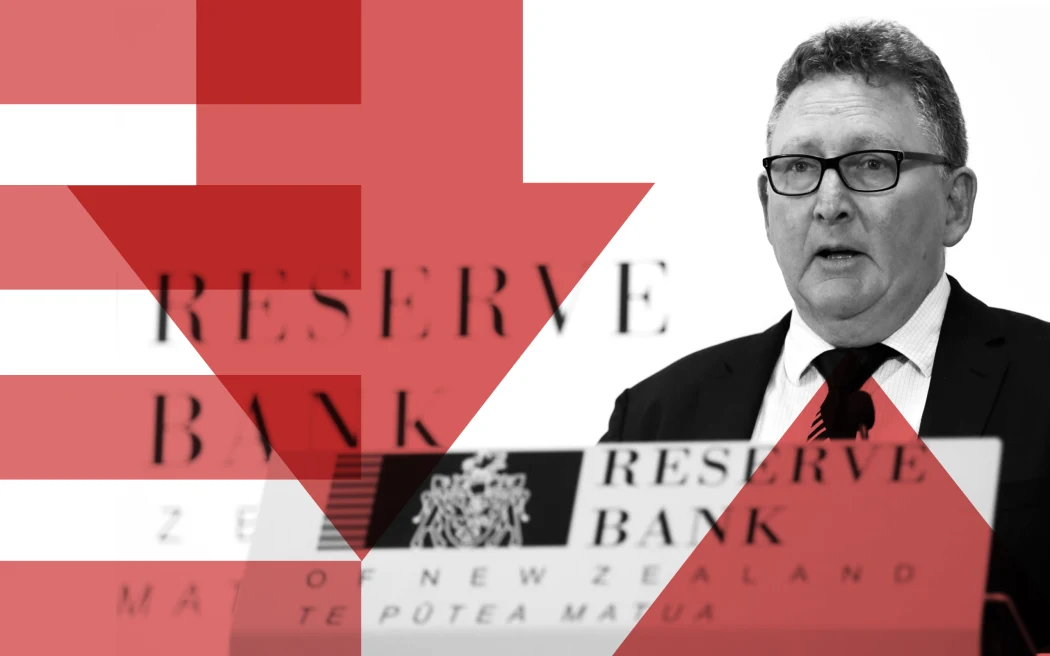
Explainer – Two high-profile Reserve Bank appointees have resigned this year, well ahead of their terms ending and amid ongoing concerns with the cost of living – but the prime minister says it’s “not unusual”.
Christopher Luxon’s Finance Minister Nicola Willis released a statement on Friday announcing chair Neil Quigley’s resignation, saying it was “the appropriate time for him to hand over”, but soon after told RNZ she would have demanded his resignation had it not been offered.
Quigley’s resignation stems partly from his mischaracterisation of the resignation of the central bank’s governor Adrian Orr in March.
And despite the Reserve Bank’s statutory independence, top politicians are continuing to offer their own opinions on what it should be doing.
They are, of course, following the example of Luxon himself – who maintains that the situation is not a mess, that the RBNZ has “incredibly strong and experienced governance”, and “disagree(s) completely” that its reputation has been damaged.
If you’re wondering what on Earth is going on, the whole saga is laid out below.
Orr not to be

Adrian Orr and Nicola Willis. Photo: RNZ
Controversy has surrounded the resignation of the former Reserve Bank Governor Adrian Orr.
Orr led the RBNZ from 2018, through the Covid-19 pandemic, and – despite significant criticism from National and ACT ahead of the 2023 election – continued in the role until early this year.
Orr’s resignation on 5 March came just a day before he had been expected to open an international economics conference being hosted by the RBNZ, so when then-board chair Neil Quigley at the time said it was for “personal reasons”, speculation about what that could be was rife.
Willis said she was not going to “characterise the reasons” but she had been aware for a few days of discussions between Orr and Quigley about a possible resignation, and said questions about that were for the board to respond to.
Her previous criticisms in opposition of the Reserve Bank’s handling of the pandemic highlighted a difference of philosophy on how to approach fiscal strategy.
The ACT Party has also been particularly critical of Orr’s style.
Orr also championed the approach requiring the banks to hold more capital – in case of financial shocks like the 2008 global financial crisis – which the central bank is now looking to reduce in a move recommended by a government-led committee of MPs and celebrated by the coalition.

Neil Quigley. Photo: RNZ / Samuel Rillstone
Quigley held a media conference later in the day, but his explanation did little to quell the speculation.
He said it was not an issue of performance, conduct, or policy, and acknowledged there were some discussions about the central bank’s funding agreement with the government, but framed it as a decision Orr had come to after completing his work.
“He’s achieved a great deal that he set out to do when he took the job, we’ve been through a lot, not just the pandemic, but all of the changes the bank has been through over Adrian’s term as governor,” Quigley said.
“So Adrian feels that he has done the job and he has inflation under the target range and he feels positive about that.”
Deputy Governor Christian Hawkesby replaced Orr as Acting Governor.
A permanent appointment to the role is yet to be announced.
rnz



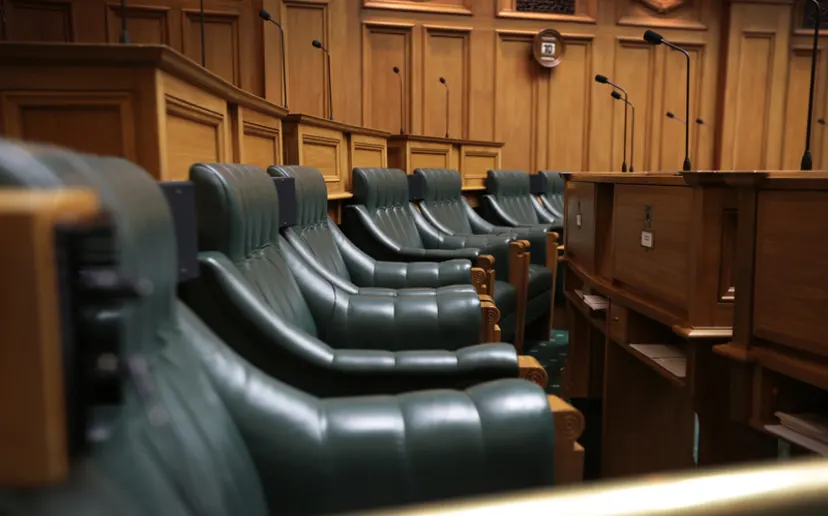
The chief executive of the Parliamentary Service is confident there will be enough room to accommodate the increased number of MPs and their staff coming into Parliament.
On current numbers, up to 131 MPs could be sitting in the Chamber following the election, brought on by a record overhang result.
Clerk of the House of Representatives Dr David Wilson told the Spinoff that currently the debating chamber had enough chairs to seat 124 MPs – including the Speaker of the House – and work was being done to accommodate more by altering the seating arrangement.
In a statement, Parliamentary Service chief executive Rafael Gonzalez-Montero said planning for a larger Parliament had been going for “some time”.
“Now that the election results have confirmed an increase to the number of members we are looking at several options.
“We are confident we will be able to accommodate all members within the Chamber.”
VNP / Phil Smith
Gonzalez-Montero said office accommodation for members and their staff would be “stretched” for a short time, but the new Members’ Building was only a few months away from “practical completion”.
That building – located behind Parliament – was due to be ready to occupy in April next year and had capacity to accommodate around 30 backbench MPs.
“All members should be in fit-for-purpose accommodation from that point,” Gonzalez-Montero said.
Following the 2023 election, 123 MPs sat in the Chamber – a record number at the time. That decreased to 122 following the resignation of National MP Judith Collins.
Collins held the seat of Papakura and stepped down in May and Parliament voted against holding a by-election because it was too close to the election.
The election result also meant high-ranking National Party MPs like Chris Bishop, Paul Goldsmith, Nicola Willis and Gerry Brownlee – Speaker of the House and an MP for 30 years – would likely not make it back into Parliament.
Only resigning or retiring MPs were permitted to give a valedictory speech meaning none of them would get the chance to give a valedictory statement.
Asked if their would be special allowances for valedictories, Wilson said in a statement that normally only MPs were allowed to speak in the House but the House could suspend its own rules or temporarily alter them.
“It could do so to allow former members to address the House.”
Wilson said no such arrangements could be made until the next Parliament opened and members sworn in.
rnz


Police say person who fired gun at officers still at large

New Zealand sides named for RLWC finals

Parliamentary Service working on extra chairs and offices for increased number of MPs


-

 Latest News2 months ago
‘Chilling’: Business groups speak out against National’s supermarket break-up plan
-

 NZ News2 months ago
Tom Phillips report: The missed opportunities to find the children
-

 Politics2 months ago
National vows to try to split Pak’nSave and New World
-

 Latest News2 months ago
Cars bearing Chinese police markings stir unease in Auckland
-

 Fiji News2 months ago
Plans to have new Constitution by Dec 24th 2026
-

 NZ News2 months ago
Cop who stole $68,000 can now be named as champion Muay Thai fighter Haimona Tamati-Te Paki
-

 Politics2 months ago
MBIE confirms botched biometric projects costs blown out to $50.7 million
-

 Latest News2 months ago
Five Karangahape Road venues lose their liquor licences after police intervention