

World
Reuters and AP journalists killed in Gaza strike were not ‘a target’ – Israeli military spokesperson


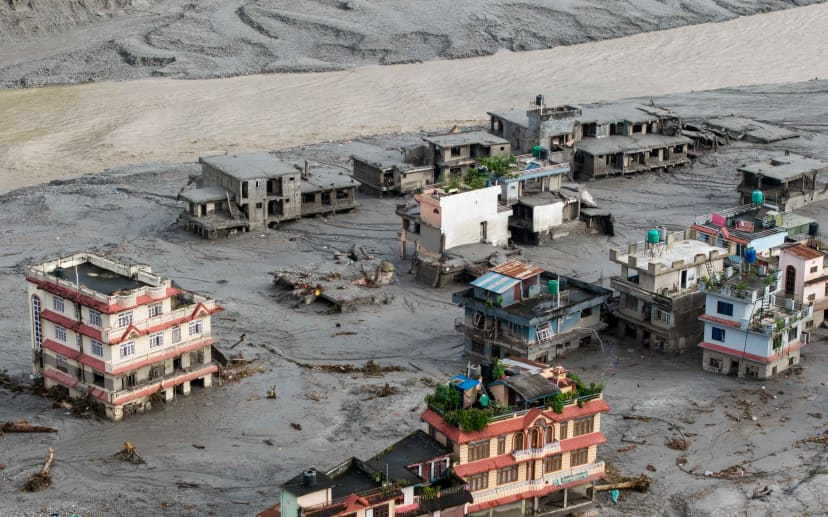
- A flash flood and landslide hit the Nepal-China border on Wednesday
- Police in Nepal say 362 bodies have been found
- Hundreds of tourists are among more than 1000 people missing
- Five Kiwis are among the missing, MFAT says
- It’s believed a glacier collapse may have caused the disaster
Horrifying pictures of the Nepal flash flood are being described as “like watching a movie” by a New Zealand-based Nepali man.
Five New Zealanders are among more than 1000 people missing following Wednesday’s catastrophic flash flooding on the Nepal-China border which killed at least 362 people.
RNZ understands four of the five New Zealanders missing are Suhasini Reddy, who lives in Australia, Auckland man Dejan Kuzmic, and Hamilton couple Mihir and Kinnari Patel.
The identity of the fifth person has not yet been confirmed.
Based in the Canterbury town of Lincoln, Dr Sulav Paudel said seeing the disaster unfold was unlike anything he had seen.
“It’s horrifying. It’s like things we see in dramatic movies,” he said.
“Most of us haven’t slept well.”
Dr Paudel was the treasurer for the New Zealand chapter of the Non-Resident Nepali Association (NRNA).
The group had issued an urgent plea for donations as it tries to raise emergency relief funding for the Nepal government.
NRNA New Zealand was working with other NRNA groups within its international network, including a team on the ground in Nepal.
Its executive team met on Thursday to discuss how New Zealand-based Nepali could respond to the disaster.
PRAKASH MATHEMA / AFP
Dr Paudel said the group had reached out to the Ministry of Foreign Affairs and Trade to advocate for support from the New Zealand government for the disaster recovery.
He hoped the government would soon formally acknowledge the event, including what support it might be able to offer.
“In the meantime we’re also looking after our members to see whether there are any families or people who have loved ones that need support,” he said.
Given the event was still unfolding, Dr Paudel said it was too early to determine to what extent New Zealand-based Nepali may have been personally impacted.
“There are so many people that are out of reach that we don’t know what has happened to them yet,” he said.
“In terms of actual casualties, I don’t think we’ve heard from anyone.
“We expect the number (of casualties) to go up.”
There were about 1350 members of NRNA New Zealand.
A candlelight vigil for the victims of the Nepal disaster was due to be held in Auckland’s Aotea Square on Saturday.
rnz
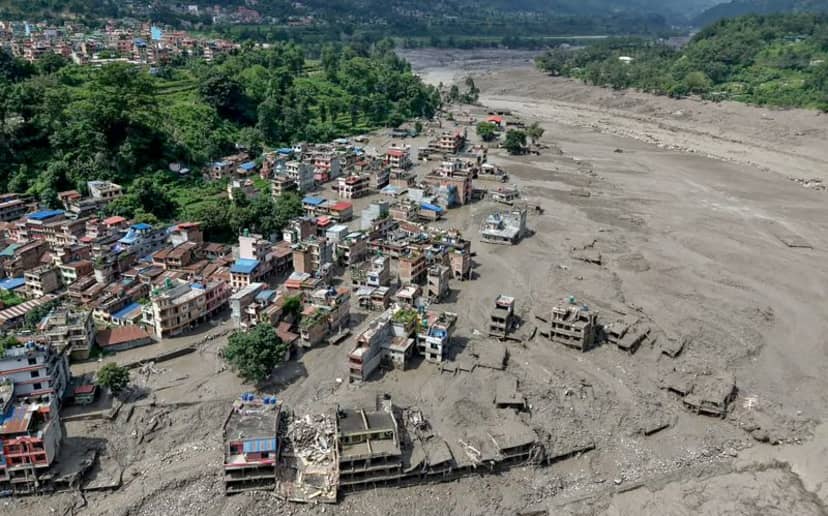
Rescue teams rushed Thursday to find hundreds of people missing on the Nepal-Tibet border in flash floods and landslides that killed at least 160.
Many of the missing are foreign tourists, officials said of the disaster that wiped out entire villages. The death toll appeared likely to rise.
Are you or is someone you know affected? Email iwitness@rnz.co.nz
One terrifying clip of surveillance video from the Chinese side of the frontier shows a raging wall of mud and debris crashing over a building several stories high on Wednesday morning, engulfing it as dozens of people run for their lives below. The surge sweeps away buses and cars like they are toys.
Chinese state media reported “major casualties” from a mudslide at a Tibet border hub, reporting three dead and another 265 people missing.
Nepali police said they had recovered 157 bodies after “devastating floods”, with officers working to move families in flood-risk areas to safety.
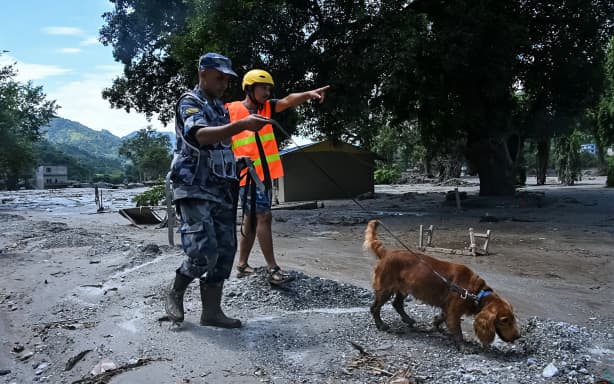
Tibet government officials mobilized nearly 800 emergency workers and 150 vehicles as well as sniffer dogs and speed boats to help the rescue efforts, China’s official Xinhua news agency said.
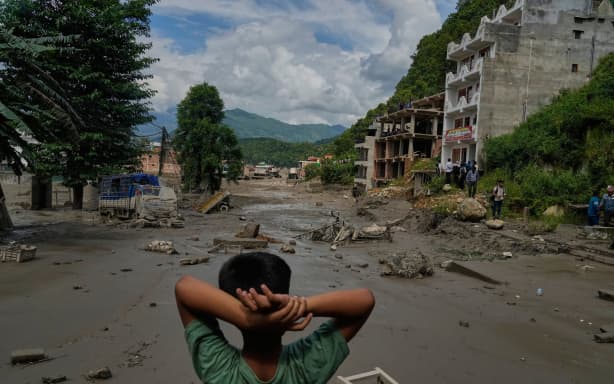
In the area hit by the disaster, rescuers waded through mud and sludge to look for survivors after floodwaters buried the lower floors of multi-storey buildings.
Some 403 tourists – 341 of them foreigners – were unaccounted for several hours after the disaster struck, according to Nepal’s tourism ministry.
The missing foreigners included 142 Indians, and others from Australia, Britain, Malaysia, the Netherlands, Portugal, South Africa, South Korea and the United States, the tourism board said.
“Entire villages and market areas have been wiped out,” said David Fisher, the Nepal head of the International Federation of Red Cross and Red Crescent Societies (IFRC).
It said it was was dispatching emergency supplies including blankets, first aid kits, stretchers and body bags.
Risk of new flood?
Locals were traumatised, while experts cautioned that a lingering blockage in a river could produce an additional flood.
“I got a call from (my brother-in-law) this morning, and they were crying and said their entire house had been swept away. Three family members were rescued, but his brother is still missing,” said 56-year-old local Raju Bhadel.
The cause of the flooding was not immediately clear.
But Nepal’s Foreign Minister Shishir Khanal said an earthquake likely triggered a landslide, which in turn blocked a river, sending water gushing downstream.
Nepal’s disaster authority said that satellite data indicated that a “snow-rock landslide” on the Nepal-China border may have caused the flood.
Images shared by Nepali police showed floodwater surging through a river, sweeping away houses in its path, while AFP images depicted the top floor of a house sticking out from muddy soil.
The Nepali Army was carrying out flights and had rescued scores of people, while others living near the river in danger zones had been told to relocate.
Niranjan Shrestha/AP via CNN Newsource
‘Mudslide disaster’
Sarthak Shrestha, a remote sensing and geo information analyst at the Kathmandu-based International Centre for Integrated Mountain Development (ICIMOD), said a preliminary assessment showed “no anomalies” from China’s side of the border.
“We believe a rock-ice avalanche occurred in Nepal, blocking the Lhende river and causing the cascading flood event,” he told AFP.
Chinese state broadcaster CCTV reported on Wednesday that “a mudslide disaster” on the Nepali side resulted in “major casualties and missing people” at the Gyirong Port in Tibet.
China’s leader Xi Jinping said that “the most urgent task is doing everything possible to search for and rescue the missing people”, according to CCTV.
Traffic authorities in Tibet’s Shigatse said roads in the area were “at risk of mudslides and unsafe for passage”.
Monsoon rains from June to September regularly trigger deadly floods and landslides across South Asia.
Scientists say climate change is increasing the frequency and intensity of extreme weather events in the region.
Qianggong Zhang, head of climate and environmental risks at ICIMOD, warned of the potential for a second flood.
“With a blockage still lodged upstream on the Nepal-China border river, authorities warn a second flood may occur,” he told AFP.
Advice for New Zealanders in Nepal
A spokesperson for the Ministry of Foreign Affairs and Trade said the New Zealand High Commission in New Delhi is in contact with authorities in Nepal to seek information about New Zealanders who may have been affected.
“All New Zealanders in Nepal should follow the advice of local authorities at all times, including any evacuation orders. New Zealanders in Nepal should also let their family and friends know that they are safe when they are able to.”
They said any New Zealanders requiring consular assistance can call the 24/7 consular emergency line on +64 99 20 20 20.
– AFP with additional reporting by RNZ



Bower, Parker and Carter into All Blacks starting XV for second test against Springboks

‘Horrifying’: NZ-based Nepali community pleads for urgent help

Police continue hunt for those behind Wattle Downs suspected double homicide


-

 Latest News2 months ago
RNZ investigation finds uranium, lead in black-market tobacco
-

 Latest News2 months ago
Kaixiao Liu’s journey from failed China’s Got Talent contestant to Auckland mystery death
-

 NZ News2 months ago
Fresh drone shots show extent of weather damage to SH1 near Kaikōura
-

 NZ News2 months ago
Gulf Harbour trial: Leader of fringe religious group and wife guilty of kidnapping and manslaughter
-

 Sports2 months ago
Paraguay knock Germany out of World Cup on penalties in major upset
-

 Sports2 months ago
‘They’ll bring everything’ – All Blacks don’t consider France a ‘B’ team
-

 NZ News2 months ago
Caregiver who was jailed for raping elderly woman and sexually assaulting another named
-

 Fiji News1 month ago
Fiji finalising diaspora policy to ensure citizens abroad ‘keep coming back’