

Business
‘Competitive’ Asian supermarket prices benefit consumers

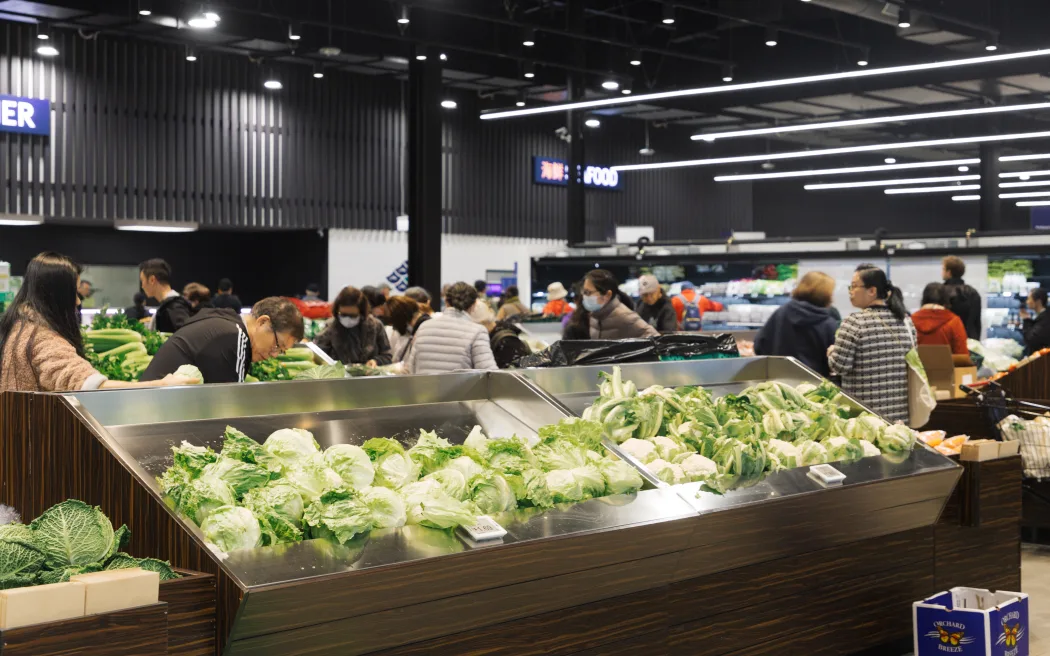
Retail grocery store owners in Auckland are feeling the squeeze after stiff competition has tightened margins following the arrival of several large Asian supermarkets over the past 12 months.
Described by the Commerce Commission as New Zealand’s “largest one-stop Asian supermarket”, Foodie opened in Westgate on 29 August 2024.
The store spans 3800 square meters and offers a wide selection of products from China, Japan, Malaysia, the Philippines, Singapore, South Korea, Vietnam and other parts of Asia, catering to the city’s growing Asian communities.
Around the same time, Asian supermarket chain Tai Ping opened a new branch in Henderson on 24 August.
LianHua launched its flagship supermarket store on Auckland’s North Shore in November, which was followed by the opening of Medol in Mt Wellington in June.
The recent surge in large Asian supermarket openings in Auckland has expanded options for consumers.
At the same time, it has also intensified competition between operators, leaving some business owners feeling mounting pressures to stay profitable.

Golden Apple’s core customer base is predominantly Asian. Photo: Supplied
Golden Apple, which opened its first grocery outlet in Henderson in 2015 followed by a second on the North Shore in 2023, is among those feeling the pinch.
William Zhong, manager of Golden Apple, said sales at the Henderson location had fallen sharply since the opening of Foodie and Tai Ping’s new stores in the same suburb.
“My business really struggled from the end of last year through the beginning of this year,” he said.
Zhong said Golden Apple’s core customer base is predominantly Asian, with Chinese shoppers making up the majority.
He said the store’s North Shore location is performing much better than the Henderson branch, largely due to demographics.
“About 60 percent to 70 percent of our customers on the North Shore are Chinese,” he said. “Whereas in Henderson, it’s only around 40 percent.”

Golden Apple’s Henderson store. Photo: Supplied
Zhong said although Auckland’s Chinese population was growing rapidly, the number of Asian supermarkets was expanding at an even faster pace.
He said customers generally preferred to shop close to home, which meant that an oversupply of Asian supermarkets in a single suburb could exceed demand, making it difficult for businesses to remain profitable.
“Right now, many of Auckland’s best Asian supermarkets are concentrated in West Auckland, particularly in Henderson and Westgate,” he said.
Four large Asian supermarkets in the area – Foodie, Tai Ping, Golden Apple and SMART – were located a few kilometers from each other, he said.
“We all feel the pressure,” he said. “The market is not big, but there are more and more Asian supermarkets opening here.”
Zhong said the economic downturn in many sectors in New Zealand had prompted many Chinese investors to enter the grocery business, believing supermarkets were the best place to make money – especially given their strong performance and status as essential businesses that were allowed to operate during the COVID-19 lockdowns.
He believed this trend helped to accelerate the boom in Asian supermarkets across Auckland.

Asian supermarket chain Tai Ping opened a new branch in Henderson in August 2024. Photo: RNZ / Ruth Kuo
Zhong said his focus now was on continuing to provide high-quality products and excellent service to his core customer base, and he was pleased that many customers who had stopped shopping at Golden Apple’s Henderson store were gradually returning.
He said competition among Asian supermarkets in Auckland was likely to intensify over the next few years, potentially leading to a shake-up in the market.
“Some supermarkets will survive,” he said. “But those that can’t will eventually have to close their doors.”
Chengde Liu, owner of E-PACS Supermart, admitted to feeling the same pressure.
After immigrating from Singapore to New Zealand in the 1980s, Liu opened E-PACS in the Auckland suburb of East Tāmaki in 2000, specializing in offering vegetarian and Malaysian/Singaporean food for the migrant community.
Liu said the number of Asian supermarkets and grocery stores in Auckland at the time could be counted on one hand.

E-PACS Supermart has been operating in Auckland for more than two decades. Photo: RNZ / Ruth Kuo
Tai Ping, Lim Chhour, Soung Yueen and Tofu Shop were among a handful of places where migrants regularly went to buy food that contained the flavour of home and maintain ties to their cultural roots.
He said the growing number of Asian migrants had contributed directly to the expansion of the grocery sector in Auckland.
Liu’s strategy was to stand out by offering a specialized range of products aimed at targeted customers.
“Eighty percent of our products are vegetarian foods,” he said. “This is our strength, and the core advantage that allows us to survive.”
In addition to serving Malaysian and Singaporean foods, Liu said the store had expanded its offerings to include products from Thailand, the Philippines, Indonesia, Vietnam and Taiwan in an effort to attract customers from different backgrounds.

The management team at Foodie does not want to compete directly with other Asian supermarkets. Photo: RNZ / Yiting Lin
Tao Shi, managing director of Foodie, said weekday foot traffic had remained steady at around 2000 to 3000 customers since opening. Foot traffic typically doubled on weekends.
Shi said Foodie’s gross turnover dipped for about three weeks from late November to early December – a period before Christmas he described as a typical “quiet season” for the grocery sector.
“Sales dropped around 10 to 20 percent during those three weeks,” he said. “That was really stressful for us.”
However, he said sales had bounced back this year and performed well in the last quarter.
“The gross turnover in the June quarter increased 15 percent compared with the March quarter,” he said.

Foot traffic at Foodie typically doubles over weekends. Photo: RNZ / Lin Yiting
Shi said Foodie did not aim to compete directly with other Asian supermarkets, adding it offered a unique shopping experience that allowed customers the opportunity to purchase daily essentials at one location instead of visiting multiple stores.
He believed all Asian supermarkets share the same goal of expanding and growing their customer base.
“I don’t think it’s competition,” he said. “We [Asian supermarkets] can work together to make ourselves more mainstream.
“We should advocate for attracting more non-Asian customers to shop [in Asian supermarkets]. We are not here to serve only Asian customers.”
After a year in operation, Shi said most of Foodie’s customers remained Asian, particularly those from Chinese, South Korean, Filipino and Indian communities.
During public and school holidays, however, non-Asian shoppers made up nearly half of the store’s foot traffic.
Shi said market demand was driving the rapid growth of Asian supermarkets in Auckland, adding options for shoppers, including more competitive food prices.
“Some products do have competitive prices,” he said. “We get fresh produce directly from farms, so we can keep prices a little lower for customers.”
Shi said Foodie is planning to open at least three to five new branches in Auckland, and potentially outside the city.
“We do have the ambition to build Foodie as a national brand,” he said. “That’s our long-term goal.
“But it’s still too early to say. After all, we have only one store now, so we will take it one step at a time and serve every customer well.”

Asian supermarket chain Tai Ping opened a new branch in Henderson in August 2024. Photo: RNZ / Ruth Kuo
Stats NZ’s latest data shows that retail sales value for supermarkets and grocery stores stood at $26.31 billion in 2023, rising to $27.08 billion in 2024.
Meanwhile, food prices increased 4.6 percent in the 12 months to 30 June, following a 4.4 percent rise in the year to 31 May.
The Commerce Commission’s 2024 Annual Grocery Report, released on 6 August, said Auckland’s major supermarkets held 71 percent of the market, compared with 88 percent in the rest of the country.
The report said barriers to entry for new competitors remained high, and the major supermarkets continued to wield significant power over smaller suppliers.
While consumers in Auckland and other major cities have a range of options, those in smaller towns and rural areas often have little to no choice, with some stores in small towns operating as local monopolies.
“Auckland continues to be a hub for the entry and expansion of specialist grocery retailers,” a Commerce Commission spokesperson said.
“Major supermarkets have a significantly lower market share in Auckland compared with other regions, partly due to the presence of more specialist grocery retailers, like Asian stores,” the spokesperson said.
“This is driving higher levels of competition and choice that benefit consumers and is something we would like to see across the country.”
~ VIA RNZ




A St John’s paramedic and a LPG delivery driver have been seriously injured in a crash on State Highway 1, north of Levin.
St John’s area operations manager Gareth Collings said a rapid response unit was caught up in the crash which happened at 10.40 am near Poroutawhao, north of Levin.
“The paramedic in the rapid response unit and the driver of the other vehicle were both treated for serious injuries and transported to Palmerston North Hospital by ambulance. Our thoughts are with those impacted by this incident and we are offering support to our people who were involved,” Collings said.
St John would be “supporting police” investigating the cause of the crash.

A Genesis Energy LPG delivery vehicle was involved in the crash. Photo: RNZ / Samuel Rillstone
Genesis Energy’s Ed Hyde confirmed one of its LPG delivery drivers was involved in the crash.
“Genesis has another vehicle on the way to the scene to collect the LPG cylinders and we will work with emergency services to make the site safe,” Hyde said.
Workers on a nearby site told RNZ they saw a St John vehicle travelling north with flashing lights before the crash.
St John has been approached for comment.
A reporter at the scene said workers unloaded household gas canisters from the bed of a smashed-up truck outside Lewis Farms on SH1.
The truck has lost its front wheels and the damaged cab was resting on the ground.
More than 100 vehicles were backed up at a cordon before traffic was allowed through.
~ RNZ


Police say person who fired gun at officers still at large

New Zealand sides named for RLWC finals

Parliamentary Service working on extra chairs and offices for increased number of MPs


-

 Latest News2 months ago
‘Chilling’: Business groups speak out against National’s supermarket break-up plan
-

 NZ News2 months ago
Tom Phillips report: The missed opportunities to find the children
-

 Politics2 months ago
National vows to try to split Pak’nSave and New World
-

 Latest News2 months ago
Cars bearing Chinese police markings stir unease in Auckland
-

 Fiji News2 months ago
Plans to have new Constitution by Dec 24th 2026
-

 NZ News2 months ago
Cop who stole $68,000 can now be named as champion Muay Thai fighter Haimona Tamati-Te Paki
-

 Politics2 months ago
MBIE confirms botched biometric projects costs blown out to $50.7 million
-

 Latest News2 months ago
Five Karangahape Road venues lose their liquor licences after police intervention