

NZ News
Antisocial behaviour reaching ‘desperate’ levels in Wellington suburb

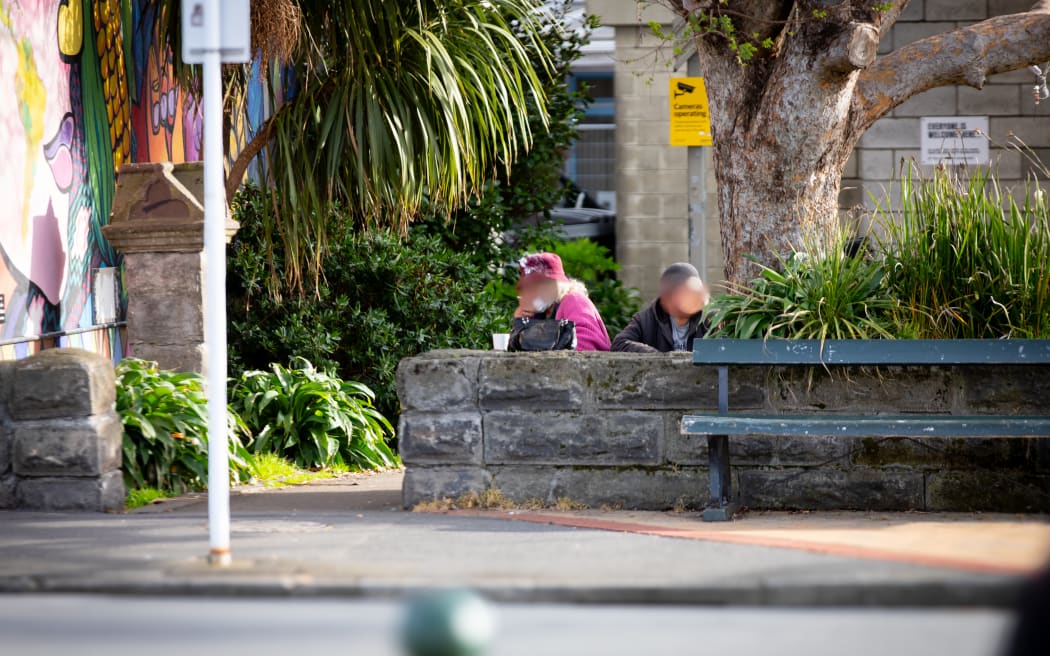
At 2pm on a weekday afternoon, two men are chasing each other down down the middle of the road, yelling and swearing, as cars and cyclists try to move past, before police pull up.
A horn blares, and a man walks past quickly: “About time this place got some attention”, he says, “it’s going to hell.”
Residents and businesses in the Wellington suburb of Newtown say homelessness, drug taking, and antisocial behaviour on the streets is reaching desperate levels.
Social services say they are dealing with an influx of rough sleepers moving out to Newtown from central Wellington and from elsewhere in the North Island.
And a city councillor wants a council-led inner-city safety programme extended out to the suburb.
Resident and business owner Duncan Mclean has coined a new phrase – NFM – or Normal For Newtown.
He said an increase in homelessness and drug-dealing in the past year has created a new, and at times frightening, normal.
“It’s the worse it’s been in 24 years. Newtown is famous for its interesting characters, who the society tends to enjoy having around.
“But it’s just got really bad with begging and homelessness and at-risk folks being affected by drug dealers really.”

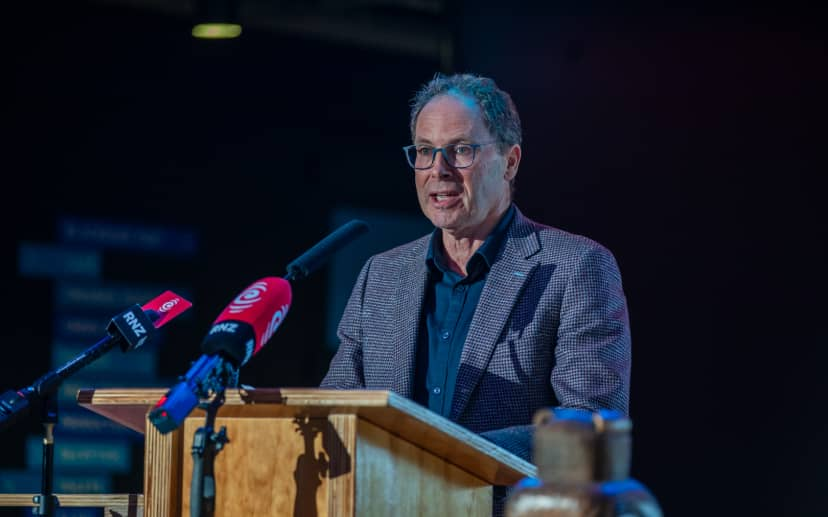
Duncan Mclean. Photo: RNZ / Mark Papalii
Mclean said he had organised several street clean-ups, which had uncovered hundreds of small bags which probably once contained drugs, as well as food and even human faeces behind the back of a bus shelter.
He has also asked the Wellington City Council to install more street lighting in the neighbourhood.
He said the atmosphere of the creative, quirky suburb, was changing, and now felt “desperate”.
“It affects my customers because they come to my store, they go to get money out of a money machine, there is someone asking them for money, not once but twice – by multiple different people.
“It’s threatening and I don’t think they feel safe. The whole environment doesn’t feel safe unfortunately.”
Data provided by the Downtown Community Ministry shows the number of rough sleepers in Wellington increased by 24 per cent between January and March 2025, and 10 per cent between April to June 2025, compared to last year.
Acting executive director Natalia Cleland said people who were rough sleeping in Wellington CBD moved to Newtown after police started their beat patrols last year.
Outreach teams who work in the suburb twice each week, helping to talk with and try and house rough sleepers, have reported an increase in Newtown, she said.
“The presence of the police made people feel uncomfortable. It made lots of people feel more safe, but it also made lots of people feel uncomfortable.
“So the people that felt like they didn’t want to have interactions with police, or didn’t want to have conversations with the police, they moved out to different suburbs.”
Tania, who lives in a council flat in Berhampore but spends most of her time in the courtyard of the central St Tom’s church, said she had seen a lot of new faces on the street.
“We’re going who’s that, who’s that, who’s that ‘cos like I said we’ve been here a long-time, we know the faces around here, so when we do see new faces, we sort of – peer [and] watch them, watch them, to see what they are going to turn out to be like.”
She said the courtyard sometimes gets trashed at night, and she helps clean it up in the morning.
“Usually during the night, when we are not around it gets very messy.
“We’ve come back in the morning and we’re clearing up again. We work with the council who come and pick up our rubbish all the time, they come and get it round about lunch-time. So we do work with them, but these other young ones, they just have no respect.”
Anton, who has lived in Newtown for more than 40 years and describes himself as part of the street community, said he has seen a “massive” increase in rough sleepers.
“There’s new streeties showing up everyday. Some travel, some stay forever.”
He said there were some people who the social agencies will not have recorded as rough sleeping – because they did not use community facilities.
“For years, the public never saw it – they didn’t see us.”
He said the increase was causing friction in the community. “A hungry man is an angry man.”
A community searching for solutions
Salvation Army Newtown Corps Officer Captain Andrew Wilson said its Newtown centre was dealing with a four-fold increase in rough sleepers.
Some had come from further up the West Coast of the North Island – towns like Whanganui – where they could not access the services they needed.
Wilson said a minority of Newtown’s street community were exhibiting antisocial behaviour – for instance asking for money or food outside the supermarket – and this was increasing a sense of anxiety in the suburb.
He said the Salvation Army and business-owners had held a workshop to practice de-escalation techniques.

Andrew Wilson. Photo: RNZ / Mark Papalii
Wilson said many others in the rough sleeping community had fallen on hard times, and were engaging with agencies.
He said he had seen people turn their life around and get back into housing, but the Ministry of Social Development’s criteria – excluding people from housing if they have contributed to their own homelessness – was an obstacle.
“It’s the way the language is being used, especially on the individual level, that we are seeing it’s not necessarily helpful for working towards people being housed and homed,” Wilson said.
MSD Wellington regional commissioner Gagau Annandale-Stone said the department was still approving most applications for emergency housing.
But she said it may not be the right place for people with significant and complex needs like drug and alcohol addiction, or mental health issues.
“Suppliers have the right to choose whether they accept a guest, or allow them to continue staying there.”
Annandale-Stone said the government funded alternative, more comprehensively supported, accommodation options such as Housing First and Transitional Housing, which had a different set of criteria.
Southern Ward councillor Nureddin Abdurahman wanted to see an extension of Wellington City Council’s City Safety Plan – which devotes Wellington City Council resources for tackling homelessness and safety in the inner city.
It includes funding community patrols from Māori wardens and urban liason officers trained in de-escalation, managing the CCTV network, boosting lighting repairs, and bright yellow city safety points – intercoms which people can use if they are feeling unsafe.
The plan runs along the Golden Mile, Te Aro and the waterfront, but stops at the Woolworths on Adelaide Rd, Abdurahman said.
He wanted it extended into Newtown.
“I’m not asking for a polished kind of environment, we all live together.
“This is where students live, where migrants live, and where former refugees flourish, no one chose to be sleeping rough outside.
“What I am basically asking is. How can we support them? Now it’s getting a little bit out of hand.”
A Wellington City Council spokesperson said there were currently no plans to extend the City Safety Plan due to budget constraints, and no planned upgrades to lighting.
For Mclean, he wanted co-ordinated action from agencies that could bring about change, not gentrification.
“Newtown is a fabulous suburb, unique to anywhere in New Zealand.
“We don’t want to lose the flavour that’s here, but it’s hard for it to thrive when it feels a bit unsafe on the streets.”



Latest News
Opportunities to mitigate multi-million-dollar RNZ budget blowout likely missed – experts
Multiple opportunities to identify and mitigate a multi-million-dollar budget blowout at RNZ appear have been missed, according to the former executive director at Audit New Zealand.
The public broadcaster on Monday revealed a near $12 million shock financial loss after a litany of financial blunders, which will now lead to sweeping job cuts.
The $11.8m loss is more than 25 times the $470,000 RNZ had expected to lose over the year to June.
CEO Paul Thompson took responsibility for the result, and said internal reports gave an inaccurate picture of the finances, meaning the scale of the loss only became clear in October.
RNZ’s former chief financial officer Hilary Parker resigned unexpectedly in early October.
The board said it would commission an independent review into what went wrong.
Independent contractor Stephen Walker, who left the Audit Office earlier this year, said the size of the loss was surprising, as was the length of time it took to identify it – months after the financial year ended.
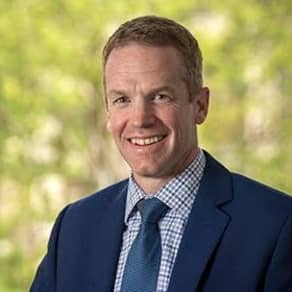
Supplied / OAG
“Probably more of a concern is that they had seemingly been unaware that they were running up a significant deficit until they were in the preparation stage of their annual report in October.”
Walker said public entities typically produced monthly financial reports.
An interim audit also took place before the end of the financial year, he said, but if the organisation hadn’t identified significant losses at that stage, the auditor could also be in the dark.
“It seems that there’s a real weakness in forecasting and budgeting that’s occurred here and that the monthly accounts, when they’re produced, either haven’t identified these significant variances against budget or the magnitude of them really hasn’t come to light until right towards the end of the financial year,” Walker said.
“And really at that point, there’s no opportunity for the chief executive, the leadership team to take, and the board to take, any corrective action because the year has effectively been completed.”
Walker said the “significant miss” was difficult to account for given it was more than 10 percent of RNZ’s total funding.
He said based on RNZ’s annual report, financial complexity didn’t appear to be a factor.
“This $11.8m loss isn’t made up of one particular item … it seems to have been contributed to by a number of separate expense lines running over budget. So I don’t think it’s necessarily to do with complexity.”
Among the errors, RNZ wrongly counted $2m from land sales as income in its budget. Staff costs also came in $3.2m over budget, including $1.4m in redundancy payments.
Professor at Auckland University’s business school Norman Wong said based on media reports the issues identified were “significant and troubling”.

Supplied / University of Auckland
“But recognising the sale of land as income in their budget is a basic error that one would have expected to have been caught and corrected well before it got to this point.”
With funding reductions at RNZ over the past two years, Walker expected greater scrutiny of financial results.
“Virtually every public entity has had their annual budget reduced. And so you would expect … the leadership team on a monthly basis and board – I’m not sure how frequently the board will consider the information – but you would expect them to be interrogating the results on a regular basis throughout the year,” he said.
Walker said initiating an independent review was the correct course of action and that he’d want to understand what information the leadership team and the board were regularly receiving.
He said he’d “love to say” surprising financial results were rare, but conceded they occured on a semi-frequent basis during his time leading the Audit Office.
“The benefit of independent scrutiny by the Audit Office – and the auditors providing that support to the Auditor General – [is] that the reporting is fairly presented at the end of the year, whether it’s good, bad or ugly.”
rnz


Police say person who fired gun at officers still at large

New Zealand sides named for RLWC finals

Parliamentary Service working on extra chairs and offices for increased number of MPs


-

 Latest News2 months ago
‘Chilling’: Business groups speak out against National’s supermarket break-up plan
-

 NZ News2 months ago
Tom Phillips report: The missed opportunities to find the children
-

 Latest News2 months ago
Cars bearing Chinese police markings stir unease in Auckland
-

 Politics2 months ago
National vows to try to split Pak’nSave and New World
-

 Fiji News2 months ago
Plans to have new Constitution by Dec 24th 2026
-

 Politics2 months ago
MBIE confirms botched biometric projects costs blown out to $50.7 million
-

 NZ News2 months ago
Cop who stole $68,000 can now be named as champion Muay Thai fighter Haimona Tamati-Te Paki
-

 Latest News2 months ago
Five Karangahape Road venues lose their liquor licences after police intervention