

Latest News
Clinical director supports law change calls after two-month-old dies after allegedly given wrong dosage

Warning: This story has details of the death of an infant.
A Neonatal Intensive Care Unit (NICU) clinical director is supporting calls for a law change mandating medication be checked by two people before it’s dispensed following the death of a two-month old baby after she was allegedly given medication at an adult dosage by a pharmacy.
A member of the national executive of the Pharmaceutical Society agreed a change is needed, but said pharmacists need to be better resourced, adding the New Zealand pharmacy workforce “is in crisis”.
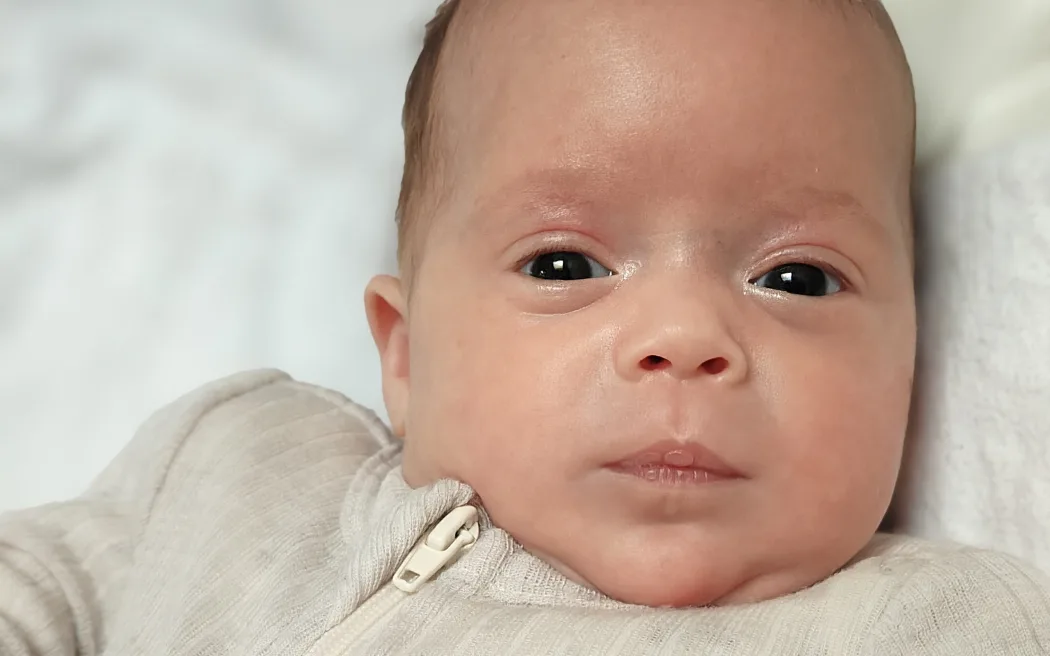
RNZ revealed Bellamere Arwyn Duncan died at Starship Hospital on 19 July. The two-month-old was allegedly given an adult dosage of phosphate by a Manawatū pharmacy. A coroner’s preliminary opinion is she died from phosphate toxicity.
The revelations have prompted the Ministry of Health and Health New Zealand to “urgently” undertake a joint review into the incident with Medsafe visiting the pharmacy to ensure they are safe to continue operating. The Pharmacy Council, which is also investigating, said it’s “clear that an awful error has occurred”.
Bellamere’s parents are calling for a law change that would make it mandatory for medication to be checked by two people before it is dispensed.
Do you know more? Email sam.sherwood@rnz.co.nz
University of Otago’s Dr Jason Wister, a Senior Medical Officer neonatologist and Dunedin Hospital’s Neonatal Intensive Care Unit (NICU) clinical director, told RNZ he was in favour of the suggested law change.
“I would be very supportive of that. That is the policy that we have in the NICU. I think that’s fairly standard practice within NICUs, that all medications require two people to check them before dispensing.
“It seems like that would be a safe, low-risk, high-reward situation that would take very little time and effort to mandate.”
Dr Wister said phosphate was “well known” as a potential for toxicity, especially in infants with “significant morbidity and mortality associated with it”.

Bellamere Duncan’s parents were allegedly given an adult dosage of phosphate by the pharmacy. Photo: Supplied
The medication was prescribed for preterm infants for their bone health and bone growth, he said, and a safe dose for a baby would depend on its weight.
The label on the medication Bellamere was given directed her parents to dissolve one 500mg tablet of phosphate twice daily in a glass of water.
Her parents gave her three bottles in 24 hours as had been recommended, totalling 1500mg.
Dr Wister said the total amount she received would have resulted in a “massive overdose”.
“With regards to the effect of the phosphate toxicity, it would most likely be due to causing hypocalcemia (low calcium).
“Phosphorus and calcium are in balance. As phosphorus increases, calcium decreases. An abrupt increase in phosphorus levels could have led to severe hypocalcemia which can cause seizures, muscle stiffening, cardiac arrhythmia, and laryngospasms.”
Lanny Wong a pharmacist, director of Mangawhai Pharmacy and a member of the national executive of the Pharmaceutical Society told Checkpoint Bellamere’s death was “devastating” and she supported a “full, transparent investigation so the lesson can be learned from this tragedy”.
Wong said dispensing medicine like phosphate was “not a routine process” for a community pharmacy.
“It is considered quite a complex process, require precise calculations, specialist knowledge and full attention.”
She said phosphate was given in a dispersible tablet.
“It does require the pharmacist to have full attention to do the calculation, and sometimes to cross check the dose against the weight of the baby and with the prescriber before the dispensing go out.”
Wong said she was “fortunate” she had multiple pharmacists in her pharmacy, and had her prescriptions checked by another pharmacist if she was doing a “complex dispensing”.
Asked if there needed to be changes mandating a second check, she said there did, but said pharmacists needed better support.
“I think it needs to change, but to change it, we need to be well resourced. We need to be well funded, and we need to be supported. That’s what we need. But at the moment, we’re simply not supported – let’s just be frank, New Zealand pharmacy workforce is in crisis.”
Wong said New Zealand had 7.95 pharmacists for every 10,000 people compared to 9.3 in Australia, 9.1 in the United Kingdom and 9.6 in the USA.
“So we are absolutely stretched. So our number do matter. There’s a lower density of pharmacist means there’s more pressure on people, longer working hours, reduced rate, and all the vital safety check has been compressed at the moment.
“And on top of that, pharmacies are acting like a shock absorber as well for the rest of the primary health system. You know, for people that can’t see GP, they’re actually going to go see their pharmacist. And, you know, and the government wanting us to do more vaccinations and our jobs is becoming more complex, but we haven’t received the funding or the support to help us do this.”

Bellamere was flown to Starship Hospital after she suddenly stopped breathing. Photo: RNZ / Cole Eastham-Farrelly
On Monday, a police spokesperson confirmed to RNZ police were undertaking inquiries on behalf of the coroner. If police detected any criminality then it would be up to the coroner to decide if they paused their inquiry while police carried out further investigations.
Health Minister Simeon Brown told RNZ on Monday he raised the incident with the Director-General of Health as soon as he was made aware.
“She assured me that there would be an investigation undertaken by both the Ministry of Health and Health New Zealand. That investigation is underway.
“I am advised that this incident has led to Medsafe undertaking an urgent assessment of the pharmacy. A further investigation is being undertaken by the Pharmacy Council, and the death is also the subject of a Coroner’s inquest.”
Health agencies would provide information to the coroner as needed to support the inquest.
“It is important that the reviews are undertaken, and that the circumstances that led to this incident are understood. I expect that these investigations may propose recommendations, and that these will be reviewed once reports are complete.”
Labour health spokeswoman Ayesha Verrall said in a statement to RNZ she was “horrified” to hear of Bellamere’s death.
“I will follow the outcome of the review closely to see if there are opportunities to stop this from happening again.”
A Health and Disability Commissioner (HDC) spokesperson said the Pharmacy Council had notified HDC of the incident as was required under the Health Practitioners Competence Assurance Act.
“HDC has referred this complaint back to the Pharmacy Council to manage as we consider they are best placed to address the issues raised.”
The Pharmacy Council said they were unable to comment further when asked by RNZ on Monday whether they supported calls for a law change.
“Our enquiry and investigation processes are currently underway and, until these are complete, we cannot provide any further details. At the end of the process, we will make any recommended changes to ensure as best as possible an event like this does not happen again.”
Pharmac’s Director Equity and Engagement, Dr Nicola Ngawati told RNZ medicine doses for children were generally worked out based on the child’s weight.
“And so many formulations for children are oral liquids to allow for accurate dosing. These oral liquids may also be more suitable for certain adults, for example, people who are unable to swallow tablets.
“Whether or not a medicine is manufactured in an oral liquid formulation is a commercial decision for pharmaceutical companies.”
Pharmac was always happy to consider funding medicines in an oral liquid form, one of our factors for consideration is suitability,” Dr Ngawati said.
The medication
While in hospital Bellamere’s mum, Tempest Puklowski gave Bellamere her drops for Vitamin D. Nurses also administered her phosphate.
When they left hospital they were given some Vitamin D in a little bottle, and a prescription for iron and Vitamin D.
The following day Bellamere’s father, Tristan Duncan went to a Manawatū pharmacy with the prescriptions. He was given the iron, but said the pharmacy refused to give the Vitamin D as the staff thought the dosage was “too high for her age and her weight”.
The staff said they would call the neonatal unit and follow-up.
A few days later Puklowski received a call from the unit to organise a home care visit. During the call she was asked if she had any concerns, and Puklowski asked if they had been contacted about the Vitamin D. They had not, and said they would follow up and rewrite the prescription along with a prescription for phosphate.
A day after the phone call, on 2 July, Duncan went to the pharmacy to collect the medication and came home with just the phosphate. Unbeknown to the parents they had allegedly been given an adult dosage of phosphate.
The label on the medication directed them to dissolve one 500mg tablet of phosphate twice daily in a glass of water.
That evening they gave Bellamere her first dose of the medicine in her formula water. They would give her three bottles in 24 hours as was recommended.
The couple noticed in that period that her eating was off, and thought she was “extra gassy,” Puklowski said.
“She was still feeding fine. She just wasn’t maybe going through a whole bottle compared to what she was,” she recalled.
Then, the day after she got her first dosage Bellamere suddenly stopped breathing.
Bellamere was taken to hospital and rushed to the emergency department. Once she was stabilised she was taken to the neonatal unit where she stayed overnight before she was flown to Starship Hospital.
The couple had taken a bottle of the medicine with them to Starship Hospital. She gave it to the staff who saw that they had been given an adult dose. The staff then requested the original prescription which confirmed the script had been written with the correct dosage, but somehow the pharmacy had given the wrong dosage Puklowski said.
“I keep thinking about how much she ended up having and it just makes me feel sick.”
Tragically, Bellamere died at Starship Hospital on 19 July.
The couple are adamant they want changes to the system for giving out medication.
“It’s the sort of thing that can’t really be overlooked,” Puklowski said.
“There needs to be something better in effect, rather than just relying on one person to make sure you’re getting the right prescription, having at least a few eyes.”
Pharmacy responds
The owner of the Manawatū pharmacy that dispensed the medication said in a statement to RNZ the baby’s death was “a tragedy”.
“Our sympathy is with the family and whānau. This is a very difficult time.
“We are looking into what has happened to try to understand how this took place. There will also be external reviews which we will work with.”
RNZ asked the owner how the medication was given at the wrong dosage, whether they disputed the allegations, when the pharmacy became aware the wrong dosage had been given, and what confidence people could have about other medication received from the pharmacy.
The owner said the pharmacy was “devastated about what has happened and are investigating to find out how this occurred”.
“It is not appropriate to comment further at this stage.”
rnz




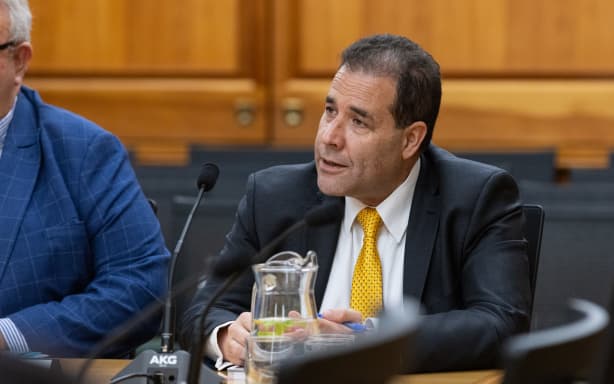
The chief executive of the Parliamentary Service is confident there will be enough room to accommodate the increased number of MPs and their staff coming into Parliament.
On current numbers, up to 131 MPs could be sitting in the Chamber following the election, brought on by a record overhang result.
Clerk of the House of Representatives Dr David Wilson told the Spinoff that currently the debating chamber had enough chairs to seat 124 MPs – including the Speaker of the House – and work was being done to accommodate more by altering the seating arrangement.
In a statement, Parliamentary Service chief executive Rafael Gonzalez-Montero said planning for a larger Parliament had been going for “some time”.
“Now that the election results have confirmed an increase to the number of members we are looking at several options.
“We are confident we will be able to accommodate all members within the Chamber.”
VNP / Phil Smith
Gonzalez-Montero said office accommodation for members and their staff would be “stretched” for a short time, but the new Members’ Building was only a few months away from “practical completion”.
That building – located behind Parliament – was due to be ready to occupy in April next year and had capacity to accommodate around 30 backbench MPs.
“All members should be in fit-for-purpose accommodation from that point,” Gonzalez-Montero said.
Following the 2023 election, 123 MPs sat in the Chamber – a record number at the time. That decreased to 122 following the resignation of National MP Judith Collins.
Collins held the seat of Papakura and stepped down in May and Parliament voted against holding a by-election because it was too close to the election.
The election result also meant high-ranking National Party MPs like Chris Bishop, Paul Goldsmith, Nicola Willis and Gerry Brownlee – Speaker of the House and an MP for 30 years – would likely not make it back into Parliament.
Only resigning or retiring MPs were permitted to give a valedictory speech meaning none of them would get the chance to give a valedictory statement.
Asked if their would be special allowances for valedictories, Wilson said in a statement that normally only MPs were allowed to speak in the House but the House could suspend its own rules or temporarily alter them.
“It could do so to allow former members to address the House.”
Wilson said no such arrangements could be made until the next Parliament opened and members sworn in.
rnz


Police say person who fired gun at officers still at large

New Zealand sides named for RLWC finals

Parliamentary Service working on extra chairs and offices for increased number of MPs


-

 Latest News2 months ago
‘Chilling’: Business groups speak out against National’s supermarket break-up plan
-

 NZ News2 months ago
Tom Phillips report: The missed opportunities to find the children
-

 Politics2 months ago
National vows to try to split Pak’nSave and New World
-

 Latest News2 months ago
Cars bearing Chinese police markings stir unease in Auckland
-

 Fiji News2 months ago
Plans to have new Constitution by Dec 24th 2026
-

 NZ News2 months ago
Cop who stole $68,000 can now be named as champion Muay Thai fighter Haimona Tamati-Te Paki
-

 Politics2 months ago
MBIE confirms botched biometric projects costs blown out to $50.7 million
-

 Latest News2 months ago
Five Karangahape Road venues lose their liquor licences after police intervention