Connect with us

HTML Image

i

Latest News

Community support workers among NZ’s lowest paid

Published

on

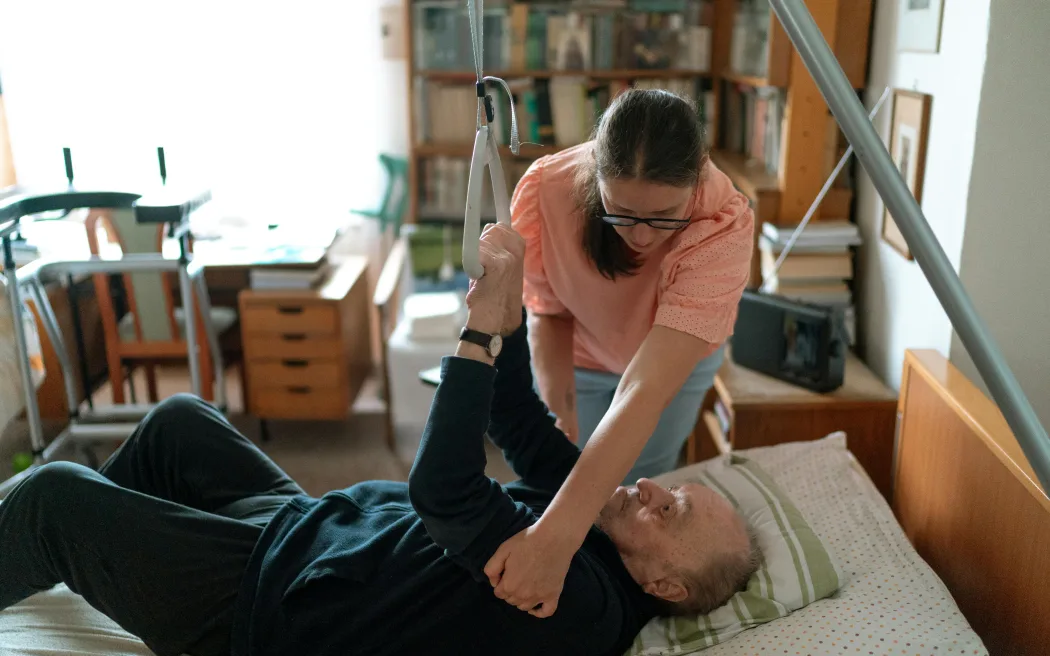
Home and community support workers, who look after the country’s elderly, are feeling frustrated at the amount they’re compensated for using their personal vehicles for work.

The workers are among New Zealand’s lowest-paid employees, maxing out about $29 an hour.

They also use their own vehicles to travel between jobs and are reimbursed at an amount significantly less than the Inland Revenue Department recommends for personal-vehicle use at work.

That’s now off the table after the government changed the law last month.

South Island support worker Sandra (RNZ has agreed not to use her surname) is reimbursed $2.35 for trips under 15 kilometres and 63.5c a kilometre for longer trips.

“We can travel up to 10 or 11km and we still get that standard rate of $2.35,” she said.

“A colleague of mine bought a brand new car in 2017. There are now 240,000 [kilometres] on the clock. Over the past year she has spent well over $3000 just in servicing and repairs on her car.”

Stories such as that were common.

“I had to get a lot of work done on my car to get a warrant. The work was going to cost around $1000 and, of course, I couldn’t afford that up front, so I had to save for that.

“In the meantime, because the warrant on my car had run out I couldn’t register it either. I was still having to work in an unwarranted and unregistered car, and I got a $400 fine.”

With no pool cars available, she said she had no other choice than to keep using her own if she were to continue working.

Home and community support workers can do tasks such as washing or showering clients, cleaning their houses and preparing food.

Sandra had spent more than 20 years in the sector, during which time petrol and vehicle costs have risen faster than the reimbursement rates.

“We’ve always used our own vehicles, but I think when I started we got paid per kilometre, and I think it was around 20c per kilometre, which actually worked out quite well back then.”

Sandra generally doesn’t get paid to travel to the first home she visits for the day, or home from her last jobs of a day.

The rates for the sector are below the Inland Revenue recommended rate of $1.04 a kilometre for personal-vehicle reimbursement up to 14,000km a year.

Health NZ says it’s looking for improvements

Under a decade-old law, Health NZ covers the cost of workers’ private vehicle use by paying the country’s service providers (there are about 50 of them), who then pass this on to the workers.

Health NZ ageing well acting director Mark Powell said the Home and Community Support (Payment for Travel Between Clients) Settlement Act 2016 set eligibility criteria and minimum pay rates.

“The providers can choose to pay more than what they claim back from us,” he said.

“The IBT [in-between travel] Settlement commits the Crown to review the mileage rate annually against the current relevant rates paid by the Inland Revenue Department and [adjust] accordingly as funding allows.

“As part of our aged care funding model, we are currently developing options to improve the travel payment system to ensure the incentives are right, encourage efficiencies and are attractive to home support workers.”

Health NZ provides advice once a year about reviewing the rates, and the health minister, in consultation with the ACC minister, then makes a decision.

Minister of Health Simeon Brown said he had received advice on the matter and was considering it.

E Tū union’s director for community support Mat Danaher said improvement was needed.

“We believe very strongly that this is a pay equity issue and it has been part of our pay equity discussion.

“It does absolutely need to be resolved. It is totally unfair. It is iniquitous.”

The sector was one of 33 for which claims had been laid by female-dominated workforces, but which were stopped under the pay equity law change, which tightened the criteria to bring claims.

Danaher said the home and community support field of more than 10,000 workers was 90 percent female.

“Fisheries officers and many other male-dominated occupations, where you’re expected to drive between sites or between clients or between visits, come with a car provided by the employer and a fuel card.

“You are paid from the moment you start work and get into that car until the moment you finish work at the end of the week.”

Workers ‘morally blackmailed’ into using own vehicles

Invercargill-based disability support worker and E Tū union rep Gordon Cambridge was critical of the pay equity law change, which halted the sector claim.

He said without appropriate payments for the likes of personal-vehicle use, the disability and community support sectors would continue to have a high turnover of workers.

“People are virtually morally blackmailed into using their own car and running up huge amounts of mileage almost entirely for work.”

Cambridge works for IDEA Services, which does pay its support workers at the Inland Revenue-recommended rate for own-vehicle use under a collective agreement negotiated in 2023.

A spokeswoman said when that was next renegotiated, changes in the standard government reimbursement rate would be considered.

It also had work vehicles available to staff.

Labour spokeswoman for seniors Ingrid Leary said home and community support workers were upset about the situation.

“They had expected to get a pay equity settlement. On the back of that they had not pushed too hard on the transportation because they thought it was all going to be sorted out.

“Now that the pay equity claim has been cut they’re left with these terrible reimbursements that don’t actually cover their costs and make them, essentially, pay money just to do their job.”

Minister for Seniors Casey Costello said New Zealand needed to have a good home care system and managing travel costs and funding better was part of that.

She and Simeon Brown had asked Health NZ to report back to them on options to improve travel payments.

Workplace Relations and Safety Minister Brooke van Velden said the new pay equity scheme was there to address genuine sex-based undervaluation across workforces.

“Workers in the employment system should know that there are processes available for employees and employers to agree pay and other conditions such as collective bargaining rounds.”

rnz

Continue Reading
Click to comment

Leave a Reply

Your email address will not be published. Required fields are marked *

Latest News

Police say person who fired gun at officers still at large

Published

on

Police say a person who fired a gun at officers in Napier is still at large.

Eastern District Commander Superintendent Joel Lamb said Police tried to stop a vehicle in the Pirimai Area at about 10pm on Tuesday.

He said someone in the back seat pointed what was presumed to be a firearm at officers pursuing the vehicle.

“Staff have then heard two distinct gunshots as the firearm was discharged.

“Fortunately, neither of our officers were injured, and the patrol vehicle did not sustain any damage.”

He said hours later, the vehicle was seen travelling north on the Waikato Expressway towards Auckland.

Police seized the vehicle at an address in Manurewa, but they had not found the alleged offender.

Lamb said people who lived at the Manurewa address were engaging with Police.

He said Eastern District and Counties Manukau Police were making enquiries.

“Presenting a firearm at a Police officer is a serious escalation that puts our staff and the wider community at risk. This behaviour is entirely unacceptable.

“We are taking this incident extremely seriously and will be pursuing all lines of enquiry to locate the offender and hold them accountable.”

Police asked anyone who witnessed the incident to contact Police on 105 or online using the reference number 261111/3764.

Information could also be provided anonymously via Crime Stoppers on 0800 555 111.

rnz

Continue Reading

Latest News

New Zealand sides named for RLWC finals

Published

on

The players tasked with ending Australia’s Rugby League World Cup dominance have been named.

The Kiwis and Kiwi Ferns have announced their squads for this Sunday’s World Cup finals in Brisbane.

Both sides are chasing their first titles since 2008, and both are looking to end their opponents run of three crowns in a row.

“Our Kiwi Ferns have been so dominant in years gone by, and we want to bring dominance back to this jersey, so I think it will be a case of who wants it more,” said co-captain Georgia Hale of the impending clash.

The Kiwis get a major boost for the final as they welcome back Ronaldo Mulitalo after he served a one-match ban for a high tackle against Fiji Bati.

Mulitalo replaces Charnze Nicoll-Klokstad, who moves to the six-man bench, which again includes utility Te Maire Martin, middle forwards Naufahu Whyte, Erin Clark and Xavier Willison plus fullback Keano Kini.

Loose forward Joseph Tapine will make his 30th Test appearance in a familiar pack again, including second-rowers Isaiah Papali’i and Briton Nikora, and props James Fisher-Harris and Moses Leota.

Winger Jamayne Isaako is on the cusp of claiming the New Zealand record for most Test points.

His five goals against Tonga lifted his career points tally to 225 – level with Shaun Johnson – while centre Casey McLean goes into the final with 16 tries in just eight Tests.

Fisher-Harris will again captain the team.

Fullback Ponga said the goal of the group was clear.

“We have high expectations around what we want to achieve, and obviously winning a world Cup is one of them.”

Meanwhile, Ricky Henry has selected a settled side to take on the Jillaroos, led by their lethal centre combination of Stacey Waaka and Mele Hufanga.

Veteran Apii Nicholls takes the number one jersey, Leianne Tufuga and Mackenzie Wiki on the wings.

Henry has stuck with his halves pairing of Chantay Kiria-Ratu and Raecene McGregor with Alexis Tauaneai, Georgia Hale and Otesa Pule up front.

Rounding out the starting pack is Shaniece Monschau, Kaiyah Atai, and Angelina Teakaraanga-Katoa.

“We have been building well throughout the tournament; we understand the Jillaroos side, and will give it our all to make New Zealand proud this weekend,” said Henry.

RLWC Finals:

Kiwi Ferns vs Jillaroos- 6.10pm

Kiwis vs Kangaroos – 9.35pm

Sunday November 15

Suncorp Stadium, Brisbane

Live blog updates on RNZ

Kiwi Ferns:

1. Apii Nicholls 2. Leianne Tufuga 3. Mele Hufanga 4. Stacey Waaka 5. Mackenzie Wiki 6. Chantay Kiria-Ratu 7. Raecene McGregor 8. Alexis Tauaneai 9. Georgia Hale 10. Otesa Pule 11. Shaniece Monschau 12. Kaiyah Atai 13. Angelina Teakaraanga-Katoa.

Interchange: 14. Ashleigh Quinlan 15. Annessa Biddle 16. Shannon Mato 17. Ivana Lauitiiti.

Reserves: 18. Brooke Anderson 19. Zahara Temara 20. Brianna Clark 21. Abigail Roache 22. Tenika Willison.

Kiwis:

1. Kalyn Ponga, 2. Jamayne Isaako, 3. Dane Gagai, 4. Casey McLean, 5. Ronaldo Mulitalo, 6. Kodi Nikorima, 7. Jahrome Hughes, 8. James Fisher-Harris (c), 9. Jeremy Marshall-King, 10. Moses Leota, 11. Isaiah Papali’i, 12. Briton Nikora, 13. Joseph Tapine (v/c).

Interchange: 14. Te Maire Martin, 15. Naufahu Whyte, 16. Erin Clark, 17. Xavier Willison.

Reserves: 18. Keano Kini, 19. Phoenix Crossland, 20. Charnze Nicoll-Klokstad, 21. Scott Sorensen, 22. Leo Thompson.

rnz

Continue Reading

Latest News

Parliamentary Service working on extra chairs and offices for increased number of MPs

Published

on

The chief executive of the Parliamentary Service is confident there will be enough room to accommodate the increased number of MPs and their staff coming into Parliament.

On current numbers, up to 131 MPs could be sitting in the Chamber following the election, brought on by a record overhang result.

Clerk of the House of Representatives Dr David Wilson told the Spinoff that currently the debating chamber had enough chairs to seat 124 MPs – including the Speaker of the House – and work was being done to accommodate more by altering the seating arrangement.

In a statement, Parliamentary Service chief executive Rafael Gonzalez-Montero said planning for a larger Parliament had been going for “some time”.

“Now that the election results have confirmed an increase to the number of members we are looking at several options.

“We are confident we will be able to accommodate all members within the Chamber.”

Chief Executive of the Parliamentary Service Rafael Gonzalez-Montero appears before select committee.
Parliamentary Service chief executive Rafael Gonzalez-Montero.

VNP / Phil Smith

Gonzalez-Montero said office accommodation for members and their staff would be “stretched” for a short time, but the new Members’ Building was only a few months away from “practical completion”.

That building – located behind Parliament – was due to be ready to occupy in April next year and had capacity to accommodate around 30 backbench MPs.

“All members should be in fit-for-purpose accommodation from that point,” Gonzalez-Montero said.

Following the 2023 election, 123 MPs sat in the Chamber – a record number at the time. That decreased to 122 following the resignation of National MP Judith Collins.

Collins held the seat of Papakura and stepped down in May and Parliament voted against holding a by-election because it was too close to the election.

The election result also meant high-ranking National Party MPs like Chris Bishop, Paul Goldsmith, Nicola Willis and Gerry Brownlee – Speaker of the House and an MP for 30 years – would likely not make it back into Parliament.

Only resigning or retiring MPs were permitted to give a valedictory speech meaning none of them would get the chance to give a valedictory statement.

Asked if their would be special allowances for valedictories, Wilson said in a statement that normally only MPs were allowed to speak in the House but the House could suspend its own rules or temporarily alter them.

“It could do so to allow former members to address the House.”

Wilson said no such arrangements could be made until the next Parliament opened and members sworn in.

rnz

Continue Reading

Trending

Copyright © 2026 The Buzz: Powered by Apna Network Limited - Concept by Digital Hub NZ