Connect with us

HTML Image

i

Covid-19

US opens up to fully vaccinated travellers

Published

on

The US is easing its Covid-19 travel restrictions, re-opening to passengers from the UK, EU and other nations.
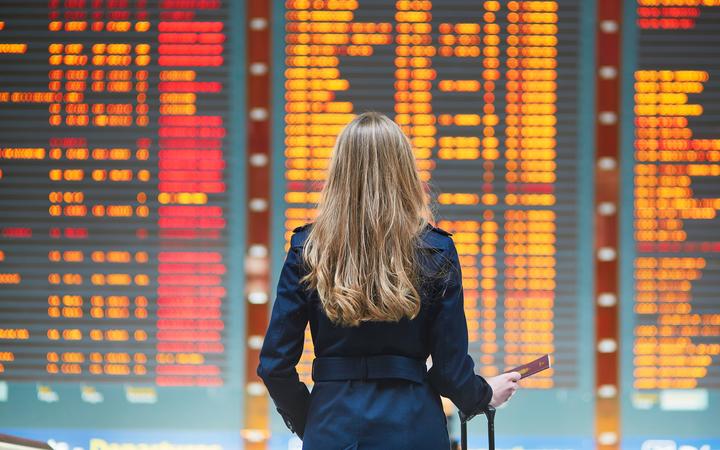
Young woman in international airport looking at the flight information board, holding passport in her hand, checking her flight

Photo: 123RF

From November, foreign travellers will be allowed to fly into the US if they are fully vaccinated, and undergo testing and contact tracing.

The US has had tough restrictions on travel in place since early last year.

The move answers a major demand from European allies, and means that families and friends separated by the restrictions can be reunited.

White House Covid-19 coordinator Jeff Zients announced the new rules on Monday, saying: “This is based on individuals rather than a country-based approach, so it’s a stronger system.”

“Most importantly, foreign nationals flying to the US will be required to be fully vaccinated,” he said.

US restrictions were initially imposed on travellers from China in early 2020, and then extended to other countries.

The current rules bar entry to most non-US citizens who have been in the UK and a number of other European countries, China, India, South Africa, Iran and Brazil within the last 14 days.

Under the new rules, foreign travellers will need to demonstrate proof of vaccination before flying, obtain a negative Covid-19 test result within three days of travelling, and provide their contact information. They will not be required to quarantine.

Officials said there would be some exceptions to the new policy, including for children who are not eligible to be vaccinated.

It was not immediately clear if the new rules applied only to US-approved vaccines, with Zients saying this would be determined by the US Centers for Disease Control.

A White House source told the BBC that the question of whether people who have had the AstraZeneca vaccine or 12- to 18-year-olds who have only had one jab would be allowed in under the new rules was a level of “granular detail” that was still being worked out, though this would affect millions.

Americans who are not fully vaccinated will still be able to enter, but they will need to be tested before their return to the US, and after they arrive home.

Zients said the policy would come into effect in early November, but did not give an exact date.

The new rules do not apply to land borders, meaning that restrictions continue to apply to cross-border travel with Canada and Mexico.

The easing of travel rules came as a surprise to many, after the US government last week said it was not the right time to lift the restrictions.

One British official told the BBC on Monday that the decision had come completely out of the blue.

Following the announcement, UK Prime Minister Boris Johnson said he was “delighted”.

“It’s a fantastic boost for business and trade, and great that family and friends on both sides of the pond can be reunited once again,” he wrote on Twitter.

German Vice-Chancellor Olaf Scholz also welcomed the change, saying it was “great news for German and European investments, our exports and transatlantic relations”.

Airline shares rose in response to the new travel rules, with British Airways owner IAG up as much as 10 percent.

Virgin Atlantic chief executive Shai Weiss called the move “a major milestone” for travel recovery.

Doug Parker, chairman and CEO of American Airlines, said he welcomed the “science-based approach” to lifting travel restrictions.

“With the shared goals of health and safety always at the forefront, we’re looking forward to welcoming more customers back to easy, seamless international trips for business, for leisure, and to reconnect with family and friends,” he said.

Travellers also celebrated the changes.

“It’s a happy day. Big Apple, here I come!” French entrepreneur Stephane Le Breton told the Associated Press news agency, as he looked forward to a trip to New York City that had been put on hold because of the restrictions.

The US has recorded more than 42 million coronavirus cases since the pandemic began, and over 670,000 deaths.

In an interview with BBC World News on Monday, White House coronavirus adviser Dr Anthony Fauci urged more Americans to get vaccinated.

– BBC

Covid-19

Covid-19 update: 8544 new cases, 39 further deaths linked to virus

Published

on

There were 8544 new cases of Covid-19 reported in Aotearoa in the week to midnight on Sunday, and a further 39 deaths attributed to the virus.

The total number of deaths attributed to the virus in New Zealand is now 3077.

In addition, there were 246 cases in hospital at midnight on Sunday with six in intensive care.

The seven-day rolling average of cases was 1217.

Last week, 9883 new Covid-19 cases were reported and a further 37 deaths were attributed to the virus.

Source: RNZ

Continue Reading

Covid-19

Dr Jonathan Howard: why US doctors spread Covid disinformation

Published

on

An American doctor believes more than 800,000 Americans would be alive today, if the US had taken New Zealand’s Covid approach.

Jonathan Howard, who is the chief of neurology at Bellevue Hospital in New York, said he was angry that influential health professionals minimised the seriousness of the virus.

“We want them infected,” was the call of then presidential science adviser Paul Alexander.

It’s also the title of Howard’s new book, which tells the story of how some medical and public health professionals came to become anti-vaccine and pro herd immunity.

He told Kim Hill on Saturday Morning there was a deluge of mis-information from prominent US doctors, some of whom wanted to actually spread the virus.

“Famous doctors from our top universities went on television and told people that Covid was just going away, that it was just the flu, that young people under the age of 65 have essentially no risk,” he said.

“And not only were there not attempts to limit the virus, these were loud influential voices who wanted to spread it.

“You can read quotes from our former Covid advisor, Donald Trump’s former Covid advisor, celebrating rising cases, saying this is a good thing when cases rise, which is shocking and astonishing.”

While Howard said there were obvious differences between the two countries, many lives could have been saved if the US had taken a similar approach to New Zealand.

“If we had limited infections until we had vaccinated the vast majority of our population, we would have potentially had hundreds of thousands of people still alive today, there’s no question about that.”

However, our zero-Covid strategy wasn’t without its critics, with Stanford professor Jay Bhattacharya writing that it had “cost New Zealand dearly”.

“I think that the fact that most of your grandparents are still alive means that zero Covid did not cost you dearly,” Howard said in response.

“I don’t discount that, there were real costs of the lockdowns, I don’t know anyone who argues otherwise and I want to be very clear that I was protected from those costs, meaning I am very fortunate to be employed, I worked throughout the pandemic, I was never lonely, I don’t have my own business.”

But Howard said he didn’t think that the alternative – letting the virus spread freely – would have yielded a better outcome.

He said that when forklifts were needed to move bodies into giant refrigerated trucks in New York, it was fantasy to imagine the city could have operated as normal during the pandemic.

“You talk about deferred healthcare – every single healthcare worker was working with Covid patients, our hospitals were overflowing,” he said.

“So when I hear people lament they missed cancer screenings, who would have done those screenings? Would elderly patients have left their house to go to crowded waiting rooms to get a mammogram for example? I don’t think so.

“I think that the fantasy is that things could have just been normal if only if it hadn’t been for overly cautious politicians.”

By comparison, New Zealand did well, Howard said.

“I look at the numbers, I look at your death rate with great jealousy.” he said.

“And I think for long periods of time your economy was more open than ours was because we had to keep locking down, just because there were overwhelming outbreaks of the virus.”

Howard said the fact many older New Zealanders were still alive compared with the US statistics, showed the success of this country’s Covid strategy.

Source  RNZ

Continue Reading

Covid-19

Covid-19 case numbers: 11,739 new cases, 58 further deaths

Published

on

There were 11,739 new cases of Covid-19 reported in Aotearoa in the week to midnight on Sunday, and a further 58 deaths attributed to the virus.

The total number of deaths from the disease is now 2850.

In addition, there were 247 cases in hospital at midnight Sunday, with six in intensive care.

The seven-day rolling average of cases was 1672.

Last week 12,277 new cases were reported and a further 30 deaths attributed to the virus.


Source RNZ

Continue Reading

Trending

Copyright © 2026 The Buzz: Powered by Apna Network Limited - Concept by Digital Hub NZ