

Latest News
How much do urgent care fees vary within 21km in Auckland?


t’s lunchtime on a Tuesday at the White Cross urgent care clinic in the south Auckland suburb of Otāhuhu.
“Today is our fourth time in four weeks and today we’ve had to pay $150. So the twins are free, but me and my partner is $65 each.”
A mother told me the family had to come back to the clinic for another prescription, because sickness was spreading at home.
“The virus that my daughters have caught doesn’t go away unless you get antibiotics. And now we’ve caught it so we need antibiotics too, which their antibiotics won’t work for us. It’s just getting worse and worse. And if they get better and we’ve got it, we just end up giving it (the virus) back to them.”

Big fee variation at AK White Cross urgent care clinics
The Otāhuhu clinic is close to home for the family, and it’s cheaper than other urgent care clinics.
“This is the most affordable one to take us in this fast. Our Local Doctors (a GP clinic) can’t take us in for another three weeks. The last time we’ve been to the doctors for ourselves was probably two years ago. We just tough it out because it’s too much amongst all the other bills that we have to pay.
“Today we’re gonna have to cut short on food. We haven’t done our grocery shopping for the week yet, so it’s gonna be what the twins need, and then whatever’s left.”
By “take us in this fast”, the mother meant: “eight hours with two two-year-olds, gonna be great.”
As part of the Budget this year, Health Minister Simeon Brown promised greater accessibility to urgent and after-hours healthcare in the regions, with several new 24-hour services planned around New Zealand.
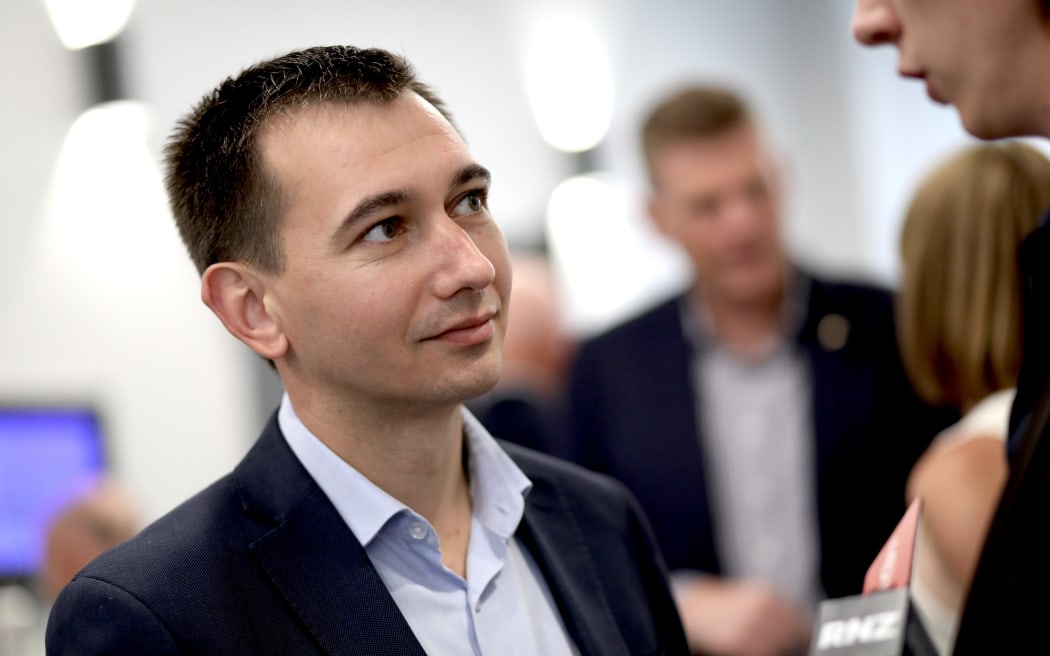
Health Minister Simeon Brown. Photo: RNZ/Marika Khabazi
Meanwhile in Auckland, urgent care is accessible but the fees, and the wait times, are quite varied around the city.
Three hours later, I crossed path with the family again – 7km away at the White Cross clinic in Mount Wellington.
At White Cross Otāhuhu, the cost for an un-enrolled adult without a community services card is $70. Meanwhile in Mount Wellington, the fee is $130.
The mother said they were sent by staff at Otāhuhu to Mount Wellington at no extra cost, so their wait could be shortened by half.
They told me the Mount Wellington waiting room is much quieter than Otāhuhu.
Further south, the cheapest White Cross clinic is in Manurewa, where an un-enrolled adult without a discount pays $60, and $15 if ACC offers cover. Enrolled adults pay $18, and if they’ve got ACC coverage, it’s free.
It’s an attractive price for many patients.
A woman told me this is the cheapest clinic that she knows of, and she drove 10km that day to see the doctor.
“Just for a follow up, it’s $18.”
Another man told me the price is vastly different between two clinics 9km apart.
“In Takanini, I think the charge for a repeat prescription is around $15 to $20, but here it’s around $7 to $10.”
Meanwhile in Remuera, one of Auckland’s affluent suburbs, the White Cross Ascot 24/7 charges $130 – more than double the $60 charged in Manurewa.
A couple who just finished their consultation told me they are enrolled with the Tāmaki Health network, so it cost them $80 in Remuera.
They say their bill could be cheaper if they travelled to a clinic further away, but in this case, they think their health is more important than the money they could save.
“It was $80 because I was in pain, and this was the nearest hospital from my work,” the woman said.
“Where we go most of the time, it’s about $17 or $18, then if it’s after 5pm, that’s $35. But she was working here, so it was convenient for her to come here,” her partner added.
Their wait that day was two hours.
Malcolm Mulholland from Patient Voice Aotearoa said cost was the number one factor in determining whether patients access healthcare.
“I know that there are a number of families and patients out there who won’t go and see their GP, primarily because of cost. And when that situation does arise, what tends to happen is as the patient’s health deteriorates, they end up going to the ED and that’s why we are seeing ED with record number of patients.”
Mulholland said many factors play into how practices price their fees: location, competition, demand and funding level are just a few.
He lives in Palmerston North, where there is only one after-hours clinic. It costs $210 to see a doctor during normal hours, and $240 on weeknights.
The Palmerston North clinic also belongs to Tāmaki Health, which manages the White Cross network of urgent medical clinics.
Tāmaki Health declined to comment, or provide a statement for this story.
I asked Mulholland if there’s anything patients can do to cut their bill.
“Sadly not. I don’t know if there is much that patients can do other than try to be seen during the day. But again, you’re gonna run into problems with GP practices being full and then the wait time to see a GP.
“I think that’s a really sad state of affairs because you’re essentially asking patients to triage themselves and patients won’t always make the right decision.”
And Mulholland said it all came back to the desperate need for more doctors.
“Patients are worried about their health. They can’t get access to a GP or a doctor, whether that be during the normal working hours or via an ED. And so they’re going wherever they think they might be seen.”
In May, the government announced a $164 million investment in urgent care. As part of the improvement, the agency noted it would implement a nationally consistent fee and subsidies schedule.
In a statement to First Up, director of Living Well at Health New Zealand Martin Hefford said, “Health New Zealand is shifting from a fragmented system with wide fee variation to one that’s more transparent and predictable across the country.”
There would still be some variation of fees, Hefford said, but the details were not finalised yet.
rnz



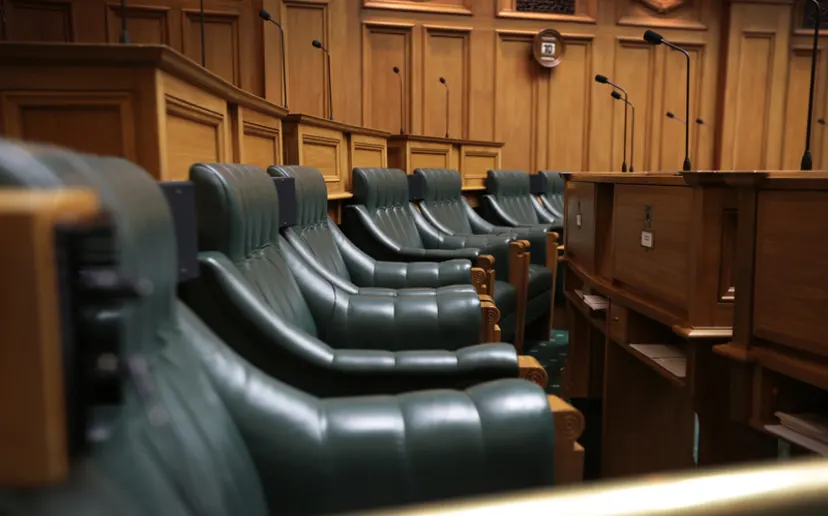
The chief executive of the Parliamentary Service is confident there will be enough room to accommodate the increased number of MPs and their staff coming into Parliament.
On current numbers, up to 131 MPs could be sitting in the Chamber following the election, brought on by a record overhang result.
Clerk of the House of Representatives Dr David Wilson told the Spinoff that currently the debating chamber had enough chairs to seat 124 MPs – including the Speaker of the House – and work was being done to accommodate more by altering the seating arrangement.
In a statement, Parliamentary Service chief executive Rafael Gonzalez-Montero said planning for a larger Parliament had been going for “some time”.
“Now that the election results have confirmed an increase to the number of members we are looking at several options.
“We are confident we will be able to accommodate all members within the Chamber.”
VNP / Phil Smith
Gonzalez-Montero said office accommodation for members and their staff would be “stretched” for a short time, but the new Members’ Building was only a few months away from “practical completion”.
That building – located behind Parliament – was due to be ready to occupy in April next year and had capacity to accommodate around 30 backbench MPs.
“All members should be in fit-for-purpose accommodation from that point,” Gonzalez-Montero said.
Following the 2023 election, 123 MPs sat in the Chamber – a record number at the time. That decreased to 122 following the resignation of National MP Judith Collins.
Collins held the seat of Papakura and stepped down in May and Parliament voted against holding a by-election because it was too close to the election.
The election result also meant high-ranking National Party MPs like Chris Bishop, Paul Goldsmith, Nicola Willis and Gerry Brownlee – Speaker of the House and an MP for 30 years – would likely not make it back into Parliament.
Only resigning or retiring MPs were permitted to give a valedictory speech meaning none of them would get the chance to give a valedictory statement.
Asked if their would be special allowances for valedictories, Wilson said in a statement that normally only MPs were allowed to speak in the House but the House could suspend its own rules or temporarily alter them.
“It could do so to allow former members to address the House.”
Wilson said no such arrangements could be made until the next Parliament opened and members sworn in.
rnz


Police say person who fired gun at officers still at large

New Zealand sides named for RLWC finals

Parliamentary Service working on extra chairs and offices for increased number of MPs


-

 Latest News2 months ago
‘Chilling’: Business groups speak out against National’s supermarket break-up plan
-

 NZ News2 months ago
Tom Phillips report: The missed opportunities to find the children
-

 Latest News2 months ago
Cars bearing Chinese police markings stir unease in Auckland
-

 Politics2 months ago
National vows to try to split Pak’nSave and New World
-

 Fiji News2 months ago
Plans to have new Constitution by Dec 24th 2026
-

 Politics2 months ago
MBIE confirms botched biometric projects costs blown out to $50.7 million
-

 NZ News2 months ago
Cop who stole $68,000 can now be named as champion Muay Thai fighter Haimona Tamati-Te Paki
-

 Latest News2 months ago
Five Karangahape Road venues lose their liquor licences after police intervention