Connect with us

HTML Image

i

NZ News

King’s Birthday: What’s open, what’s closed and how it’s decided who gets honours

Published

on

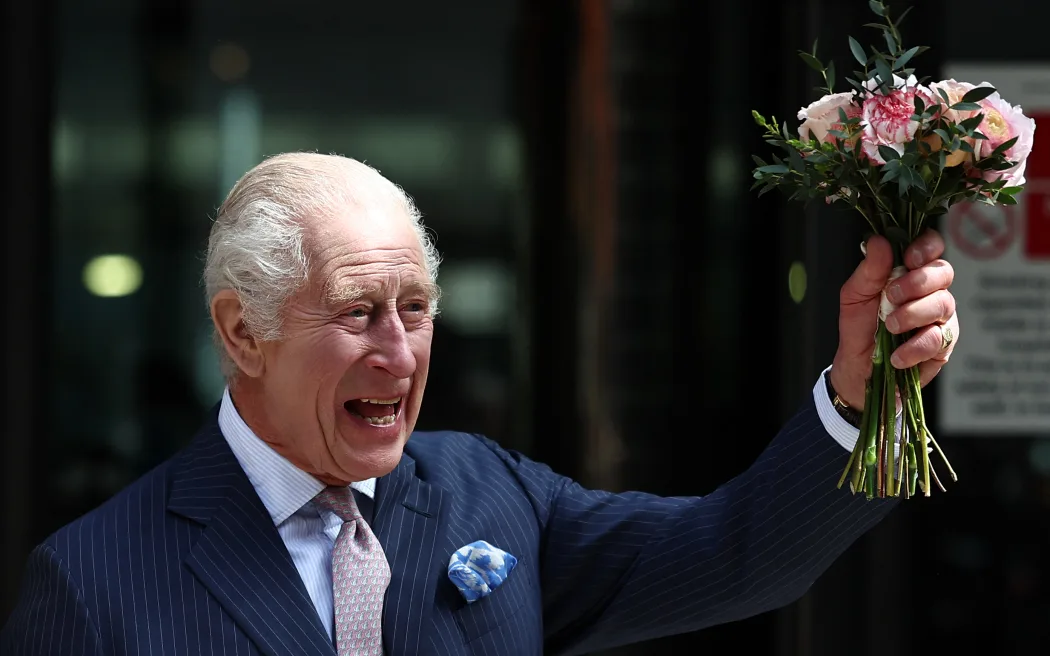
Explainer – King Charles’ birthday is commemorated with a public holiday on Monday – what’s open, how do those royal honours get chosen and should we still celebrate it, anyway?

Here’s everything you need to know about the holiday.

What’s open on Monday? Do I have to work?

It is a public holiday, but some people may still have to work depending on their employer.

Employees are paid time-and-a-half and entitled to a paid day off if a public holiday falls on a normal working day for them.

However, if you are a contractor or working for yourself, you don’t get those benefits.

You can read more about public holiday rules for employers here.

Trading restrictions don’t apply on Monday as they do for Easter holidays, the morning of Anzac Day or Christmas.

Shops, restaurants and cafes can be open as usual but it pays to check opening hours beforehand.

I’m gonna want a latte, do I have to pay a surcharge?

Because businesses have to pay employees more on a public holiday, it raises their costs. So some businesses choose to add a surcharge to their prices on holidays.

The typical surcharge is 15 percent.

However, businesses must be clear about announcing those charges to customers via signage, verbally or other methods.

Customers can also complain to the Commerce Commission if they feel misled or a charge was excessive.

King’s Birthday is also about celebrating New Zealanders’ achievements

Dozens of New Zealanders will be given royal honours which will be announced on Monday for excellence in their fields.

It’s the second time each year honours are given out – they’re also announced on New Year’s Eve.

Cool, can I get an honour? Who decides who gets them?

Literally anyone can nominate someone living who they think deserves a Royal Honour. (Unless you try to nominate yourself, which is not allowed and also kind of weird.)

The Honours Unit at the Department of the Prime Minister and Cabinet processes between 800 to 1000 nominations a year, Blair Teesdale-Moore, senior communications advisor with the department, said.

“The unit prepares a draft citation for each one based on the information in the nomination and letters of support,” she said.

The Cabinet Appointments and Honours Committee then considers every nomination individually in a series of confidential meetings over several weeks.

“As chair of the APH committee and the King’s primary advisor on honours matters, the prime minister advises the King on the final honours lists,” Teesdale-Moore said.

“By long-standing constitutional convention the King of New Zealand acts on the advice of the prime minister – this includes the formal approval of New Zealand Royal honours.”

Once the draft list is set, it is then given informal approval by the governor-general, run by potential recipients first – “a small number decline,” Teesdale-Moore said – and then it’s off to the King, who is the head of our honours system.

Hang on, the King was born in November. Why are we celebrating in June?

King Charles III turns 77 on 14 November. So why are we wishing him a happy birthday now?

Blame the weather. The tradition of celebrating the monarch’s birthday in the northern summer dates back hundreds of years, and is tied in with the Trooping the Colour ceremonial event held every June in London.

The ceremony of Trooping the Colour is believed to have been first performed during the reign of King Charles II from 1660 to 1685, the British Army says.

In 1748, during the reign of King George II, the sovereign’s birthday first became a celebrated holiday. Trooping the Colour became tied in to celebrate the monarch, no matter when their actual birthday was.

Ever since then, the king or queen has basically had two birthdays – the real one, and the big old fancy military parade one.

Trooping the Colour will be held in the UK on 14 June this year.

Is the King’s Birthday really something NZ should be marking in 2025?

That’s a matter of opinion and it all depends on who you ask.

As part of the Commonwealth, King Charles is New Zealand’s head of state. Of course, there have been calls to change that, which ramped up after the death of Queen Elizabeth II following her 70-year reign in 2022.

Monarchy New Zealand organisation did not respond to requests for comment from RNZ by deadline, but on its website calls the monarchy “something all Kiwis can be proud of”.

“It’s a vital component of our government, a guarantee of our democracy, and a sign of our maturity and independence as a nation.

“The King is a completely apolitical head of state (who) represents all New Zealanders regardless of their political views. This cannot happen in a republic.”

However, there are also calls to abandon the holiday celebrating a monarch on the other side of the world.

Savage, the chair of the New Zealand Republic organisation, called King’s Birthday an “empty public holiday that celebrates nothing in particular. It is no one’s birthday and even the Brits don’t celebrate it as a public holiday”.

“It has already been surpassed by Matariki as a proper, meaningful public holiday. New Zealand Republic was one of the first groups to start campaigning for Matariki and we are campaigning to replace King’s Birthday with a spring time public holiday in September.”

NZ Republic suggests a replacement public holiday could be Citizenship Day, when New Zealand citizenship was officially established on 6 September 1948 by the passing of the New Zealand Citizenship Act, or Suffrage Day on 19 September, marking the day in 1893 that NZ signed into law allowing women to vote.

But for now, your public holiday off is thanks to the King.

Source: RNZ

Continue Reading
Click to comment

Leave a Reply

Your email address will not be published. Required fields are marked *

Latest News

Police say person who fired gun at officers still at large

Published

on

Police say a person who fired a gun at officers in Napier is still at large.

Eastern District Commander Superintendent Joel Lamb said Police tried to stop a vehicle in the Pirimai Area at about 10pm on Tuesday.

He said someone in the back seat pointed what was presumed to be a firearm at officers pursuing the vehicle.

“Staff have then heard two distinct gunshots as the firearm was discharged.

“Fortunately, neither of our officers were injured, and the patrol vehicle did not sustain any damage.”

He said hours later, the vehicle was seen travelling north on the Waikato Expressway towards Auckland.

Police seized the vehicle at an address in Manurewa, but they had not found the alleged offender.

Lamb said people who lived at the Manurewa address were engaging with Police.

He said Eastern District and Counties Manukau Police were making enquiries.

“Presenting a firearm at a Police officer is a serious escalation that puts our staff and the wider community at risk. This behaviour is entirely unacceptable.

“We are taking this incident extremely seriously and will be pursuing all lines of enquiry to locate the offender and hold them accountable.”

Police asked anyone who witnessed the incident to contact Police on 105 or online using the reference number 261111/3764.

Information could also be provided anonymously via Crime Stoppers on 0800 555 111.

rnz

Continue Reading

Latest News

New Zealand sides named for RLWC finals

Published

on

The players tasked with ending Australia’s Rugby League World Cup dominance have been named.

The Kiwis and Kiwi Ferns have announced their squads for this Sunday’s World Cup finals in Brisbane.

Both sides are chasing their first titles since 2008, and both are looking to end their opponents run of three crowns in a row.

“Our Kiwi Ferns have been so dominant in years gone by, and we want to bring dominance back to this jersey, so I think it will be a case of who wants it more,” said co-captain Georgia Hale of the impending clash.

The Kiwis get a major boost for the final as they welcome back Ronaldo Mulitalo after he served a one-match ban for a high tackle against Fiji Bati.

Mulitalo replaces Charnze Nicoll-Klokstad, who moves to the six-man bench, which again includes utility Te Maire Martin, middle forwards Naufahu Whyte, Erin Clark and Xavier Willison plus fullback Keano Kini.

Loose forward Joseph Tapine will make his 30th Test appearance in a familiar pack again, including second-rowers Isaiah Papali’i and Briton Nikora, and props James Fisher-Harris and Moses Leota.

Winger Jamayne Isaako is on the cusp of claiming the New Zealand record for most Test points.

His five goals against Tonga lifted his career points tally to 225 – level with Shaun Johnson – while centre Casey McLean goes into the final with 16 tries in just eight Tests.

Fisher-Harris will again captain the team.

Fullback Ponga said the goal of the group was clear.

“We have high expectations around what we want to achieve, and obviously winning a world Cup is one of them.”

Meanwhile, Ricky Henry has selected a settled side to take on the Jillaroos, led by their lethal centre combination of Stacey Waaka and Mele Hufanga.

Veteran Apii Nicholls takes the number one jersey, Leianne Tufuga and Mackenzie Wiki on the wings.

Henry has stuck with his halves pairing of Chantay Kiria-Ratu and Raecene McGregor with Alexis Tauaneai, Georgia Hale and Otesa Pule up front.

Rounding out the starting pack is Shaniece Monschau, Kaiyah Atai, and Angelina Teakaraanga-Katoa.

“We have been building well throughout the tournament; we understand the Jillaroos side, and will give it our all to make New Zealand proud this weekend,” said Henry.

RLWC Finals:

Kiwi Ferns vs Jillaroos- 6.10pm

Kiwis vs Kangaroos – 9.35pm

Sunday November 15

Suncorp Stadium, Brisbane

Live blog updates on RNZ

Kiwi Ferns:

1. Apii Nicholls 2. Leianne Tufuga 3. Mele Hufanga 4. Stacey Waaka 5. Mackenzie Wiki 6. Chantay Kiria-Ratu 7. Raecene McGregor 8. Alexis Tauaneai 9. Georgia Hale 10. Otesa Pule 11. Shaniece Monschau 12. Kaiyah Atai 13. Angelina Teakaraanga-Katoa.

Interchange: 14. Ashleigh Quinlan 15. Annessa Biddle 16. Shannon Mato 17. Ivana Lauitiiti.

Reserves: 18. Brooke Anderson 19. Zahara Temara 20. Brianna Clark 21. Abigail Roache 22. Tenika Willison.

Kiwis:

1. Kalyn Ponga, 2. Jamayne Isaako, 3. Dane Gagai, 4. Casey McLean, 5. Ronaldo Mulitalo, 6. Kodi Nikorima, 7. Jahrome Hughes, 8. James Fisher-Harris (c), 9. Jeremy Marshall-King, 10. Moses Leota, 11. Isaiah Papali’i, 12. Briton Nikora, 13. Joseph Tapine (v/c).

Interchange: 14. Te Maire Martin, 15. Naufahu Whyte, 16. Erin Clark, 17. Xavier Willison.

Reserves: 18. Keano Kini, 19. Phoenix Crossland, 20. Charnze Nicoll-Klokstad, 21. Scott Sorensen, 22. Leo Thompson.

rnz

Continue Reading

Latest News

Opportunities to mitigate multi-million-dollar RNZ budget blowout likely missed – experts

Published

on

Multiple opportunities to identify and mitigate a multi-million-dollar budget blowout at RNZ appear have been missed, according to the former executive director at Audit New Zealand.

The public broadcaster on Monday revealed a near $12 million shock financial loss after a litany of financial blunders, which will now lead to sweeping job cuts.

The $11.8m loss is more than 25 times the $470,000 RNZ had expected to lose over the year to June.

CEO Paul Thompson took responsibility for the result, and said internal reports gave an inaccurate picture of the finances, meaning the scale of the loss only became clear in October.

RNZ’s former chief financial officer Hilary Parker resigned unexpectedly in early October.

The board said it would commission an independent review into what went wrong.

Independent contractor Stephen Walker, who left the Audit Office earlier this year, said the size of the loss was surprising, as was the length of time it took to identify it – months after the financial year ended.

Stephen Walker.
Independent contractor Stephen Walker is a former executive director at Audit New Zealand.

Supplied / OAG

“Probably more of a concern is that they had seemingly been unaware that they were running up a significant deficit until they were in the preparation stage of their annual report in October.”

Walker said public entities typically produced monthly financial reports.

An interim audit also took place before the end of the financial year, he said, but if the organisation hadn’t identified significant losses at that stage, the auditor could also be in the dark.

“It seems that there’s a real weakness in forecasting and budgeting that’s occurred here and that the monthly accounts, when they’re produced, either haven’t identified these significant variances against budget or the magnitude of them really hasn’t come to light until right towards the end of the financial year,” Walker said.

“And really at that point, there’s no opportunity for the chief executive, the leadership team to take, and the board to take, any corrective action because the year has effectively been completed.”

Walker said the “significant miss” was difficult to account for given it was more than 10 percent of RNZ’s total funding.

He said based on RNZ’s annual report, financial complexity didn’t appear to be a factor.

“This $11.8m loss isn’t made up of one particular item … it seems to have been contributed to by a number of separate expense lines running over budget. So I don’t think it’s necessarily to do with complexity.”

Among the errors, RNZ wrongly counted $2m from land sales as income in its budget. Staff costs also came in $3.2m over budget, including $1.4m in redundancy payments.

Professor at Auckland University’s business school Norman Wong said based on media reports the issues identified were “significant and troubling”.

Norman Wong.
Norman Wong.

Supplied / University of Auckland

“But recognising the sale of land as income in their budget is a basic error that one would have expected to have been caught and corrected well before it got to this point.”

With funding reductions at RNZ over the past two years, Walker expected greater scrutiny of financial results.

“Virtually every public entity has had their annual budget reduced. And so you would expect … the leadership team on a monthly basis and board – I’m not sure how frequently the board will consider the information – but you would expect them to be interrogating the results on a regular basis throughout the year,” he said.

Walker said initiating an independent review was the correct course of action and that he’d want to understand what information the leadership team and the board were regularly receiving.

He said he’d “love to say” surprising financial results were rare, but conceded they occured on a semi-frequent basis during his time leading the Audit Office.

“The benefit of independent scrutiny by the Audit Office – and the auditors providing that support to the Auditor General – [is] that the reporting is fairly presented at the end of the year, whether it’s good, bad or ugly.”

rnz

Continue Reading

Trending

Copyright © 2026 The Buzz: Powered by Apna Network Limited - Concept by Digital Hub NZ