

Latest News
Budget 2025 at a glance: The big changes, winners and losers

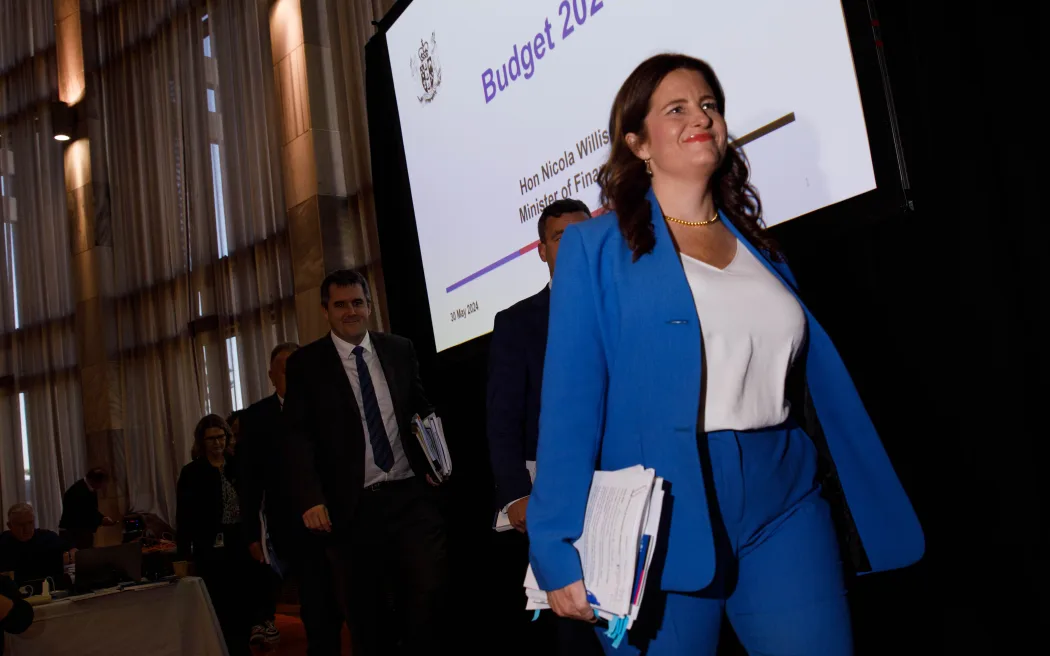
Big changes for KiwiSaver
The amount the government adds to KiwiSaver accounts is being halved to 25c for every dollar that savers deposit, to a maximum $261 a year.
Meanwhile, the minimum contribution will go up from the current 3 percent of wages to 4 percent in two steps over the next three years.
And people earning more than $180,000 a year will receive no government contribution at all from July.
But, 16 and 17-year-olds will start getting government contributions in July (they are currently excluded), and requirements for employers to match their deposits will kick in next year.
Savings from pay equity changes and Best Start
Willis has revealed a controversial and last-minute change making industrial pay equity claims more difficult – and halting 33 current claims – will save the government $2.7 billion.
That’s nearly half of the $5.3b of government spending that was shaved off this year’s Budget.
From April next year, the Best Start child payment scheme will also become fully income tested in the same way the second and third years are, with payments cut off when a family earns more than $97,000 a year.
The cuts are balanced by new spending of $6.7b – mostly through increased budgets for health, education, law and order and defence.
Businesses get a tax break
The flagship policy for the Budget will create a new rule allowing businesses to write off 20 percent of the value of new assets – like machinery, tools and equipment from their tax bill in addition to regular depreciation.
The government forecasts this could, by encouraging investment, boost GDP by 1 percent and wages by 1.5 percent over the next two decades.
Tightening of benefits for unemployed young people
In a surprise change, Social Development Minister Louise Upston has announced 18 and 19-year-olds will now have their Jobseeker and emergency benefits tested against their parents’ incomes.
The policy is forecast to save the government about $163 million over four years, but the income levels parents will be tested against have not yet been decided by Cabinet.
 A Flourish data visualization
No surplus until 2029
Each year, a return to surplus keeps getting pushed out further.
By the government’s new, preferred measure (which excludes ACC and was used at December’s half-year economic update) the government is expected to stay in deficit until 2028, with a narrow ($200m) surplus forecast for 2029.
However, by the measure used for every modern Budget until last year, the country would still be in deficit to the tune of $3 billion in 2029.
See our breakdown of the economy in simple charts here.
Treasury forecast this year’s deficit, using the newly introduced calculation, to the end of June would be $10.2 billion, about $2.7 billion lower than forecasted.
The deficit will peak in the coming year at $12.1 billion, nearly $2 billion more than the December forecast, with the 2027 forecast nearly double the previous forecast at $8.1 billion.
Education spending changes
The Budget puts the handbrake on annual growth in education spending as past splurges on school buildings run out in the next few years.
Despite that, spending on teaching and learning continued to grow with what the government described as a “seismic shift” in support for children with disabilities.
Education Minister Erica Stanford said new education initiatives in the Budget totalled $2.5 billion over four years, though about $614m of that total was reprioritised from “underperforming” initiatives.
The government’s total spend on early on early childhood and school education would grow by roughly $400m to $19.85b in 2025-26, but drop to $19b and $18.9b in subsequent years.
The fall was partly due to the fact the $240m-a-year free school lunch programme Ka Ora, Ka Ako, was only funded until the end of 2026, and to a $600m drop in capital funding by 2027-28 and beyond.
The Budget revealed education’s worst-kept secret – the axing of a major school-clustering scheme, Kahui Ako, to help bankroll the learning support increase.
Health has few surprises
With many of the big ticket items already announced, it’s a largely no-surprises Budget for health.
It includes a $447m boost for primary care and urgent after-hours care, and $1b of new capital spending for health infrastructure.
Getting prescriptions for items for people with conditions such as asthma, diabetes and high blood pressure will get easier with a move to allow 12-month prescriptions from next year.
The overall health budget now tops $31b for the next year, up 4.77 percent.
Law and Order spending jumps
The police are to get almost half a billion over four years to maintain front line services, while $246m extra over four years will be spent on trying to free up the logjammed courts.
With inmate numbers forecast to hit almost 11,000 by mid-2026, the Budget puts almost $400m over four years to help meet the “population and other volume pressures”.
Other changes
Most government departments have received no extra funding this year, meaning they will have to absorb any increases in costs, including wages.
Health, education, law and order and defence are the main exceptions.
As teased, the Budget includes some targeted cost-of-living support through an increase to Working for Families abatement thresholds and rates.
The changes are expected to deliver an extra $14 a fortnight on average to about 142,000 families, most earning less than $100,000 a year.
The SuperGold card rates rebate will also be slightly expanded to provide more support for up to 66,000 more retirees. A new income abatement threshold is being added and the maximum rebate lifted from $790 to $805.
rnz



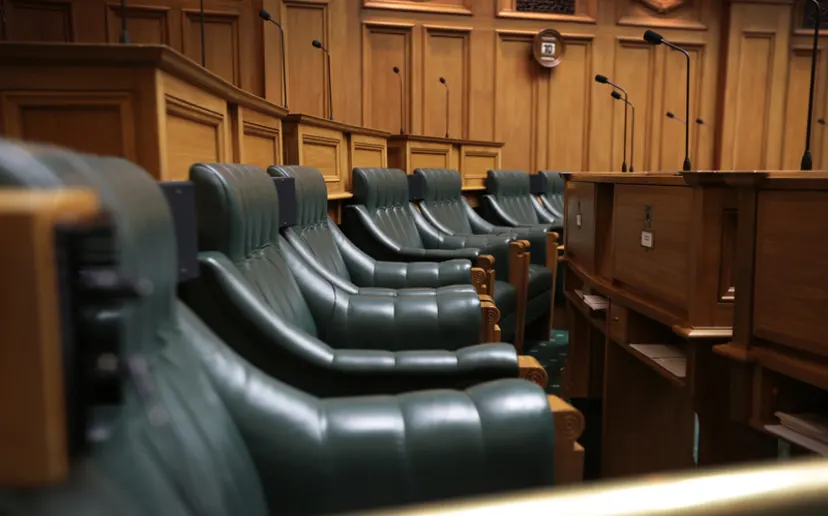
The chief executive of the Parliamentary Service is confident there will be enough room to accommodate the increased number of MPs and their staff coming into Parliament.
On current numbers, up to 131 MPs could be sitting in the Chamber following the election, brought on by a record overhang result.
Clerk of the House of Representatives Dr David Wilson told the Spinoff that currently the debating chamber had enough chairs to seat 124 MPs – including the Speaker of the House – and work was being done to accommodate more by altering the seating arrangement.
In a statement, Parliamentary Service chief executive Rafael Gonzalez-Montero said planning for a larger Parliament had been going for “some time”.
“Now that the election results have confirmed an increase to the number of members we are looking at several options.
“We are confident we will be able to accommodate all members within the Chamber.”
VNP / Phil Smith
Gonzalez-Montero said office accommodation for members and their staff would be “stretched” for a short time, but the new Members’ Building was only a few months away from “practical completion”.
That building – located behind Parliament – was due to be ready to occupy in April next year and had capacity to accommodate around 30 backbench MPs.
“All members should be in fit-for-purpose accommodation from that point,” Gonzalez-Montero said.
Following the 2023 election, 123 MPs sat in the Chamber – a record number at the time. That decreased to 122 following the resignation of National MP Judith Collins.
Collins held the seat of Papakura and stepped down in May and Parliament voted against holding a by-election because it was too close to the election.
The election result also meant high-ranking National Party MPs like Chris Bishop, Paul Goldsmith, Nicola Willis and Gerry Brownlee – Speaker of the House and an MP for 30 years – would likely not make it back into Parliament.
Only resigning or retiring MPs were permitted to give a valedictory speech meaning none of them would get the chance to give a valedictory statement.
Asked if their would be special allowances for valedictories, Wilson said in a statement that normally only MPs were allowed to speak in the House but the House could suspend its own rules or temporarily alter them.
“It could do so to allow former members to address the House.”
Wilson said no such arrangements could be made until the next Parliament opened and members sworn in.
rnz


Police say person who fired gun at officers still at large

New Zealand sides named for RLWC finals

Parliamentary Service working on extra chairs and offices for increased number of MPs


-

 Latest News2 months ago
‘Chilling’: Business groups speak out against National’s supermarket break-up plan
-

 NZ News2 months ago
Tom Phillips report: The missed opportunities to find the children
-

 Latest News2 months ago
Cars bearing Chinese police markings stir unease in Auckland
-

 Politics2 months ago
National vows to try to split Pak’nSave and New World
-

 Fiji News2 months ago
Plans to have new Constitution by Dec 24th 2026
-

 NZ News2 months ago
Cop who stole $68,000 can now be named as champion Muay Thai fighter Haimona Tamati-Te Paki
-

 Politics2 months ago
MBIE confirms botched biometric projects costs blown out to $50.7 million
-

 Latest News2 months ago
Five Karangahape Road venues lose their liquor licences after police intervention