

NZ News
Children as young as 6 adopted, made to work as house slaves


Children as young as six are being adopted overseas and being made to work as house slaves, suffering threats, beatings and rape.
Kris Teikamata – a social worker at a community agency – spoke about the harrowing cases she encountered in her work, from 2019 to 2024, with children who had escaped their abusers in Auckland and Wellington.
“They’re incredibly traumatised because it’s years and years and years of physical abuse, physical labour and and a lot of the time, sexual abuse, either by the siblings or other family members. They were definitely threatened, they were definitely coerced and they had no freedom. When I met each girl, [by then] 17, 18, 19 years old, it was like meeting a 50-year-old. The light had gone out of their eyes. They were just really withdrawn and shut down.”
In one case a church minister raped his adopted daughter and got her pregnant.
Teikamata and her team helped 10 Samoan teenagers who had managed to escape their homes, and slavery – two boys and eight girls – with health, housing and counselling. She fears they are the tip of the iceberg, and that many remain under lock and key.

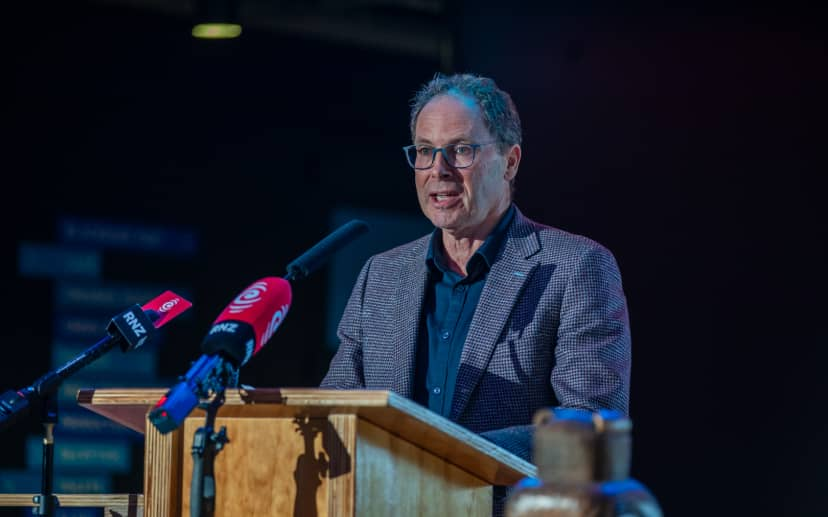
Kris Teikamata Photo: Supplied
“They were brought over as a child or a teenager, sometimes they knew the family in Samoa, sometimes they didn’t – they had promised them a better life over here, an education and citizenship.
“When they arrived they would generally always be put into slavery. They would have to get up at 5, 6 in the morning, start cleaning, start breakfast, do the washing, then go to school and then after school again do cleaning and dinner and the chores – and do that everyday until a certain age, until they were workable.
“Then they were sent out to factories in Auckland or Wellington and their bank account was taken away from them and their Eftpos card. They were given $20 a week. From the age of 16 they were put to work. And they were also not allowed to have a phone – most of them had no contact with family back in Samoa.”
‘A thousand kids a year… and it’s still going on’
Nothing stopped the abusive families from being able to adopt again and they did, she said. A recent briefing to ministers reiterated that New Zealanders with criminal histories or significant child welfare records have used overseas courts to approve adoptions, which were recognised under New Zealand law without further checks.
“When I delved more into it, I just found out that it was a very easy process to adopt from Samoa,” she said. “There’s no checks, it’s a very easy process. So about a thousand kids [a year] are today being adopted from Samoa, it’s such a high number – whereas other countries have checks or very robust systems. And it’s still going on.”
As children, they could not play with friends and all of their movements were controlled.
Oranga Tamariki uplifted younger children, who were sometimes siblings of older children who had escaped. “The ones that I met had escaped and found a friend or were homeless or had reached out to the police.”
When they were reunited with their birth parents on video calls, it was clear they came from loving families who had been deceived, she said.
While some adoptive parents faced court for assault, only one has been prosecuted for trafficking.
Government, police and Oranga Tamariki were aware and in talks with the Samoan government, she said.
Adoption Action member and researcher Anne Else said several opportunities to overhaul the 70-year-old Adoption Act had been thwarted, and the whole legislation needed ripping up.
“The entire law needs to be redone, it dates back to 1955 for goodness sake,” she said. “But there’s a big difference between understanding how badly and urgently the law needs changing and actually getting it done.
“Oranga Tamariki are trying, I know, to work with for example Tonga to try and make sure that their law is a bit more conformant with ours, and ensure there are more checks done to avoid these exploitative cases.”
Children from other countries had been sold for adoption, she said, and the adoption rules depended on which country they came from. Even the Hague Convention, which is supposed to provide safeguards between countries, was no guarantee.
Immigration minister Erica Stanford said other ministers were looking at what can be done to crack down on trafficking through international adoption.
“If there are non-genuine adoptions and and potential trafficking, we need to get on top of that. It falls outside of the legislation that I am responsible for, but there are other ministers who have it on their radars because we’re all worried about it. I’ve read a recent report on it and it was pretty horrifying. So it is being looked at.”
A meeting was held between New Zealand and Samoan authorities in March. A summary of discussions said it focused on aligning policies, information sharing, and ‘culturally grounded frameworks’ that uphold the rights, identity, and wellbeing of children, following earlier work in 2018 and 2021.
Where to get help:
- Salvation Army support for survivors of trafficking: modernslaveryresponse@salvationarmy.org.nz
- NZ Police.
- Victim Support 0800 842 846.
- Rape Crisis: 0800 88 33 00.
- Rape Prevention Education.
- Empowerment Trust.
- HELP (Auckland): 09 623 1700, (Wellington): 04 801 6655.
- Safe to talk: 0800 044 334.
- Tautoko Tāne Male Survivors Aotearoa.
Source: RNZ



Latest News
Opportunities to mitigate multi-million-dollar RNZ budget blowout likely missed – experts
Multiple opportunities to identify and mitigate a multi-million-dollar budget blowout at RNZ appear have been missed, according to the former executive director at Audit New Zealand.
The public broadcaster on Monday revealed a near $12 million shock financial loss after a litany of financial blunders, which will now lead to sweeping job cuts.
The $11.8m loss is more than 25 times the $470,000 RNZ had expected to lose over the year to June.
CEO Paul Thompson took responsibility for the result, and said internal reports gave an inaccurate picture of the finances, meaning the scale of the loss only became clear in October.
RNZ’s former chief financial officer Hilary Parker resigned unexpectedly in early October.
The board said it would commission an independent review into what went wrong.
Independent contractor Stephen Walker, who left the Audit Office earlier this year, said the size of the loss was surprising, as was the length of time it took to identify it – months after the financial year ended.
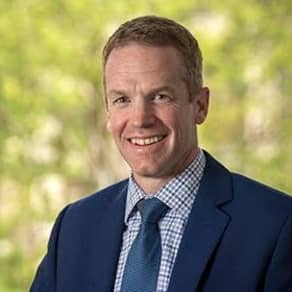
Supplied / OAG
“Probably more of a concern is that they had seemingly been unaware that they were running up a significant deficit until they were in the preparation stage of their annual report in October.”
Walker said public entities typically produced monthly financial reports.
An interim audit also took place before the end of the financial year, he said, but if the organisation hadn’t identified significant losses at that stage, the auditor could also be in the dark.
“It seems that there’s a real weakness in forecasting and budgeting that’s occurred here and that the monthly accounts, when they’re produced, either haven’t identified these significant variances against budget or the magnitude of them really hasn’t come to light until right towards the end of the financial year,” Walker said.
“And really at that point, there’s no opportunity for the chief executive, the leadership team to take, and the board to take, any corrective action because the year has effectively been completed.”
Walker said the “significant miss” was difficult to account for given it was more than 10 percent of RNZ’s total funding.
He said based on RNZ’s annual report, financial complexity didn’t appear to be a factor.
“This $11.8m loss isn’t made up of one particular item … it seems to have been contributed to by a number of separate expense lines running over budget. So I don’t think it’s necessarily to do with complexity.”
Among the errors, RNZ wrongly counted $2m from land sales as income in its budget. Staff costs also came in $3.2m over budget, including $1.4m in redundancy payments.
Professor at Auckland University’s business school Norman Wong said based on media reports the issues identified were “significant and troubling”.

Supplied / University of Auckland
“But recognising the sale of land as income in their budget is a basic error that one would have expected to have been caught and corrected well before it got to this point.”
With funding reductions at RNZ over the past two years, Walker expected greater scrutiny of financial results.
“Virtually every public entity has had their annual budget reduced. And so you would expect … the leadership team on a monthly basis and board – I’m not sure how frequently the board will consider the information – but you would expect them to be interrogating the results on a regular basis throughout the year,” he said.
Walker said initiating an independent review was the correct course of action and that he’d want to understand what information the leadership team and the board were regularly receiving.
He said he’d “love to say” surprising financial results were rare, but conceded they occured on a semi-frequent basis during his time leading the Audit Office.
“The benefit of independent scrutiny by the Audit Office – and the auditors providing that support to the Auditor General – [is] that the reporting is fairly presented at the end of the year, whether it’s good, bad or ugly.”
rnz


Police say person who fired gun at officers still at large

New Zealand sides named for RLWC finals

Parliamentary Service working on extra chairs and offices for increased number of MPs


-

 Latest News2 months ago
‘Chilling’: Business groups speak out against National’s supermarket break-up plan
-

 NZ News2 months ago
Tom Phillips report: The missed opportunities to find the children
-

 Politics2 months ago
National vows to try to split Pak’nSave and New World
-

 Latest News2 months ago
Cars bearing Chinese police markings stir unease in Auckland
-

 Fiji News2 months ago
Plans to have new Constitution by Dec 24th 2026
-

 NZ News2 months ago
Cop who stole $68,000 can now be named as champion Muay Thai fighter Haimona Tamati-Te Paki
-

 Politics2 months ago
MBIE confirms botched biometric projects costs blown out to $50.7 million
-

 Latest News2 months ago
Five Karangahape Road venues lose their liquor licences after police intervention