Connect with us

HTML Image

i

Latest News

Afghanistan: Pressure stays on NZ government to take action

Published

on

This story  first appeared on RNZ

Dozens of organisations and individuals have put their name to an open letter calling on the New Zealand government to give refuge to all Afghan nationals who helped defence forces, and to take at least 1500 Afghan refugees.
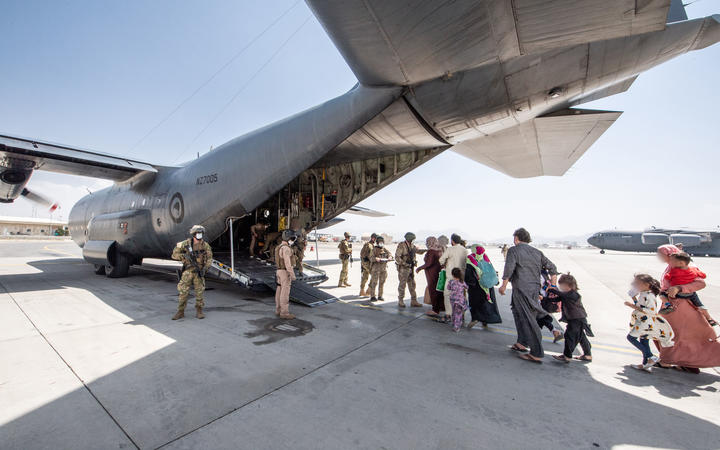
An RNZAF C130 landed in Kabul Afghanistan today and safely evacuated a number of New Zealanders and Australians.

An RNZAF C130 evacuating people from Kabul last month. Photo: Supplied / New Zealand Defence Force

Organisations including Amnesty International, Oxfam and World Vision sent the letter to Foreign Affairs Minister Nanaia Mahuta today.

“The needs in Afghanistan are growing by the hour. Right now, there are compounding crises taking place, including hunger, displacement, conflict, and Covid-19. Basic services are collapsing, and aid is running out,” the letter said.

“We are concerned that, alongside causing anguish, delays in government action and decisions increase risk of harm to those who need aid from, or safe resettlement to, New Zealand.”

It said the government had an obligation to do more.

“The New Zealand government spent 20 years and hundreds of millions of dollars in military expenditure as part of the international intervention in Afghanistan. We have an obligation to the people of Afghanistan to stand by them now. Be it the provision of aid, or safe pathways to New Zealand, the time for response is immediate and the cost of inaction is high.”

The letter listed four courses of action, including increasing humanitarian aid “at least double” to Afghanistan and increasing aid to the surrounding countries that were taking on refugees.

The letter said Afghan nationals who had helped the government should be brought here, and New Zealand should take on more refugees as well.

“Evacuate the remaining people in Afghanistan left from the initial mission, and include at risk individuals connected to New Zealand in these efforts.”

“Welcome at least 1500 Afghan refugees in this year’s current refugee intake, over and above the current Refugee Resettlement Quota commitments, for those at most immediate risk or with connections to Aotearoa.”

It asked for the quicker visa processing for Afghan nationals.

New Zealand was currently resettling 370 refugees from Afghanistan.

After the Taliban seized power last month a chaotic evacuation took place before a bomb attack at Kabul airport brought New Zealand flights to an abrupt end.

The letter said the government needed to increase its effort to engage with the Afghan community in new Zealand and do more internationally.

“Drive agreement in the international community to establish a robust investigative mechanism – with a mandate to document, collect and preserve evidence of ongoing crimes and human rights violations across Afghanistan.”

Foreign Affairs Minister Nanaia Mahuta said last month Cabinet was exploring a second phase evacuation from Afghanistan, and the effects resettlement would have on New Zealand.

Mahuta told a select committee on 31 August she was not at that point in a position to widen the criteria for allowing people into New Zealand beyond what had earlier been decided by Cabinet.

-RNZ

Latest News

Bangladesh searches for New Zealand teen missing at sea

Published

on

Rescue teams are searching for a New Zealand teenager missing after a boat carrying him and three other people capsized in Bangladesh, officials say.

Albert, 16, whose surname was withheld by police, went missing after the boat overturned in rough waters on Tuesday morning (all times local) near an estuary off Cox’s Bazar on the country’s southeastern coast.

Do you know more? Email iwitness@rnz.co.nz

The other three New Zealanders on the boat were rescued by fishermen nearby.

“The Coast Guard is searching for the boy while a helicopter is conducting an aerial search. Fishermen have also been alerted about the missing teenager,” an official told AFP on condition of anonymity as he was not authorised to speak to the media.

Rescue efforts have been hampered by rough conditions in the Bay of Bengal, he added.
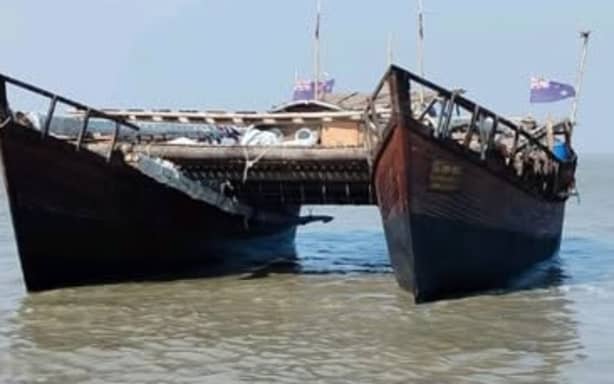
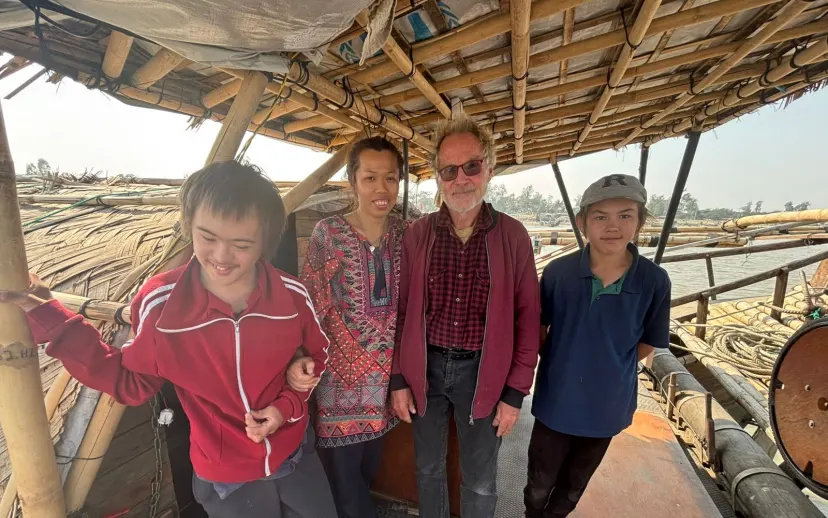
The boat the family had been travelling on.

999 NATIONAL EMERGENCY SERVICE BANGLADESH / SUPPLIED

Mohammad Ali, the officer-in-charge of Cox’s Bazar police station, said the four had been on a trip when the boat met with an accident.

Local media reports said the four were from the same family but officials were unable to confirm that information immediately.

– AFP
Continue Reading

Latest News

Man charged with human trafficking accused of deceiving staff recruited from overseas

Published

on

A man charged with human trafficking and migrant exploitation is accused of deceiving staff recruited from overseas by promising them they would be paid for all hours they worked.

One of the staff – who was recruited from India – is alleged to have been paid 36 hours per week despite working a minimum of 54 hours.

The man, listed as a company director, is also accused of failing to pay staff for working public holidays, inciting staff to breach conditions of work visas and altering employment agreements to reduce the pay rates.

RNZ earlier revealed a Christchurch man, who has interim name suppression, faced 35 charges under the Crimes Act and Immigration Act.

Do you know more? Email sam.sherwood@rnz.co.nz

Immigration New Zealand (INZ) earlier confirmed the charges, which relate to 11 complainants, include allegations of “trafficking in persons and migrant exploitation”.

Court documents seen by RNZ reveal the man, aged in his 50s, faces three charges of arranging, organising or procuring the recruitment of a person into New Zealand “knowing that recruitment involved one or more acts of deception”.

Two of the complainants were from India, and the third from Saudi Arabia.

The court documents say the defendant recruited them knowing that the terms and conditions of their employment would be “materially different” from what was promised verbally and in their individual employment agreement “namely that all hours he worked would be paid by the employer”.

The man also faces charges of supplying information to an immigration officer knowing that it was false or misleading, inciting or procuring people to breach the conditions of their work visas, and failing to pay minimum wage.

He also faces two charges of obtaining by deception by altering the original terms of an employment agreement to reduce pay rates.

One court document says that between November 2020 and June 2022 the man is accused of employing at least five people before their visas were approved.

INZ national manager of investigations Jason Perry earlier told RNZ the charges related to the alleged exploitation of 11 people.

“Trafficking in persons and migrant exploitation are serious offences that can have a significant impact on victims. INZ is committed to identifying, investigating and prosecuting this offending where there is sufficient evidence to do so.”

Perry said the charges followed a “complex investigation” by INZ’s immigration compliance and investigations team.

“As the matter is now before the courts, we are unable to make any further comment on the allegations, evidence, or the defendant at this time.

“INZ encourages anyone who suspects migrant exploitation or trafficking in persons offences being committed to report it so it can be assessed and investigated.”

rnz

Continue Reading

Latest News

New Zealand’s ATM dead zones

Published

on

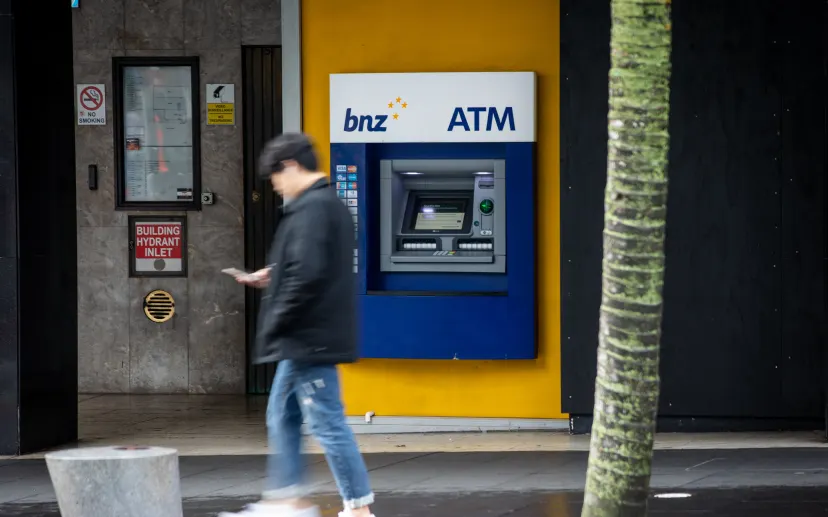
New Zealand’s network of ATMs has shrunk in recent years, and some parts of the country now do have any cash machines at all.

RNZ research shows there are now just over 1000 access points for cash around the country, at which there may be more than one ATM. About half of the just over 3000 ATMs are owned by non-bank providers.

But there are some places where there is no ATM anywhere near. People living on Great Barrier Island, in Haast, Tuatapere, Omarama and Milford Sound all have to travel a long way to access a cash machine.

From Haast, they might have to drive 144km, from Omarama it is about 30 kilometres to Twizel, and in Tuatapere 48km.

At the Hard Antler Bar and Restaurant in Haast, a staff member said people would get cash out from a local shop or gas station if they needed it. “It would be nice to have one but we manage just fine without. Being so far away from shops we have no need anyway.”

In a Haast community group, residents said it was not a huge problem. “If you live off venison, crayfish, veggies from your garden and coffee you don’t need any cash,” said one.

Others said it was a potential security problem to have an ATM. “ATMs are bad news for small out of the way quiet towns. It puts them in line for serious robbery… plus it requires being topped up a lot which costs a lot which is then passed on to you, the person withdrawing,” said another.

Across the country, about 725,000 people live at least 5km from the nearest ATM as the crow flies, 372,162 more than 10km, 200,629 more than 15km and 301 more than 75km.

New Zealand Banking Association chief executive Roger Beaumont said there was a range of factors taken into account when banks were thinking about where to locate ATMs.

“That would probably include things like customer demand for the service, and the practicality of cash in transit services reaching those locations.”

The Reserve Bank has been consulting on its plans for cash. It wants 95 percent of people living in urban areas to have walking-distance access to a free cash point.

It has identified 24 rural settlements it says need cash services, including Ngakawau, Ongaonga, Omakau, Owaka, Whangaroa and Taipa, Te Araroa, Cheviot, Rotheram, Waikari, Kimbolton, Kawhia, Balfour, Ohai, Woodlands, St Andrews, Glenavy, Nuhaka, Tuia, Hampton, Kurow, Taharoa, Harihari, Fox Glacier and Ross.

Some of those areas already have limited ATM access.

University of Otago economist Murat Ungor said it was a significant problem that some areas of the country did not have ATMs.

“Research and practical evidence show that people cannot always simply find other solutions, and the burden of doing so falls unevenly on those who are already vulnerable.

“The Reserve Bank has stated that the cash system is not fully meeting the public’s needs and that a significant increase in the quantity and quality of cash services is required, especially in rural areas.

“The assumption that people would find other ways is challenged by the realities in these communities. Research shows that 72 percent small businesses would be adversely affected if cash were unavailable. In towns like Palmerston, the only ATM charges a prohibitive $2.80 fee, and businesses have no local way to deposit cash, forcing them to drive long distances, like to Dunedin, just to bank their takings.”

He said research focused on rural towns confirmed that declining access was a bigger disadvantage for older people, people who were disabled, on low incomes or with limited transport.

“The Reserve Bank’s own Community Cash Trial in Waipukurau, where the nearest ATM was 50km away, proves the system is failing and needs intervention. Beyond practicality, cash remains essential for cultural practices like koha at tangihanga and for local fundraising functions something digital currency cannot easily replicate. The evidence is clear: these are not isolated inconveniences, but systemic failures that risk excluding communities from full participation in the economy.”

rnz

Continue Reading

Trending

Copyright © 2026 The Buzz: Powered by Apna Network Limited - Concept by Digital Hub NZ