Connect with us

HTML Image

i

Uncategorized

How farmers are faring as drought declared in Northland, Waikato, Marlborough and Taranaki

Published

on

The clock is ticking for drought stricken farmers in the Central North Island who fear if they don’t get rain soon, before temperatures drop further, then no grass will grow before winter bites.

A drought has been declared in the Northland, Waikato, Horizons, Marlborough-Tasman, and Taranaki regions. With no rain on the horizon, farmers worry a grim winter is ahead and are preparing for the worst by spending thousands on extra feed for their animals and sending stock away to greener pastures to give their paddocks a respite.

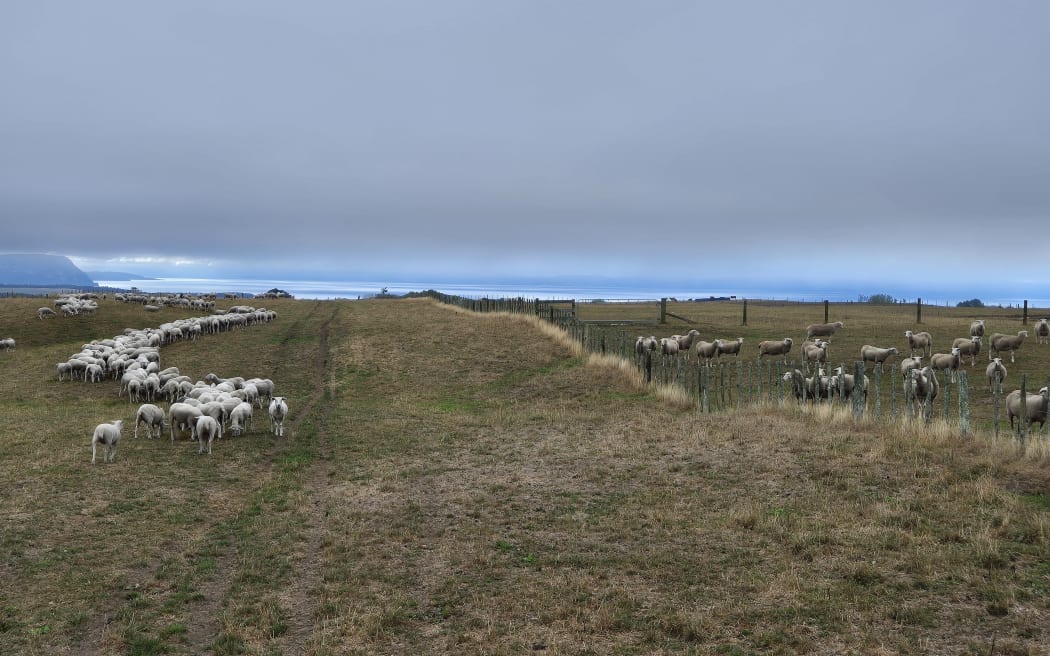
To see how farmers are faring, I begun my rural roadtrip in Tihoi on the western side of Lake Taupo. It’s a small farming community where a cold wind from the mountains and lake is blowing across the dusty brown landscape, bringing the temperature down and shrinking the warmer weather window in which farms can grow grass before winter hits.

It’s an early start at Ruby Mulinder and Sean Nixon’s sheep dairy farm, with 730 ewes to milk before breakfast. I pass a number of parched paddocks as I head to the milking shed, where there’s a comforting rhythmical sound of milk pumping from udders and into the vat.

Their health is vital for the business, as the milk is exported to China. Despite the ongoing drought, production is only down five percent because they’ve invested in extra feed.

“Keeping the ewes milking well has come at a big cost, we’ve had to buy in a lot of feed to do it and obviously that hurts our bottom line,” he said.

The area has had just half of its usual rainfall, there’s been no decent rain since December and with a rapidly cooling Autumn, they’re constantly managing the feed situation.

“If we don’t start getting some rain soon to turn things around, we’ll be going into winter in a pretty grim looking position,” Sean said.

His wife agreed, most of their conversations now revolve around the drought and how to get their animals through it in the best possible shape without having to cull any of the main herd.

“It’s getting scary now. We should have paddocks being locked up so we are growing grass for winter, but at the moment there’s not much around really. We could have a pretty hard winter here, like a really hard winter,” Ruby said.

They farm 1100 sheep and 55 cattle, and usually can make about 300 bales of sileage. However, the dry conditions started back in Spring so they’ve only managed to grow enough grass for 60 bales of hay. It’s left them well short and so far they’ve had to buy in about $20,000 of extra feed.

I perched next to Ruby in the tractor cab, as she fed out the precious lucerne and grass silage bales. We talked about the uncertainty that droughts bring, never knowing how long the tough times will last.

“The longer this goes on, the more daunting this gets. We are at the later part of March now and our growing season is quite short in Tihoi…when it shuts up shop we really don’t grow anything.

“Everyone sits with bated breath and hopes it’s going to break soon – but we don’t just need 10 mms, we need 50mms, then another 20 mlm, then another 20mm,” she said.

Ruby grinned as she recognised how demanding that sounds. “We’re a bit fussy us farmers, we want quite regular warm rain now, and we need it quickly.

“But you can’t do anything about it – Mother Nature, she’s a tough woman,” she laughed.

The local contractor has only cut half the amount of baleage in the district that he usually would, and Ruby said it means local feed sources won’t last as long. But luckily they made tough decisions early on, such as selling lambs rather than keeping them to fatten up and sell for a higher price later.

“We’re very fortunate that parts of the east coast, Hawke’s Bay and Wairarapa have had rain so that’s where all our store lambs have gone. It’s really good there was somewhere with feed they could go,” Sean said.

“This is the one thing about a drought, you hope another area is growing a lot of feed because it means we can offload stock. The worst thing we can have is the whole North Island in a really bad position, and at the end of the day, everyone takes their turn at a bad season – this is ours,” Ruby said.

A lingering drought can impact every aspect of the sheep milking operation as the ewes need good feed to conceive and grow good lambs, and then produce decent milk solids.

“You do start to worry about what it could do for next season. If we can’t feed the animals as well over winter, then potentially that doesn’t set them up as well to produce as well next season. There could definitely be flow on effects from where we are at right now,” Sean said.

Every day they’re recalculating feed budgets. “If we bugger it up now and then the ewes don’t lamb down in good condition in the spring, that has a huge roll-on effect for how big they wean their lambs and how they milk. That’s all big bottom line stuff,” Ruby explains.

‘We live and die by what falls out of the sky’

About 15 minutes away lives dairy farmer Richard Webber and his family. He drives me around his farm, yet another thirsty looking landscape, and tells me his milk production is down 10 percent on what they’d forecast.

“We’d normally be milking 800 cows this time of year, but we’re only milking 600. If we don’t get rain in the next week we’ll be down to 400,” he said.

“We either increase supply or decrease demand for feed – so drying cows off is a bob each way. Effectively a milking cow eats twice as much as a dry cow, so if we stop her making milk we can feed her less and she’ll still be fat for calving… That’s the plan,” he said.

“It’s on a knife edge at the moment, this season. It’s like the elephant in the room, the kids have grown up understanding that we live and die by what falls out of the sky,” said Richard.

It’s hard not to hope that every cloud might deliver some desperately needed rain.

“The first challenge is the mental challenge – just staying up for the fight, so it’s really a case of hanging in there, spending the money on the feed to get to a point where we feel we can not sacrifice next season,” he said.

Worst drought in 17 years

My last stop in Tihoi, was Alex Richardson. He’s lived and farmed in Tihoi for 33 years and has seen a few droughts in that time. As we talked, we leaned on his yards, admiring the beautiful herd of hereford cows and their calves. Crispy brown hills surrounded us, the only glimmer of green is in the poplar and pine trees.

It’s the worst drought he’s seen since 2008, made worse by an infestation of Porina moths eating the grass.

“This year the whole situation was compounded by us having a bad case of Porina, so that’s affected our pastures. It’s a double whammy. I’m thinking it could be quite a tough winter,” he said.

Alex decided early on to sell over 1400 store lambs, and has already fed out 140 bales of silage. He’s bought in an extra 100 bales, but it’s the lack of grass that’s driven him to send 150 of his pregnant cows to Whitianga for six weeks of better grazing. A decision that’s costing thousands of dollars in trucking fees.

It’s this lack of grass that’s driven him to send 150 of his pregnant cows to Whitianga for six weeks of better grazing, but it’s costing thousands of dollars in trucking fees.

“Cartage is the one that kills it, it’s quite expensive,” Richardson said.

He’s hoping that while they’re gone, his paddocks can recover so there’s food when the cows return.

“With a bit of luck, we’ll get some feed if we get some rain… you’ve got to just forget about it and don’t watch and wait.”

Source: RNZ

Continue Reading
Click to comment

Leave a Reply

Your email address will not be published. Required fields are marked *

Uncategorized

Rugby League: Kangaroos edge Kiwis in World Cup classic 24 -22

Published

on

In one of the most stunning starts to a sporting tournament, the Kiwis and Kangaroos played out an absolute classic to kick off the Rugby League World Cup.

It was match chock full of barely believable moments, dramatic twists and turns, and superstars stepping up on the biggest stage, with Australia holding on for an enthralling 24-22 win.

Though unlikely to affect the Kiwis semi-final hopes, the loss may come at a different cost, with Kalyn Ponga forced from the field with a suspected broken arm.

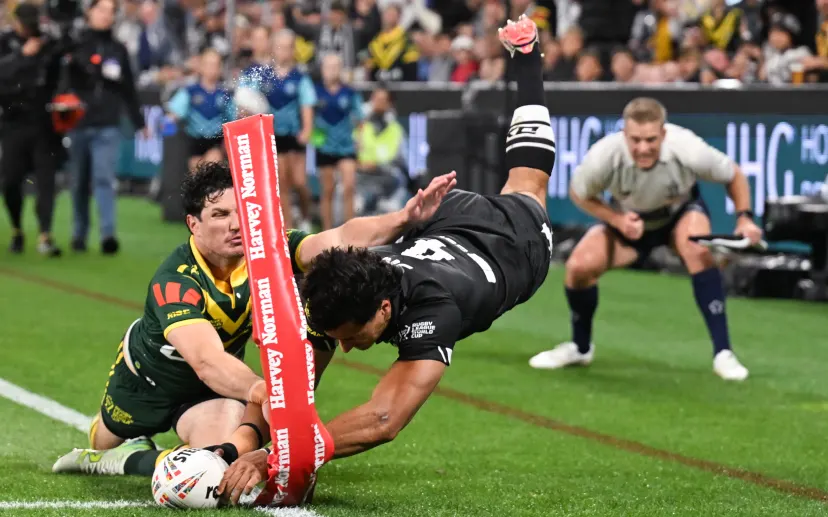
It will take something special to top the tournament’s opening try as the Kiwis struck first in sensational style.

With absolutely no room to move in the left hand corner, Casey McLean managed a miracle, finding the grass with his entire body forced over the touchline

The Kangaroos replied with a runaway, Jack Bostock snatching a Jahrome Hughes pass out of the air and streaking away to score.

With the Kiwis forcing a line drop out, Reece Walsh sent it out on the full, Jaymayne Isaako slotting an easy two points.

After the Kiwis forced the defending champs again, Australia nabbed another intercept, this time to take the lead as Tom Trbojevic latched onto a McLean ball and fended off a scrambling Kodi Nikorima to go 90.

As the siren approached, the Kiwis bagged another two points as Nikorima was taken off the ball by Katoni Staggs, the centre sent to the bin as a result as Isaako squared the scores 10-apiece at half-time.

On his first international outing, fullback Ponga put the Kiwis back in front courtesy of a deft offload from Isaiah Papali’i.

After an extended period under the pump, it looked as if Ronaldo Mulitalo had stretched the Kiwis advantage after Trbojevic spilled a kick, but the chasers were ruled to be offside.

The Kangaroos relief turned to rapture as Bostock got his second, leaping above the pack to take a towering Cameron Munster bomb and reinstate the stalemate.

It wouldn’t last long though after Ponga chimed into the line and sliced right through, standing up Walsh to reclaim the lead for the Kiwis.

But Walsh would respond with a stunner of his own, exploding onto a Bostock offload 80 out, showcasing his blistering speed as he beat both Ponga and Hughes who collided with each other, the Australian full back far too fast for the desperate chase of Joseph Tapine.

That chase proved crucial however, as Latrell Mitchell sprayed the conversion to keep the Kiwis in front by two.

Cue more Kangaroos magic, Munster sending it to the skies, Bostock and Isaako with a clean aerial contest, won by Bostock to complete his hat-trick and put the home side up 24-22 with four minutes remaining.

A final Kiwis assault proved futile as the Kangaroos held on to break New Zealand hearts, but ignite a tournament.

See how the game unfolded in our blog:

rnz

Continue Reading

Uncategorized

Election 2026: Luxon faces Hipkins in first leaders’ debate

Published

on

Analysis – Three years ago, Christopher Luxon headed into his first head-to-head debate with Chris Hipkins on the back of a poll that had National on 37 points and able to form a government with ACT alone.

Labour under then-Prime Minister Chris Hipkins was on a downward spiral on 27 percent in that same 1News-Verian poll and had no path to power.

Fast-forward three years and both parties headed into Tuesday night’s debate with two fresh new polls.

RNZ-Reid Research’s results had National on 26 percent and Labour on 31, while 1News-Verian had a much tighter race with just one point in it and both parties just under 30.

Those results spell early retirement and unemployment for a decent number of National Party MPs currently enjoying the government benches.

MMP has evolved so much in the past two elections that the combined Labour-National vote has gone from 81 percent at the 2017 election to just 57 in Tuesday’s RNZ-Reid Research poll.

So-called minor parties have grown in both size and influence, capturing the imagination of voters that traditionally voted blue or red.

Increasingly polling is suggesting another new party – Opportunity – has a good chance of making it into Parliament and being a potential kingmaker.

There’s now a very real possibility that the next government could be made up of four political parties.

That has happened before under Sir John Key’s National government in 2008, but because he chose to welcome the Māori Party into the fold, not because he had to.

The minor parties of 2026 have leverage and power going into any coalition talks well beyond any previous election years.

It makes a head-to-head between Christopher Luxon and Chris Hipkins far more redundant in this political age.
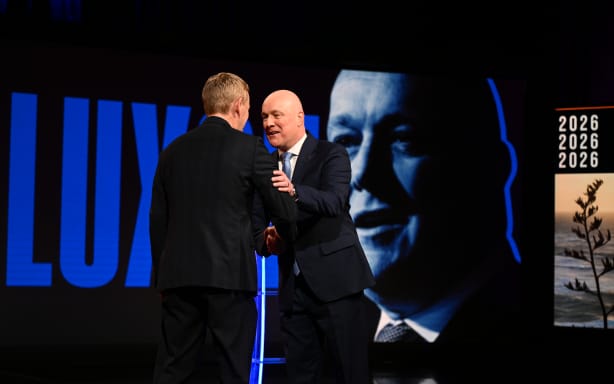
Christopher Luxon and Chris Hipkins at the TVNZ debate, hosted by Jake Tame, Oct 6 2026
The two Chrises greet each other.

TVNZ/Harley Peters

They can’t fully commit to any of the promises they make because the slate is almost entirely wiped clean after 7 November when political parties sit down to discuss what a future government might look like.

Luxon has ruled out working with Opportunity after the election because of its land tax policy and National campaigning on no new taxes.

On Tuesday night he repeatedly refused to answer whether he would pick the phone up if he needed the party to be prime minister.

Instead, he repeated his previous comments about an untenable land tax, and then told reporters after the debate the question was a “hypothetical” that didn’t need an answer.

To be clear, that’s not a no.

At times in the debate the leaders could have been put in a time machine and transported back to three years ago, so similar were some of the issues and answers to them.

The cost of living crisis continued to be the overwhelming theme, a healthcare system under pressure and patients waiting too long in emergency departments hadn’t improved, and neither Chris had fully grasped the meaning of a yes or no question.

There was no big revelation or pledge – on the latter neither party has the headroom in their fiscal plans to do so.

It’s unlikely undecided voters watching were swayed one way or the other by the end of it.

That’s not to say the two Chrises performed badly.

They were both across their briefs, and while they had some nervous energy at the outset both settled into a comfortable rhythm and got their key messages across.

While Hipkins managed to land a few blows on Luxon over his failure to discipline New Zealand First’s Winston Peters and Shane Jones over racist remarks, Luxon in return made a strong argument on education and had Hipkins concede he had done what Labour couldn’t and got India across the line on a free trade agreement.

The biggest controversy of the night was the pair being asked to pick between the All Blacks and the Warriors with Luxon going Team ABs while Hipkins chose to “Up the Wahs”.

Both would have gone to bed happy with their performance and grateful they didn’t say or do anything they deeply regretted.

There is a week until they face-off again – another week of smiling at the cameras and hoping voters return them to the major party league.

rnz
Continue Reading

Uncategorized

Sydney Roosters win NRL Grand Final with one point victory over Newcastle Knights

Published

on

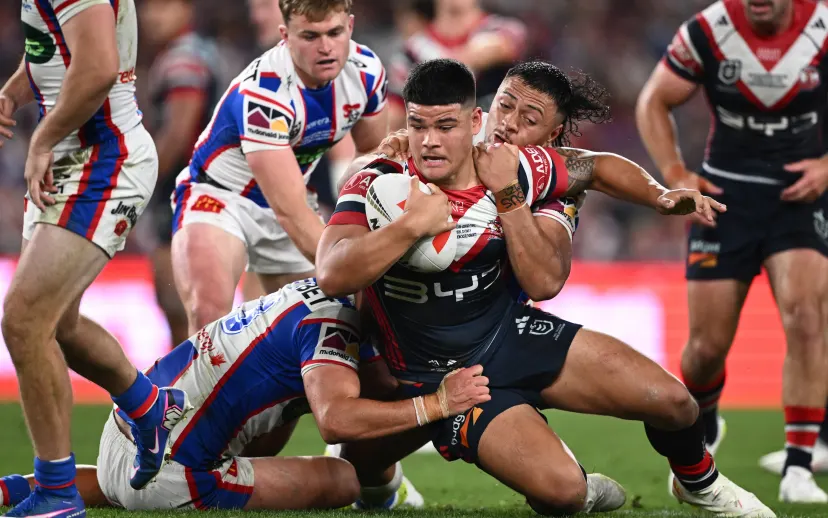
A Daly Cherry-Evans field goal proves the difference as the Sydney Roosters beat the Newcastle Knights 19-18 in the NRL grand final.

The Roosters dictated for most of the night, but Newcastle led 12-0 on the back of two first-half tries against the run of play, including a spectacular 95-metre effort by Kalyn Ponga.

Mark Nawaqanitawase, whose bat-back led directly to Ponga’s try, got the Roosters on the board just before half-time and Billy Smith muscled his way over shortly after the break.

Desperate scrambling defence kept the Knights level until Nawaqanitawase scored his second after a lucky ricochet off the upright, and Cherry-Evans slotted a one-pointer with 10 minutes left.

Knights winger Greg Marzhew scored in the 77th minute to set up a grandstand finish, but they could not get into range to try to level the game.

Earlier, the Roosters won their third NRLW premiership, scoring seven tries to thrash the Brisbane Broncos 30-6 in a blowout and exact revenge in a rematch of the 2025 decider.

– ABC News

Continue Reading

Trending

Copyright © 2026 The Buzz: Powered by Apna Network Limited - Concept by Digital Hub NZ