

Latest News
NZ First disagrees with Cabinet over current Covid-19 inquiry continuing

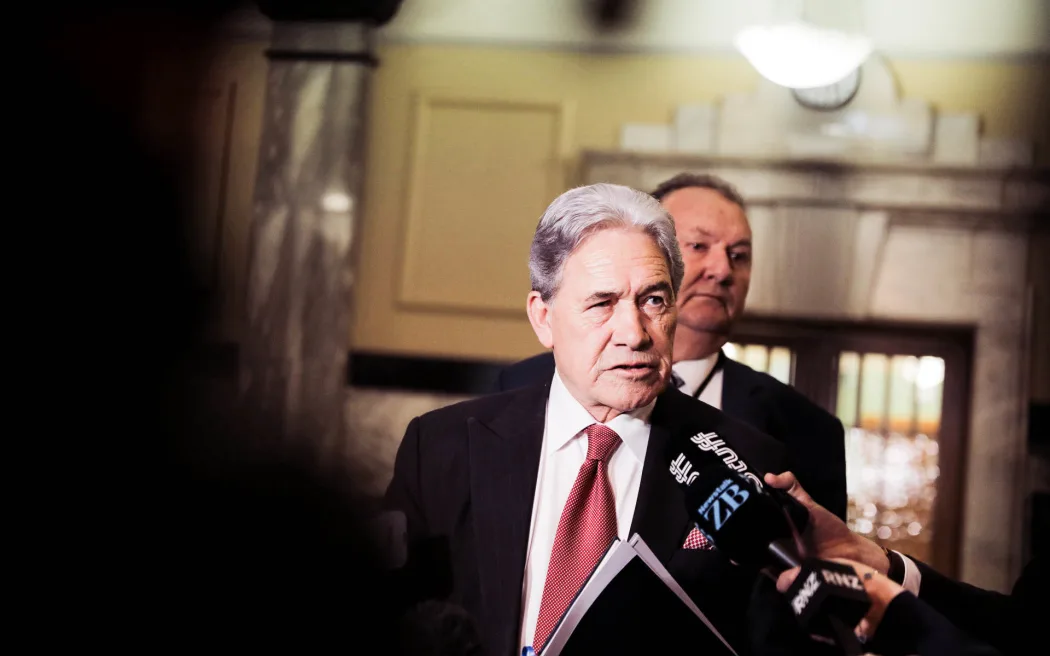
Winston Peters says New Zealand First disagrees with the decision to allow the Covid-19 inquiry to continue in its current form and with its current chairperson who, he says, risks a perception of bias.
The move marks the first use of the “agree to disagree” provisions in the coalition agreements.
Internal Affairs Minister Brooke van Velden has been leading the process for expanding the inquiry’s scope, and on Tuesday afternoon announced it would mean a “second phase” that would focus on matters of ongoing public concern.
This would include:
- Vaccine efficacy and safety
- The extended lockdowns in Auckland and Northland
- The extent of disruption to New Zealanders’ health, education, and business
The commission last year delayed hearing public submissions until 2024 while the National-led coalition government reviewed its scope.
The government began public consultation in February on expanding the scope, and what should now be included.
Van Velden said more than 13,000 submissions were received from the public, and the second phase would begin in November, aiming to deliver final recommendations by February 2026.
She said the current commissioners would be stepping down after the first phase, and would be joined by a third commissioner who would continue through to the second phase.
“We’ll end up with two different areas of evidence gathering and expertise. And I think it’s really important for us to acknowledge the work of the commissioners in phase 1 but also for that phase 2 we will be looking at what works for all three coalition parties.
“What really is important here is that there are new terms of reference, and as we’re setting new terms of reference we’re looking at a different range of expertise and a different range of people to be part of that.”
Van Velden hoped to have people with expertise in legal, medical, public health, health and economics backgrounds involved in the second phase.
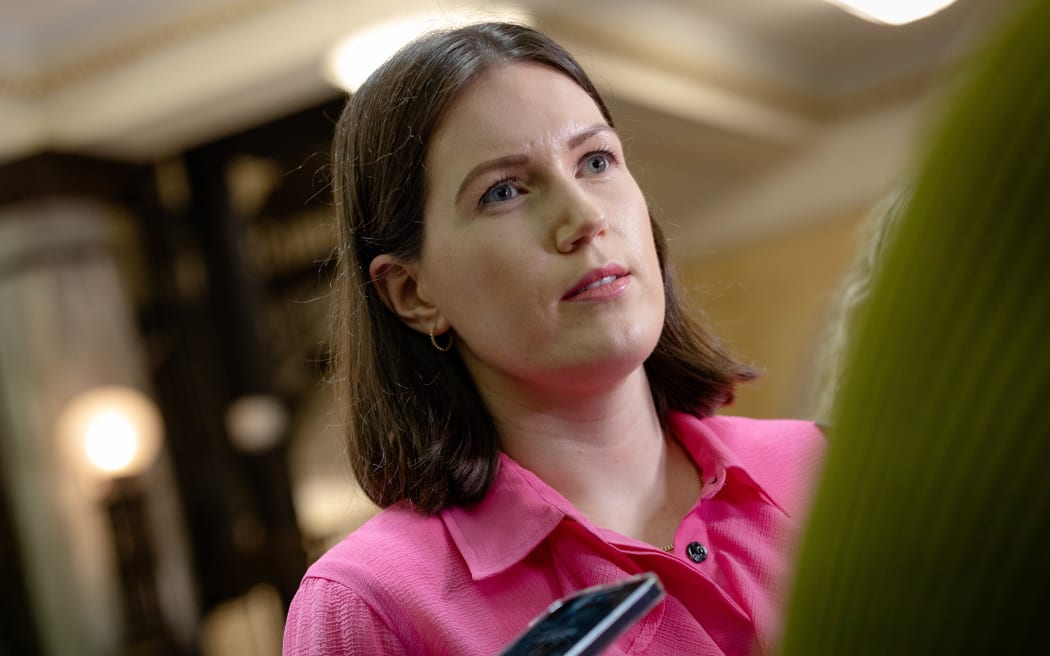
Brooke van Velden Photo: RNZ / Angus Dreaver
Peters announced New Zealand First’s position in a statement on Tuesday afternoon, saying the party supported establishing a “second phase” for the inquiry – but not with allowing the first phase to continue.
“We disagree with allowing the current inquiry to simply continue as ‘phase one’ in its current form, the current chair remaining in place, and the further extension of its report back period,” he said.
“We believe that ‘phase one’ of the Royal Commission is simply a continuation of the current inquiry, which is far too narrow in scope and remains compromised by the current Chair’s direct involvement with the previous government’s administration and direct planning of the Covid pandemic response.
“New Zealand First campaigned on the fact that the current Royal Commission was nothing more than a Labour Party political tool, being used to craft a message through its lack of scope and lack of suitability of the commissioners. We believe the public perception of bias of the current chair represents a reputational risk for ‘phase one’ of the inquiry.”
Peters said New Zealand must have an independent and robust report on the lessons learned from the Covid-19 response which could be used for any future pandemics.
“New Zealand First respects Cabinet’s decision to invoke the ‘agree to disagree’ provisions in the coalition agreement,” he said.
The agreements with both ACT and NZ First committed the government to expanding the scope of the Covid-19 inquiry.
Van Velden said the government had not wanted to shut down the current inquiry as it would set a precedent.
“We did not wish as a government to set a precedent by ending a royal commission, especially a few months before it was set to report back. Therefore we’ll be asking them to report back their findings, then they’ll be resigning, and new commissioners will take their place.
She noted the wording of ACT’s agreement specified the original commission be broadened with expanded terms of reference, subject to public consultation.
“We have met all three coalition [party] agreements,” she said.
“It would have been a waste of evidence, time, resources and the commissioners’ time for this to end a few months before it was expected to report back. There is a lot of work that has already been undertaken in areas where there should be inquiry made.”
The second phase would mean additional cost, but “I think the path forward also saves taxpayers money by not asking us to end and relitigate all of the evidence that’s already been gathered”, she said.
Peters – asked about his stance ahead of Question Time – said “well, read the press statement”.
“You know what I make of it. I gave a speech on the campaign in Whangārei, I set out what was wrong with it, we’ve never changed our idea on that. We wrote it into the coalition agreement and we’re going to see that our side of the bargain is going to be kept.
“We inherited this thing that was never going to work, it was designed to cover the Labour Party’s backside, to cover their incompetence and to cover the gross waste of the Covid lockdown months.
“We want an inquiry that sets the score right, that the public can have confidence in, and that’s what we’re going to get.”
Labour leader Chris Hipkins suggested Peters was pandering to conspiracy theorists.
“Winston Peters is trying to court the cooker vote and has been for some time, and I think this is just the latest extension of that,” he said.
Chairperson Tony Blakely and Commissioner John Whitehead were “both people of enormous integrity, people who will do a thorough and independent job of doing that,” Hipkins said.
“I understand Winston Peters has a problem with that, I presume he’d rather have Liz Gunn chairing the inquiry, ultimately it needs to be fair and independent.”
Peters was dismissive of Hipkins’ claims.
“Ah yeah, well, he can go down the rabbit hole that he’s talking about and stay down there because his day in terms of politics is well and truly over … I’m afraid his use-by date – if it ever was there – is well and truly gone.”
Then-Prime Minister Jacinda Ardern announced the Royal Commission of Inquiry into the pandemic response was announced in December 2022, saying it would be wide-ranging and examine the economic response, what can be learned from the pandemic and how it can be applied to any future pandemic.
However, individual decisions and how policies applied to individual cases or circumstances would be considered out of scope along with judgments and decisions of courts, tribunals and other agencies, private sector operations, and the Reserve Bank’s independent monetary policy committee.
Changes to court proceedings and parliament proceedings because of the pandemic will not be looked at, nor will the conduct of the 2020 general election, along with vaccine efficacy, nor the “specific epidemiology” of the virus and its variants.
Blakely in December said the commission welcomed the opportunity to work with the new government on what an expanded remit will look like.
Van Velden said Cabinet has agreed to the several points as an “indicative scope of the terms of reference for the second phase”:
- The use of vaccines during the pandemic, specifically, mandates, approval processes and safety including the monitoring and reporting of adverse reactions;
- The social and economic disruption of New Zealand’s response policies, specifically, the impacts on social division and isolation, health and education, and on inflation, debt and business activity, and the balance of these impacts against COVID-19 minimisation and protection goals;
- Extended lockdowns in Auckland and Northland, specifically whether similar public health benefits could have been realised from shorter lockdowns;
- The utilisation of partnerships with business and professional groups; and
- The utilisation of new technology, methods, and effective international practices.
Hipkins said it was important there be a fair, independent, robust Covid-19 inquiry, and the previous government had made its decisions knowing they would be judged in time.
“Of course, when you look back in retrospect, there’ll always be things that you might look at differently if you knew then what you know now. Inquiries tend to highlight those sorts of things. But the reality is we didn’t know all of those things then that we do know now.”
He said the first inquiry was about being better prepared for the next pandemic response, and the approach taken was “fine”.
“There are a lot of people who did very very good work. I think to get the best out of the inquiry, the inquiry needed to be constructed in such a way that they were confident in being able to speak openly and freely with them.”
He rejected the idea there was a need for an inquiry into vaccine efficacy.
“Ultimately vaccine efficacy is covered by medical science rather than by a Royal Commission … if it’s a medical examination of vaccine efficacy, of course it will have new information than we had at the time we were making decisions about vaccination and as long as the inquiry presents its findings in that light I have no real concerns about that.”
He said if the second phase turned out to be an attempt by David Seymour and Peters to “cook up an inquiry that reinforces their conspiracy theories then I think New Zealanders will ultimately lose confidence in that process”.
In a statement, Blakely and Whitehead said the second phase of the inquiry would complement the work already undertaken by them and help Aotearoa New Zealand be better prepared for future pandemics.
“Our current terms of reference are broad enough to allow us to look at a wide range of Covid-19 related topics, like mandates, lockdowns, and social impacts such as the impact on education and mental health,” they said.
“An inquiry into vaccine safety and adverse events is not part of our current terms of reference, and will be a useful addition. We are already looking at vaccine mandates which requires us to also consider vaccine effectiveness as it was integral to the overall elimination strategy. We also know that the use of vaccines is a really important topic for many people.”
They said it was important to understand how effective vaccines were at preventing transmission, hospitalisation and death.
They felt deeply privileged to serve as commissioners, they said, and appreciated the government allowing an extension to the 30 September reporting back date, to 28 November.
“The extension means we can fully analyse and consider the thousands of submissions we received from the New Zealand public earlier this year.”
VIA RNZ



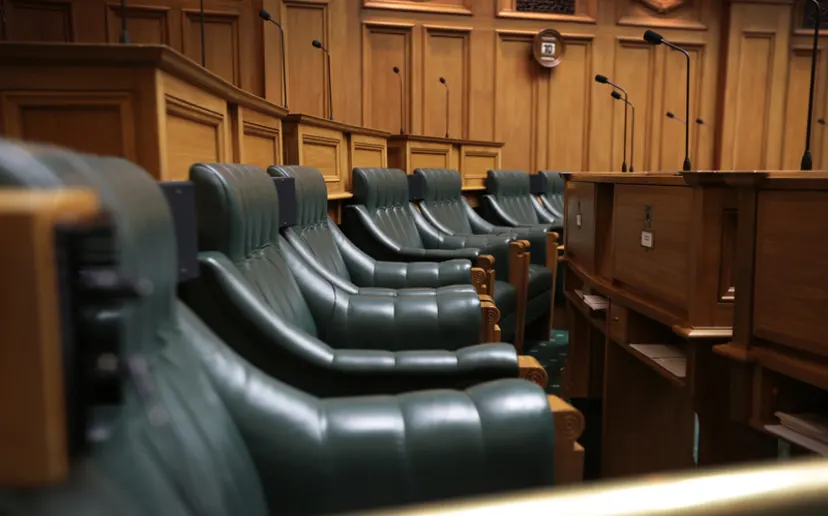
The chief executive of the Parliamentary Service is confident there will be enough room to accommodate the increased number of MPs and their staff coming into Parliament.
On current numbers, up to 131 MPs could be sitting in the Chamber following the election, brought on by a record overhang result.
Clerk of the House of Representatives Dr David Wilson told the Spinoff that currently the debating chamber had enough chairs to seat 124 MPs – including the Speaker of the House – and work was being done to accommodate more by altering the seating arrangement.
In a statement, Parliamentary Service chief executive Rafael Gonzalez-Montero said planning for a larger Parliament had been going for “some time”.
“Now that the election results have confirmed an increase to the number of members we are looking at several options.
“We are confident we will be able to accommodate all members within the Chamber.”
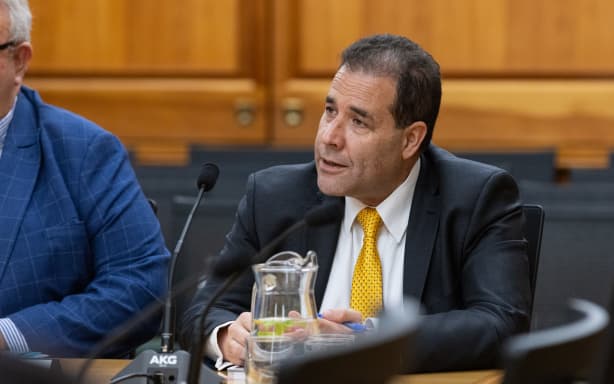
VNP / Phil Smith
Gonzalez-Montero said office accommodation for members and their staff would be “stretched” for a short time, but the new Members’ Building was only a few months away from “practical completion”.
That building – located behind Parliament – was due to be ready to occupy in April next year and had capacity to accommodate around 30 backbench MPs.
“All members should be in fit-for-purpose accommodation from that point,” Gonzalez-Montero said.
Following the 2023 election, 123 MPs sat in the Chamber – a record number at the time. That decreased to 122 following the resignation of National MP Judith Collins.
Collins held the seat of Papakura and stepped down in May and Parliament voted against holding a by-election because it was too close to the election.
The election result also meant high-ranking National Party MPs like Chris Bishop, Paul Goldsmith, Nicola Willis and Gerry Brownlee – Speaker of the House and an MP for 30 years – would likely not make it back into Parliament.
Only resigning or retiring MPs were permitted to give a valedictory speech meaning none of them would get the chance to give a valedictory statement.
Asked if their would be special allowances for valedictories, Wilson said in a statement that normally only MPs were allowed to speak in the House but the House could suspend its own rules or temporarily alter them.
“It could do so to allow former members to address the House.”
Wilson said no such arrangements could be made until the next Parliament opened and members sworn in.
rnz


Police say person who fired gun at officers still at large

New Zealand sides named for RLWC finals

Parliamentary Service working on extra chairs and offices for increased number of MPs


-

 Latest News2 months ago
‘Chilling’: Business groups speak out against National’s supermarket break-up plan
-

 NZ News2 months ago
Tom Phillips report: The missed opportunities to find the children
-

 Politics2 months ago
National vows to try to split Pak’nSave and New World
-

 Latest News2 months ago
Cars bearing Chinese police markings stir unease in Auckland
-

 Fiji News2 months ago
Plans to have new Constitution by Dec 24th 2026
-

 NZ News2 months ago
Cop who stole $68,000 can now be named as champion Muay Thai fighter Haimona Tamati-Te Paki
-

 Politics2 months ago
MBIE confirms botched biometric projects costs blown out to $50.7 million
-

 Latest News2 months ago
Five Karangahape Road venues lose their liquor licences after police intervention